








Menu

Geothermal Heating & Cooling Nashville – Slash Your Energy Bills by Up to 70% Year-Round

Ground source heat pumps tap into Nashville's stable underground temperatures to deliver efficient climate control without the wild swings of traditional HVAC systems, cutting costs while protecting against Middle Tennessee's summer heat and winter freeze cycles.

Slider Image 1
Slider Image 2
Slider Image 3
Slider Image 4
Slider Image 5
Slider Image 7
Slider Image 8
Slider Image 9
Slider Image 10
Slider Image 11

Why Nashville's Climate Makes Geothermal Systems a Smart Investment

Nashville's weather puts conventional HVAC systems through the wringer. Summer temperatures regularly push into the mid-90s with humidity levels that make your air conditioner run nonstop. Winter brings unpredictable freeze-thaw cycles that force heating systems to work overtime. Spring and fall? Forget about it. You need both heating and cooling in the same week.

This constant cycling destroys efficiency and drives up utility bills. Traditional heat pumps struggle when outdoor temperatures swing from 20°F to 95°F across the year. Your compressor works harder. Your backup heat strips kick in more often. Your energy bills climb.

Ground source heat pumps solve this problem by tapping into the earth's stable temperature. Six feet below your lawn in Davidson County, the ground stays between 55°F and 60°F all year. This constant temperature gives geothermal HVAC systems a massive advantage. Your system never fights extreme heat or cold because the ground provides a steady thermal battery.

The clay-heavy soil throughout Middle Tennessee actually helps. Clay holds moisture well, which improves thermal conductivity for ground-coupled heat pumps. The loop field transfers heat more efficiently than in sandy or rocky soil. This geological advantage makes Nashville one of the better markets for geoexchange systems in the Southeast.

You also avoid the outdoor equipment failures common with traditional systems. No condenser coils covered in cottonwood seeds from Percy Priest Lake. No compressors baking in the sun on a July afternoon. The ground loop stays protected underground where temperature and conditions never change.

Why Nashville's Climate Makes Geothermal Systems a Smart Investment
How Geothermal Heat Pumps Actually Work in Your Home

How Geothermal Heat Pumps Actually Work in Your Home

A geothermal heat pump moves heat instead of creating it. That fundamental difference is why these systems use 25% to 50% of the energy required by conventional furnaces and air conditioners.

The system has three main components. Underground loop field, ground source heat pump unit, and your home's ductwork. The loop field consists of high-density polyethylene pipes buried in your yard. We circulate a water and antifreeze solution through these pipes. In summer, this fluid absorbs heat from your home and deposits it into the cooler ground. In winter, the process reverses. The fluid picks up heat from the ground and delivers it to your home.

The heat pump unit sits inside your home, typically in a basement, crawlspace, or utility room. This indoor placement protects the compressor and electronics from weather exposure. The unit contains a compressor, heat exchanger, and reversing valve. The compressor concentrates the thermal energy collected from the ground loop. The heat exchanger transfers this energy to your ductwork. The reversing valve switches between heating and cooling modes.

Installation in Nashville requires careful site evaluation. We test soil composition and thermal conductivity. We calculate your home's heating and cooling load using Manual J protocols. We determine whether a horizontal loop field or vertical boreholes make more sense for your property size and landscape.

Horizontal loops work well for properties with adequate yard space. We excavate trenches four to six feet deep and lay out the piping in parallel runs. Vertical loops require less land area but need drilling equipment to bore holes 150 to 400 feet deep. The choice depends on your lot size, soil conditions, and existing landscaping you want to preserve.

What Installing Your Geothermal System Looks Like

Geothermal Heating & Cooling Nashville – Slash Your Energy Bills by Up to 70% Year-Round
01

Site Assessment and Design

We start with a detailed property evaluation and load calculation. Our technician maps your yard, checks soil composition, and measures your home's square footage, insulation levels, and window efficiency. We run Manual J calculations to determine your precise heating and cooling requirements. This data determines loop field sizing and whether you need a horizontal or vertical configuration. We also identify utility lines and septic systems to avoid during excavation.
02

Loop Field Installation

The loop field goes in first. For horizontal installations, we excavate trenches and lay out high-density polyethylene piping in your yard. Vertical installations require drilling boreholes where we insert U-bend pipes. We pressure test every connection to verify leak-free operation. The piping connects to a manifold that runs into your home. We backfill carefully to maintain proper pipe depth and thermal contact with surrounding soil. Most loop fields take two to three days to complete.
03

Indoor Unit Connection

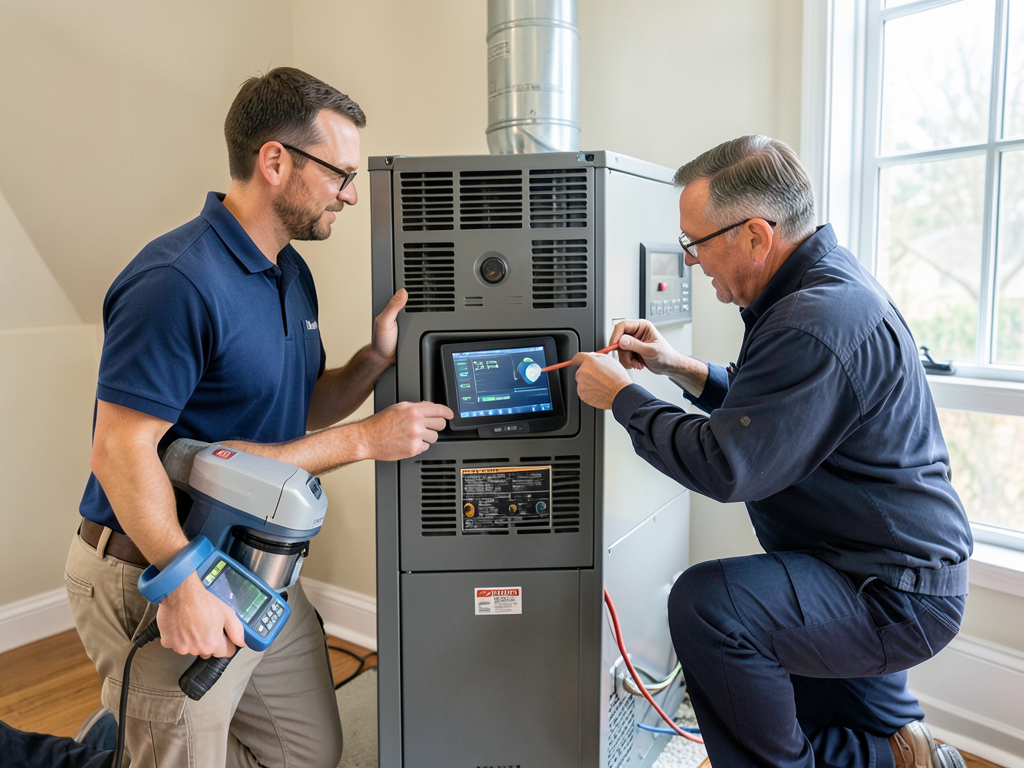
The ground source heat pump unit connects to your loop field and existing ductwork. We mount the unit in your designated mechanical space, make refrigerant connections, and integrate with your thermostat. We fill the loop system with fluid, purge air from the lines, and run the unit through complete heating and cooling cycles. We verify proper airflow through your ducts and check refrigerant pressures. You get training on thermostat operation and system maintenance expectations before we leave.

Why Alpha HVAC Nashville Knows Geothermal Systems Better Than Anyone

Geothermal installations require specialized knowledge that most HVAC contractors do not have. You cannot treat a ground source heat pump like a regular air conditioner with some pipes in the yard. The engineering, equipment, and installation methods are completely different.

We have installed geoexchange systems throughout Davidson, Williamson, and Rutherford counties. We understand the soil conditions in each area. We know where bedrock sits shallow in Brentwood and where clay runs deep in Hermitage. This geological knowledge directly affects loop field design and installation cost.

We also understand Nashville's building patterns. Older homes in East Nashville and Germantown often have limited yard space and challenging access for drilling equipment. New construction in Spring Hill and Nolensville offers more flexibility for horizontal loop fields. Historic properties near Belmont and Vanderbilt require careful permitting and restoration after excavation. Each situation demands a different approach.

Our team includes International Ground Source Heat Pump Association trained technicians. We do not subcontract the loop field installation to excavation companies who lack thermal system experience. We control the entire process from soil testing through final commissioning.

We also handle the paperwork that confuses most homeowners. Federal tax credits cover up to 30% of installation costs for qualified geothermal systems. TVA offers additional rebates through local utility providers like Nashville Electric Service. We help you identify and document eligible incentives so you maximize available savings. These financial benefits often reduce your net installation cost by thousands of dollars.

You also get realistic performance expectations. Some contractors promise impossibly low utility bills to close the sale. We provide honest projections based on your home's characteristics and usage patterns. Most Nashville homeowners see 40% to 60% reductions in heating and cooling costs compared to conventional systems.

What You Need to Know Before Installing Geothermal

Installation Timeline and Disruption

Plan for a complete installation to take five to seven days. Loop field work happens first and involves the most disruption. Excavation equipment will be on your property. Your yard will have trenches or drilling activity. We work carefully to minimize landscape damage, but some restoration will be needed afterward. Indoor equipment installation takes one to two days and involves noise and access to your mechanical areas. We maintain climate control during the transition by staging equipment replacement strategically. Schedule installation during spring or fall when outdoor temperatures are moderate and you can tolerate brief system downtime.

Upfront Cost vs Long-Term Savings

Geothermal systems cost more upfront than traditional HVAC equipment. The loop field installation drives most of the additional expense. You need excavation or drilling, specialized piping, and more complex equipment. Federal tax credits and utility rebates offset a significant portion of this investment. The real value appears in your monthly utility bills. Most Nashville homeowners recover the additional installation cost within seven to twelve years through energy savings. After that break-even point, you pocket the difference for the remaining life of the system, which typically exceeds 25 years for the indoor unit and 50 years for the loop field.

Performance in Extreme Weather

Ground source heat pumps maintain consistent efficiency regardless of outdoor temperature. When traditional heat pumps struggle during a January cold snap, geothermal systems keep pulling heat from 55°F ground. When air conditioners labor through August heat waves, your geothermal unit dumps heat into cooler earth. This consistent performance means you never need backup heat strips that consume excessive electricity. Your comfort stays steady while your neighbors' systems cycle on and off fighting extreme conditions. The system also provides superior dehumidification during Nashville's humid summers because the indoor coil operates at more efficient temperatures.

Maintenance Requirements and Longevity

Geothermal systems require less maintenance than conventional HVAC equipment. The buried loop field needs nothing beyond the initial installation. No outdoor condenser to clean. No coils exposed to weather and debris. The indoor heat pump unit needs annual filter changes and periodic inspections of the circulating pump and heat exchanger. We recommend annual maintenance visits to check fluid levels, verify pressures, and inspect electrical connections. The system has fewer moving parts than traditional equipment, which means fewer failure points. Most indoor units run 20 to 25 years before requiring major service. The loop field typically outlasts multiple generations of heat pump equipment.

Frequently Asked Questions

You Have Questions,
We Have Answers

What is the downside of geothermal heating? +

The biggest downside is upfront cost. Installing a geothermal system in Nashville requires drilling boreholes or excavating horizontal loops, which runs significantly higher than conventional HVAC. You also need adequate yard space for the ground loop. Nashville's clay-heavy soil can complicate installation and increase drilling costs. Some homes lack the lot size for horizontal loops and must use vertical drilling, which adds expense. The payback period typically runs 5 to 10 years, depending on your current energy costs and system efficiency. If you plan to move soon, you may not recoup the investment.

Is geothermal heating and cooling worth it? +

Yes, especially in Nashville's climate. You face hot, humid summers and cold winters, which means year-round HVAC use. Geothermal systems deliver consistent heating and cooling while cutting energy bills by 30 to 60 percent compared to traditional systems. The federal 30 percent tax credit significantly reduces upfront costs. Nashville's moderate ground temperatures allow efficient heat exchange year-round. If you stay in your home long enough to hit payback, typically 5 to 10 years, the savings compound. You also gain reliable performance without the efficiency swings that air-source heat pumps experience during temperature extremes.

How does the 30% tax credit work for geothermal? +

The federal Energy Efficient Home Improvement Credit covers 30 percent of total geothermal installation costs, including equipment, labor, and ground loop installation. There is no cap on the credit amount. You claim it when filing your federal taxes for the year you complete installation. If you install a system that costs $30,000, you receive a $9,000 credit, reducing your tax liability dollar-for-dollar. The credit runs through 2032, then steps down to 26 percent in 2033 and 22 percent in 2034. You must own the home and use it as your primary residence to qualify.

What is the biggest problem when using geothermal energy? +

The biggest operational problem is ground loop failure. Leaks in underground piping can go undetected for months, causing refrigerant loss or heat exchange fluid contamination. Repairing buried loops requires excavation, which disrupts landscaping and adds expense. In Nashville, shifting clay soils can stress pipe connections over time. Poor installation also causes problems. If contractors miscalculate the loop field size for your home's heating and cooling load, the system runs inefficiently or fails to meet demand. Choose experienced installers who understand local soil conditions and properly size the system for Nashville's climate demands.

What is the life expectancy of a geothermal system? +

The indoor heat pump unit lasts 20 to 25 years, similar to conventional HVAC equipment. The underground ground loop lasts 50 years or longer because it stays protected from weather and UV exposure. High-density polyethylene piping resists corrosion and maintains integrity in Nashville's clay soils. The compressor and heat exchanger require eventual replacement, but the buried infrastructure remains functional for decades. This longevity makes geothermal a solid investment if you plan to stay in your home. You replace the heat pump once or twice while the ground loop continues working, avoiding full system replacement costs.

What are 10 disadvantages of geothermal energy? +

High upfront cost. Requires significant yard space. Installation disrupts landscaping. Difficult repairs if ground loops leak. Not suitable for small urban lots. Installation complexity requires specialized contractors. Performance depends on proper sizing. Soil conditions affect installation costs. Longer payback period than conventional systems. Limited contractor availability in some areas. In Nashville, clay soil can increase drilling difficulty and cost. Homes in historic districts or on small lots may lack space for horizontal loops, forcing expensive vertical drilling. Despite these drawbacks, operational savings and longevity often outweigh initial challenges for homeowners committed to long-term ownership.

How much does a geothermal system cost for a 2000 square-foot house? +

Expect to invest between $20,000 and $40,000 for a complete geothermal system in a 2,000-square-foot Nashville home. Costs vary based on loop type, soil conditions, and system efficiency. Vertical loops cost more than horizontal due to drilling requirements. Nashville's clay soils can increase excavation difficulty. The federal 30 percent tax credit reduces net cost by $6,000 to $12,000. Factor in your current energy bills and expected savings to calculate payback. Homes with high cooling demands due to Nashville's humidity see faster returns. Get multiple quotes from experienced geothermal contractors to compare options.

Does geothermal require a lot of maintenance? +

No. Geothermal systems require less maintenance than conventional HVAC. The ground loop needs no maintenance because it stays buried and protected. The heat pump unit needs annual filter changes and periodic inspections to check refrigerant levels and electrical connections. You avoid the coil cleaning and compressor exposure issues that plague outdoor condensing units in Nashville's humidity and pollen. No outdoor equipment means no storm damage risk. Most homeowners schedule one annual service visit. The closed-loop system stays sealed, reducing wear. This low maintenance requirement adds to the long-term value and reliability of geothermal technology.

Which is better, a heat pump or geothermal? +

Geothermal outperforms air-source heat pumps in efficiency and consistency. Air-source units struggle during Nashville's temperature extremes, losing efficiency when outdoor temps drop below freezing or exceed 95 degrees. Geothermal uses stable ground temperatures, maintaining steady performance year-round. You get better humidity control in summer and more reliable heat in winter. The trade-off is higher installation cost. Air-source systems cost less upfront but deliver lower long-term savings. If you can afford the initial investment and plan to stay in your home, geothermal delivers superior comfort and energy savings in Nashville's variable climate.

Why is my electric bill so high when I have solar panels? +

This question addresses solar panels, not geothermal systems. High electric bills with solar usually mean your system undersizes your energy needs, you use more power than your panels produce, or net metering credits do not cover nighttime usage. Time-of-use rates can also increase costs if you consume power during peak hours. Your panels may underperform due to shading, dirt buildup, or equipment failure. Check your solar production data against your consumption to identify gaps. Pairing solar with geothermal reduces overall energy demand, making your solar array more effective at covering your bills.

How Middle Tennessee Soil Conditions Affect Geothermal Installation

Nashville sits on limestone bedrock covered by varying depths of clay soil. This geology creates both advantages and challenges for ground-coupled heat pumps. The clay holds moisture well, which improves thermal conductivity and heat transfer efficiency. Your loop field performs better than it would in sandy or rocky soil. The limestone bedrock below provides stable ground that won't shift or settle. The challenge comes during installation. Clay soil requires careful excavation to maintain trench stability. Bedrock depth varies across Davidson County. Areas near the Cumberland River and Stones River have deeper soil. Properties on higher elevations in areas like Forest Hills and Oak Hill may hit bedrock sooner. We test each site individually to determine the best loop configuration for your specific property.

Nashville's mix of older homes and new construction requires flexible geothermal solutions. Historic neighborhoods have mature trees, underground utilities, and limited yard access that complicate horizontal loop installations. Newer subdivisions in Williamson and Rutherford counties offer more space but may have homeowner association restrictions on excavation timing and landscape restoration. We have worked with Metro Nashville building inspectors and understand local permitting requirements. We also maintain relationships with local utility providers like NES and Middle Tennessee Electric, which helps us navigate rebate applications and interconnection requirements. Choosing a contractor who understands these local factors prevents delays and unexpected costs during your installation.
HVAC Services in The Nashville Area

Alpha HVAC is a local business dedicated to serving the entire community. Our centralized location allows us to provide swift and reliable service to all surrounding areas. Whether you need a repair, a new installation, or routine maintenance, you can trust our team to be there for you when it matters most. Explore our service area on the map below to see how we can help you with all your heating and cooling needs.

Address:
Alpha HVAC Nashville, 1001 3rd Ave N, Nashville, TN, 37201

Additional Services We Offer

Our news updates

Latest Articles & News from The Blogs

Why an Energy Recovery Ventilator (ERV) is Essential for Tight New Builds in Wedgewood-Houston Modern construction in Nashville’s Wedgewood-Houston neighborhood…

Why an Energy Recovery Ventilator (ERV) is Essential for Tight New Builds in Wedgewood-Houston

Why an Energy Recovery Ventilator (ERV) is Essential for Tight New Builds in Wedgewood-Houston Modern construction in Nashville’s Wedgewood-Houston neighborhood…

Comparing Goodman and Amana Performance for Budget Conscious Nashville Homeowners

Why Nashville Homeowners Choose Between Goodman and Amana Both Goodman and Amana offer reliable heating and cooling systems that fit…

Choosing the Right HVAC System for Your New Luxury Pool House in Belle Meade

Choosing the Right HVAC System for Your New Luxury Pool House in Belle Meade Building a luxury pool house in…

Contact Us

Call Alpha HVAC Nashville at (615) 552-1922 for a free geothermal consultation. We will evaluate your property, calculate potential savings, and explain available tax credits and rebates. Stop paying to heat and cool the outdoors. Start using the earth's natural temperature advantage.