





Menu

Commercial Heating Services in Nashville | Minimize Downtime with Industrial-Grade Solutions

Keep your Nashville facility operational year-round with commercial heating contractors who understand the demands of Tennessee's variable winters and deliver scalable, code-compliant heating systems designed for business continuity.

Slider Image 1
Slider Image 2
Slider Image 3
Slider Image 4
Slider Image 5
Slider Image 7
Slider Image 8
Slider Image 9
Slider Image 10
Slider Image 11

How Nashville's Climate Creates Unique Commercial Heating Demands

Nashville's winters bring unpredictable freeze-thaw cycles that stress commercial HVAC heating services more than residential systems. When temperatures swing from 60 degrees to 20 degrees in 48 hours, your building's heating load fluctuates dramatically. This variability strains boilers, rooftop units, and heat exchangers. Add Nashville's humidity levels, which average 70 percent even in winter, and you face condensation issues that corrode ductwork and reduce system efficiency.

Commercial facilities in neighborhoods like The Gulch, Germantown, and near Nashville International Airport deal with unique challenges. Older brick structures downtown retain moisture differently than modern steel-frame warehouses in MetroCenter. Industrial heating services must account for building age, insulation quality, and occupancy patterns. A distribution center running 24-hour shifts has different heat distribution needs than an office building operating 9 to 5.

Tennessee's building codes require specific ventilation rates for commercial spaces. Commercial heating companies must balance energy efficiency with code compliance while maintaining consistent temperatures across large footprints. When your heating system fails during a January cold snap, you are not just dealing with discomfort. You face potential pipe freezes, production delays, and liability concerns if employees or customers are affected. Commercial heating solutions for Nashville facilities require contractors who understand both the technical demands and the business impact of system failure.

How Nashville's Climate Creates Unique Commercial Heating Demands
Our Engineered Approach to Commercial Heating Systems

Our Engineered Approach to Commercial Heating Systems

Commercial heating contractors must approach every project differently than residential work. We begin with a thermal load calculation that accounts for your building's envelope, occupancy load, and operational hours. This determines the BTU requirements for your space and identifies whether your current system is undersized, oversized, or incorrectly zoned.

For rooftop units, we assess curb condition, gas line capacity, and electrical supply before recommending replacement or repair. Many commercial buildings near West End and Midtown operate with units installed in the 1990s that use obsolete controls. Retrofitting these systems with programmable thermostats and zone dampers improves efficiency without complete replacement.

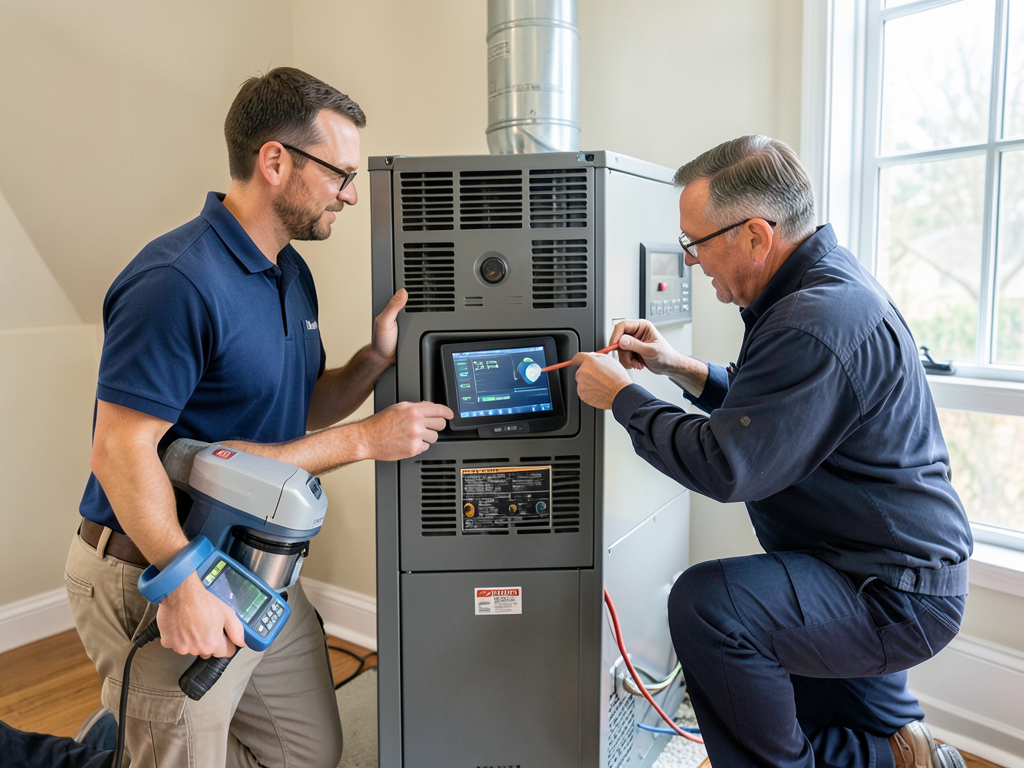
Boiler systems require different diagnostics. We perform combustion analysis to measure flue gas temperature, oxygen levels, and carbon monoxide output. This data reveals whether your boiler is cycling efficiently or wasting fuel. For facilities with steam heat, we inspect pressure reducing valves, condensate return lines, and steam traps. A single failed steam trap can waste thousands of dollars in energy annually.

Industrial heating services for warehouses and manufacturing spaces often involve infrared tube heaters or unit heaters mounted at ceiling height. These systems require careful placement to avoid dead zones and ensure even heat distribution. We use thermal imaging to identify cold spots and adjust burner orifices to match your facility's air exchange rate. Our commercial HVAC heating services include ductwork inspection using static pressure testing to verify airflow matches design specifications. Undersized ductwork creates back pressure that reduces system capacity and increases operating costs.

How We Execute Commercial Heating Projects in Nashville

Commercial Heating Services in Nashville | Minimize Downtime with Industrial-Grade Solutions
01

System Evaluation and Planning

We conduct on-site assessment of your heating infrastructure, measuring current performance against your operational requirements. This includes documenting equipment age, reviewing maintenance history, and identifying code compliance gaps. For multi-zone buildings, we map temperature differentials to determine whether the issue is equipment capacity or distribution. We provide a detailed scope of work with equipment specifications before any work begins.
02

Installation and Integration

Our installation teams work during off-hours to minimize business disruption. We coordinate with your facilities team to ensure adequate temporary heating if we must take systems offline. All work follows Tennessee mechanical codes, with proper permitting and inspection scheduling. We verify electrical connections, gas pressure, and refrigerant charge meet manufacturer specifications. Integration with existing building automation systems requires proper protocol configuration to ensure all components communicate correctly.
03

Testing and Handoff

We perform full system commissioning that includes airflow verification, temperature setpoint calibration, and safety control testing. Your facilities manager receives documentation that includes equipment manuals, warranty information, and recommended maintenance schedules. We train your staff on system operation and provide emergency contact procedures. Final walkthrough ensures you understand how to adjust settings for seasonal changes and how to identify early warning signs of future issues.

Why Nashville Businesses Choose Alpha HVAC

Commercial heating solutions require contractors who understand business operations, not just equipment. We have worked with facilities throughout Davidson County, from the medical office buildings near Vanderbilt University Medical Center to the distribution warehouses along Centennial Boulevard. This experience means we understand the urgency of maintaining uptime.

Tennessee requires mechanical contractors to hold appropriate licenses for commercial work. Our technicians maintain EPA certifications for refrigerant handling and NATE certifications for commercial equipment. This matters because incorrectly sized or installed commercial systems create ongoing problems. We have repaired numerous installations where contractors unfamiliar with commercial applications installed residential-grade equipment in commercial spaces.

Nashville's historic buildings present unique challenges. Structures in Germantown and East Nashville often have limited space for modern HVAC equipment. We specialize in retrofit solutions that provide modern efficiency without compromising building aesthetics or requiring major structural modifications. For newer construction in areas like The Nations or Wedgewood-Houston, we work directly with general contractors during the build-out phase to ensure proper equipment placement and adequate infrastructure.

Our commercial heating contractors understand the financial impact of system failures. When a restaurant loses heat during dinner service or a retail store becomes uncomfortable during holiday shopping season, revenue drops immediately. We maintain relationships with equipment suppliers that allow us to source parts quickly. For critical facilities, we offer preventive maintenance agreements that include priority scheduling and discounted emergency service rates. This proactive approach reduces the likelihood of unexpected failures during peak demand periods.

What to Expect from Commercial Heating Services

Response Time and Availability

Commercial facilities cannot afford extended downtime. We schedule service calls within your operational constraints, including after-hours and weekend availability. For existing maintenance clients, emergency response typically occurs within two hours. New clients receive same-day or next-day scheduling depending on call volume. We maintain a fleet of service vehicles stocked with common commercial components, reducing the need for multiple trips. For planned installations or major repairs, we provide detailed project timelines that account for permitting, equipment lead times, and inspection schedules. Our goal is transparent communication about realistic timeframes, not overpromising and underdelivering.

Comprehensive System Assessment

Our evaluation process goes beyond surface-level inspection. We use digital manometers to measure gas pressure, amp meters to verify electrical draw, and infrared thermometers to identify temperature anomalies. For buildings with multiple heating zones, we document performance in each area to determine whether issues stem from central equipment or distribution problems. You receive a written report that explains findings in business terms, not just technical jargon. This report includes photos of problem areas and prioritized recommendations based on safety concerns, efficiency improvements, and long-term reliability. We discuss options ranging from immediate repairs to phased replacement plans that align with your capital budgets.

Quality Standards and Performance

Commercial HVAC heating services require attention to detail that impacts long-term performance. We follow manufacturer installation guidelines precisely because shortcuts create warranty issues and premature failures. All refrigerant connections are pressure-tested and leak-checked. Gas connections receive soap bubble testing and electronic leak detection. Electrical connections are torqued to specifications and properly secured in junction boxes. We document all work with photos and test results for your facility records. Final commissioning includes running systems through complete heating cycles while monitoring temperatures, pressures, and electrical consumption. You receive baseline performance data that your facilities team can reference during future maintenance to identify when performance degrades.

Ongoing Support and Maintenance

Equipment warranties typically require documented maintenance to remain valid. We offer service agreements that include seasonal tune-ups, filter changes, and safety inspections. These visits catch small problems before they become expensive failures. For boiler systems, we perform annual combustion analysis and cleaning. Rooftop units receive coil cleaning, belt inspection, and control calibration. Our maintenance database tracks service history and alerts us when components approach typical lifespan limits. This allows proactive replacement planning rather than emergency reactions. Agreement clients receive priority scheduling and discounted rates on repairs. We also provide budget planning assistance by forecasting equipment replacement needs based on age and condition assessments.

Frequently Asked Questions

You Have Questions,
We Have Answers

What is the $5000 rule for HVAC? +

The $5000 rule is a quick decision tool for aging commercial HVAC equipment. If the repair cost multiplied by the system age in years exceeds $5000, replacement often makes better financial sense than repair. For example, a $700 repair on an 8-year-old unit equals $5600, suggesting replacement. This guideline helps Nashville facility managers weigh repair costs against diminishing equipment efficiency and rising energy bills. Factor in your building's operational demands, downtime costs, and energy expenses when making the call. This rule provides a starting framework, not an absolute mandate.

How much does a commercial HVAC maintenance cost? +

Commercial HVAC maintenance in Nashville typically costs between $150 and $500 per visit per unit, depending on system size and complexity. Annual service contracts for multi-unit buildings range from $2000 to $10,000 based on tonnage, number of rooftop units, and service frequency. Quarterly maintenance plans reduce emergency breakdowns and extend equipment life. Nashville's humid summers and variable winters increase wear on compressors and heat exchangers, making preventive service essential. Larger facilities with multiple zones or specialized equipment like chillers require higher maintenance budgets. Regular service protects your investment and minimizes costly downtime.

What is the best way to heat a commercial building? +

The best heating solution for commercial buildings in Nashville depends on building size, occupancy patterns, and operating hours. Gas furnaces deliver cost-effective heat for warehouses and retail spaces. Variable refrigerant flow systems offer zone control for multi-tenant buildings. Heat pumps work well in Nashville's moderate climate, providing both heating and cooling. Large facilities often use packaged rooftop units for simplicity and roof space efficiency. Consider your building's insulation quality, ceiling height, and ventilation requirements. Energy recovery ventilators improve indoor air quality while reducing heating costs. Match equipment capacity to actual load calculations, not guesswork.

How much do HVAC installers charge per hour? +

Commercial HVAC installers in Nashville charge between $75 and $150 per hour for labor, with licensed technicians commanding higher rates. Total installation costs depend on project scope, equipment complexity, and site accessibility. Rooftop installations require crane rental and additional labor. Prevailing wage requirements on government contracts increase hourly costs. Material markup, permit fees, and disposal charges add to the final invoice. Multi-day projects for large buildings reduce per-hour costs compared to small service calls. Request itemized quotes separating labor, materials, and overhead. Experience level matters for complex commercial installations requiring sheet metal fabrication and controls integration.

How much does a new HVAC system cost 4000 square feet? +

A complete commercial HVAC system for 4000 square feet in Nashville costs between $20,000 and $60,000, depending on equipment quality, zoning requirements, and building use. Office spaces need different air changes per hour than restaurants or medical facilities. Rooftop packaged units run less expensive than split systems with multiple air handlers. Nashville's climate demands adequate dehumidification capacity beyond simple cooling tonnage. Budget for ductwork modifications, electrical upgrades, crane rental for rooftop placement, and code compliance work. Energy-efficient equipment costs more upfront but reduces monthly utility bills. Building layout and existing infrastructure significantly impact installation complexity.

Is a new HVAC system tax deductible in 2025? +

New commercial HVAC systems qualify for Section 179 deduction in 2025, allowing businesses to deduct the full purchase price in the first year rather than depreciating over time. You can write off up to $1,160,000 for qualifying equipment placed in service during the tax year. Energy-efficient systems meeting specific efficiency ratings may qualify for additional federal tax credits under the Inflation Reduction Act. Nashville businesses should consult their tax advisor to maximize deductions and verify equipment eligibility. Bonus depreciation rules also apply. Timing installation before year-end captures current-year tax benefits.

What is the life expectancy of a commercial HVAC system? +

Commercial HVAC systems in Nashville last 15 to 25 years depending on equipment quality, maintenance frequency, and operating hours. Rooftop units exposed to Tennessee weather experience more wear than indoor equipment. High-use buildings like restaurants or 24-hour facilities see shorter lifespans than office buildings with weekday-only operation. Regular filter changes, coil cleaning, and refrigerant checks extend equipment life. Nashville's humidity accelerates corrosion on condensate pans and cabinet panels. Compressor failure typically signals end of life for packaged units. Proper installation, adequate sizing, and preventive maintenance maximize your return on investment.

What is the 3 minute rule for AC? +

The 3-minute rule prevents compressor damage by requiring a minimum wait time between shutdown and restart. This delay allows refrigerant pressures to equalize throughout the system. Restarting too quickly forces the compressor to start under high pressure, causing excessive electrical draw and mechanical stress. Commercial units typically have built-in time-delay relays to enforce this rule automatically. Nashville building managers should never override this safety feature during troubleshooting. Frequent short cycling indicates thermostat problems, refrigerant issues, or oversized equipment. Proper system design and control settings prevent premature compressor failure.

What is the most expensive HVAC repair? +

Compressor replacement ranks as the most expensive commercial HVAC repair, costing $3000 to $15,000 depending on unit size and refrigerant type. Scroll compressors in larger tonnage rooftop units drive higher costs. Heat exchanger replacement in gas furnaces runs $2000 to $8000 due to labor intensity. Nashville businesses often choose full system replacement when major components fail on equipment over 12 years old. Evaporator coil replacement costs $2000 to $5000 plus refrigerant recharge. Control board failures are less expensive but can idle entire buildings. Regular maintenance identifies small problems before they escalate.

Why don't contractors like heat pumps? +

Contractors hesitate on heat pumps due to homeowner misconceptions about performance in extreme cold, not equipment capability. Modern commercial heat pumps work efficiently in Nashville's climate, delivering both heating and cooling. Installation requires different sizing calculations than traditional split systems, and some contractors lack proper training. Heat pumps need backup heat strips for temperatures below 25 degrees, adding complexity. Service calls increase when building occupants misunderstand auxiliary heat operation. Refrigerant handling requires specific certification. Experienced commercial contractors recognize heat pumps offer energy savings and simplified equipment for Nashville's moderate winters.

Why Nashville's Building Diversity Demands Specialized Commercial Heating Expertise

Nashville's commercial building stock ranges from pre-1900 brick warehouses converted to creative offices in The Gulch to modern LEED-certified facilities near Cool Springs. This diversity means commercial heating companies cannot use one-size-fits-all approaches. Historic structures often lack adequate insulation and operate with steam or gravity heating systems that require specialized knowledge. Newer buildings have complex building automation systems that integrate HVAC with lighting and security. Industrial facilities near the Cumberland River and along Briley Parkway face different ventilation requirements than medical offices or restaurants. Understanding these variations separates competent commercial heating contractors from those who primarily handle residential work.

Tennessee's mechanical licensing requirements exist to protect building owners from substandard work. Commercial heating solutions must meet state and local codes that address ventilation rates, combustion air supply, and emergency shutoff accessibility. Nashville's Metropolitan Development and Housing Agency enforces these standards through permitting and inspection processes. Working with licensed commercial heating contractors ensures your project passes inspection without delays or costly rework. Our relationships with local inspectors and familiarity with Nashville's specific code interpretations streamline the approval process. This local knowledge matters when you need systems operational quickly and correctly.
HVAC Services in The Nashville Area

Alpha HVAC is a local business dedicated to serving the entire community. Our centralized location allows us to provide swift and reliable service to all surrounding areas. Whether you need a repair, a new installation, or routine maintenance, you can trust our team to be there for you when it matters most. Explore our service area on the map below to see how we can help you with all your heating and cooling needs.

Address:
Alpha HVAC Nashville, 1001 3rd Ave N, Nashville, TN, 37201

Additional Services We Offer

Our news updates

Latest Articles & News from The Blogs

Understanding the difference between a furnace and a boiler for older Middle Tennessee homes Choosing the right heating system for…

Understanding the difference between a furnace and a boiler for older Middle Tennessee homes

Understanding the difference between a furnace and a boiler for older Middle Tennessee homes Choosing the right heating system for…

How to choose a quiet HVAC system that won't disturb your neighbors in Brentwood

How to choose a quiet HVAC system that won't disturb your neighbors in Brentwood Living in Brentwood means enjoying peaceful…

Keeping your boat house or lakeside cabin comfortable with a mini split system

Keeping your boat house or lakeside cabin comfortable with a mini split system\n\nThe humid summers and mild winters of Middle…

Contact Us

Do not let heating problems disrupt your business operations. Call Alpha HVAC Nashville at (615) 552-1922 for commercial heating services that prioritize your uptime and budget. We provide transparent assessments and solutions designed for Nashville's commercial facilities.