






Menu

Building Automation Systems in Nashville – Keep Your Facility Running Without Disrupting Operations

Ironwood HVAC Memphis deploys Building Automation Systems engineered for zero downtime and total climate control in Nashville's demanding commercial environments.

Slider Image 1
Slider Image 2
Slider Image 3
Slider Image 4
Slider Image 5
Slider Image 7
Slider Image 8
Slider Image 9
Slider Image 10
Slider Image 11

Why Commercial Facilities in Nashville Need Intelligent Building Control Systems

Nashville's extreme seasonal swings put constant pressure on commercial HVAC infrastructure. Summer temperatures routinely exceed 90 degrees with humidity levels above 70 percent. Winter brings freeze-thaw cycles that stress outdated pneumatic controls and electromechanical thermostats.

Your facility operates on thin margins. A single hour of climate failure in a medical office costs you patients. A day of downtime in a distribution center stops your supply chain. Manual climate control wastes energy and pulls staff away from revenue-generating work.

Building Automation Systems eliminate these vulnerabilities. Direct Digital Controls monitor every zone in real time. Energy Management Systems reduce waste without sacrificing occupant comfort. Commercial HVAC Controls adjust airflow based on actual occupancy data, not guesswork.

Nashville's aging commercial building stock compounds the problem. Many properties still run on analog systems installed in the 1980s. These systems cannot integrate with modern equipment. They waste energy conditioning empty spaces. They fail without warning because they lack diagnostic capabilities.

Building Management Systems give you visibility into your entire mechanical infrastructure from a single interface. You see which zones are overcooling. You catch refrigerant leaks before they become expensive repairs. You document energy usage for LEED certification or utility rebate applications.

The alternative is reactive maintenance. You replace components after they fail. You dispatch technicians to adjust setpoints manually. You pay peak demand charges because your system cannot shed load during grid stress events.

Building Control Systems solve these operational inefficiencies. They extend equipment life by preventing short cycling. They lower insurance premiums by providing fire alarm integration and automatic smoke evacuation. They protect revenue by maintaining precise conditions in server rooms, laboratories, and clean manufacturing environments.

Why Commercial Facilities in Nashville Need Intelligent Building Control Systems
How We Deploy Building Automation Systems for Nashville Commercial Properties

How We Deploy Building Automation Systems for Nashville Commercial Properties

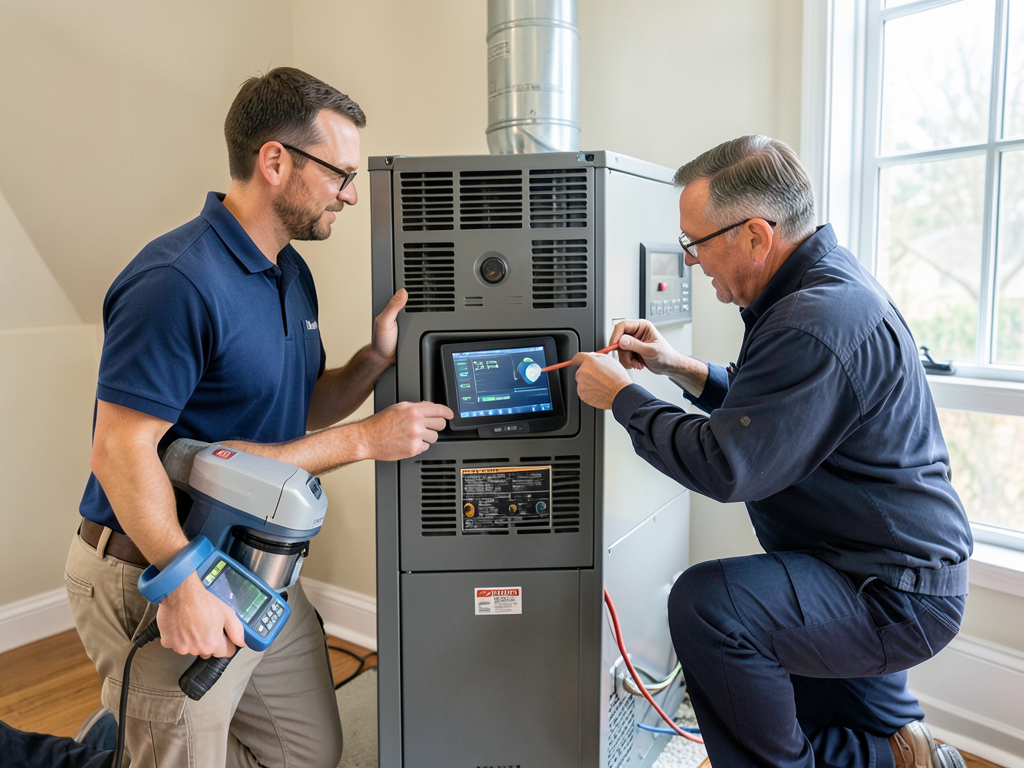
We start with a mechanical audit. Our team maps every air handler, chiller, boiler, and fan coil in your facility. We document existing control architecture. We identify orphaned equipment running on isolated controllers. We measure actual airflow against design specifications to find duct leakage and damper failures.

This audit reveals integration opportunities. A retail property might have three separate systems controlling HVAC, lighting, and access control. We unify these into a single Building Management System that coordinates occupancy sensors with ventilation schedules. When the last employee badges out, the system automatically switches to unoccupied mode.

Next, we design the Direct Digital Controls network. We specify field controllers with enough processing power to handle complex sequences. We select sensors with NIST-traceable calibration for spaces requiring regulatory compliance. We design redundant communication paths so a single network failure cannot disable your entire system.

Installation happens in phases to avoid disrupting your operations. We pre-program controllers in our shop. We install sensors and actuators during off-hours. We commission one zone at a time, verifying setpoints and alarm thresholds before moving to the next area.

Integration with existing equipment requires expertise. A 20-year-old chiller might use a proprietary protocol that modern systems cannot read. We install protocol gateways that translate legacy signals into BACnet or Modbus formats. This protects your capital investment while giving you modern monitoring capabilities.

We program custom sequences based on your actual operational requirements. A hospital needs different ventilation strategies than a warehouse. A restaurant requires kitchen exhaust coordination that a law office does not. Generic factory settings waste energy and create comfort complaints.

The final step is operator training. Your maintenance staff learns how to adjust schedules, acknowledge alarms, and generate energy reports. We provide documentation showing every sensor location, every control valve, and every sequence of operation. This knowledge transfer ensures your team can maintain system performance long after we leave.

What Happens During Your Building Automation System Installation

Building Automation Systems in Nashville – Keep Your Facility Running Without Disrupting Operations
01

Site Assessment and Load Analysis

We measure your facility's actual thermal loads using data loggers and power meters. We analyze utility bills to identify demand spikes and consumption patterns. We interview your facilities team to understand comfort complaints and operational constraints. This data drives controller sizing and sensor placement. We identify code compliance gaps and life safety integration requirements before ordering equipment.
02

System Integration and Programming

We configure Energy Management Systems to communicate with your existing equipment using open protocols like BACnet, Modbus, and LonWorks. We program optimal start algorithms that pre-condition spaces before occupancy without wasting energy. We create alarm hierarchies that escalate critical failures immediately while filtering nuisance alarms. We integrate utility meter data for real-time energy tracking and demand response participation.
03

Commissioning and Performance Validation

We test every control sequence under actual load conditions. We verify that dampers modulate correctly, that valves achieve full stroke, and that sensors read accurately across their operating range. We simulate failure modes to confirm that alarms trigger properly. We provide trend logs documenting system performance against your design specifications. You receive a commissioning report showing achieved energy savings and confirming code compliance.

Why Nashville Facilities Trust Ironwood HVAC Memphis for Building Control Systems

Nashville's commercial construction boom created a patchwork of control systems. A building might have one contractor's equipment on floors 1 through 3 and a different brand on floors 4 through 6. Previous integrators often walked away from compatibility problems, leaving you with isolated systems that cannot share data.

We specialize in multi-vendor integration. Our technicians hold manufacturer certifications across competing platforms. We have successfully integrated Siemens controllers with Johnson Controls field devices and Trane air handlers. This expertise matters when you need a single dashboard showing energy consumption across your entire portfolio.

Metro Nashville's mechanical code requires specific ventilation rates for commercial occupancies. ASHRAE 62.1 compliance demands CO2-based demand control ventilation in high-density spaces. Our Building Automation Systems monitor indoor air quality continuously and modulate outside air intake to meet code minimums without over-ventilating during low occupancy periods.

Local utility providers offer substantial rebates for buildings that participate in demand response programs. Nashville Electric Service pays commercial customers to shed load during peak events. Our Energy Management Systems automate this process. When NES issues a demand response signal, your system raises cooling setpoints by two degrees and dims non-critical lighting without manual intervention. You collect rebate payments while reducing demand charges.

Nashville's position in Tornado Alley requires life safety integration. Our Building Management Systems coordinate with fire alarm panels and emergency generators. When smoke detectors activate, the system shuts down air handlers in the affected zone to prevent smoke migration while maintaining pressurization in exit stairwells. During power outages, the system prioritizes critical loads and prevents generator overload.

We maintain local inventory of common sensors, actuators, and controllers. When a sensor fails at 2 PM on a Friday, you do not wait until Monday for a shipping department to process your order. We stock replacement parts for the equipment we install. This reduces your mean time to repair and protects your business continuity.

What You Get With Professional Building Automation System Deployment

Predictable Project Timeline

Most commercial Building Automation Systems require 4 to 12 weeks from contract signing to final commissioning. Timeline depends on facility size, existing infrastructure condition, and integration complexity. We provide a detailed project schedule before work begins. This schedule identifies milestones, equipment delivery dates, and required facility shutdowns. We coordinate with your operations team to minimize business disruption. Installation happens in phases so you maintain climate control throughout the building. We communicate progress weekly and flag any delays immediately.

Comprehensive System Assessment

Initial consultation includes a detailed facility walkthrough and mechanical equipment inventory. We review your utility bills to establish baseline energy consumption. We analyze your current control strategy to identify inefficiencies and failure points. You receive a written proposal documenting recommended upgrades, expected energy savings, and available utility rebates. This assessment identifies compatibility issues before they become installation problems. We provide equipment lifecycle analysis showing when aging components will require replacement. The goal is complete transparency about scope, cost factors, and return on investment.

Measured Performance Outcomes

Properly deployed Building Control Systems reduce energy consumption by 15 to 30 percent compared to manual or pneumatic controls. You gain real-time visibility into equipment performance through web-based dashboards accessible from any device. Automated fault detection identifies problems before they cause comfort complaints or equipment damage. You receive monthly performance reports showing energy usage trends, alarm history, and optimization opportunities. The system documents runtime hours for predictive maintenance scheduling. This data-driven approach extends equipment life and reduces emergency repair costs.

Ongoing System Support

We provide operator training ensuring your staff can manage daily operations without vendor dependency. You receive complete system documentation including network diagrams, sensor schedules, and sequence of operation narratives. Planned maintenance agreements include quarterly system health checks, software updates, and sensor calibration verification. We offer remote monitoring services that catch system drift before it impacts comfort or energy usage. When you need changes to setpoints or schedules, we provide phone support and remote programming assistance. Annual recommissioning ensures your system maintains peak performance as your facility requirements evolve.

Frequently Asked Questions

You Have Questions,
We Have Answers

What are some examples of building automation systems? +

Building automation systems integrate HVAC controls, lighting management, access control, and energy monitoring into one platform. Common examples include Johnson Controls Metasys, Schneider Electric EcoStruxure, and Siemens Desigo CC. These systems manage temperature setpoints, occupancy-based lighting schedules, variable air volume units, and chiller optimization. In Nashville commercial buildings, automation systems also manage humidity control year-round due to Tennessee's high moisture levels. Other examples include fire alarm integration, elevator monitoring, and water leak detection. Modern systems use IP networks and cloud dashboards to provide facility managers real-time data access from any location.

What are the top 5 BMS systems? +

The top five building management systems include Johnson Controls Metasys, Honeywell Forge, Schneider Electric EcoStruxure, Siemens Desigo, and Trane Tracer. These platforms dominate commercial installations across Nashville due to robust HVAC integration, scalability, and third-party compatibility. Johnson Controls and Honeywell lead in healthcare and educational facilities, while Schneider and Siemens are common in Class A office towers downtown. Trane Tracer performs well in mixed-use developments where chiller plants and rooftop units coexist. Selection depends on your existing equipment, IT infrastructure, and long-term facility goals. Each system offers different strengths in analytics, cybersecurity, and vendor support.

What is a typical BMS system? +

A typical BMS system consists of field controllers, sensors, actuators, a central server, and user interface software. Field controllers communicate with HVAC equipment, lighting panels, and mechanical systems via BACnet or Modbus protocols. Sensors measure temperature, CO2 levels, pressure, and occupancy. Actuators adjust dampers, valves, and variable frequency drives based on programmed sequences. The central server stores trend data and runs scheduling algorithms. Nashville facilities use these systems to manage cooling loads during humid summers and prevent freeze-ups in winter. The user interface allows operators to adjust setpoints, acknowledge alarms, and generate energy reports for code compliance.

What is SCADA vs BMS? +

SCADA monitors and controls industrial processes like water treatment plants, power grids, and manufacturing lines. BMS manages commercial building systems like HVAC, lighting, and access control. SCADA focuses on real-time process control with high-speed data acquisition and redundancy for critical infrastructure. BMS prioritizes occupant comfort, energy efficiency, and equipment runtime optimization. SCADA uses RTUs and PLCs with proprietary protocols. BMS uses open protocols like BACnet and LonWorks. In Nashville, you see SCADA at the water treatment facility on Omohundro Place and BMS in office towers along West End Avenue. Both collect data, but serve different operational goals and regulatory requirements.

What are the 4 types of automation systems? +

The four types of automation systems are fixed automation, programmable automation, flexible automation, and integrated automation. Fixed automation handles repetitive tasks with dedicated equipment. Programmable automation allows reprogramming for different operations. Flexible automation adapts to varying production requirements without manual intervention. Integrated automation combines multiple systems into one networked platform. In commercial buildings, integrated automation dominates because facility managers need HVAC, lighting, and security to communicate. Nashville office buildings and hospitals use integrated platforms to reduce energy waste, streamline maintenance, and meet Tennessee commercial building codes. This approach cuts operational costs and improves equipment lifespan through predictive analytics.

What are the three types of BMS? +

The three types of BMS are centralized, distributed, and hybrid systems. Centralized BMS routes all data and control through one main server, common in smaller Nashville office buildings. Distributed BMS spreads intelligence across multiple field controllers, reducing network traffic and improving reliability in campus environments like Vanderbilt Medical Center. Hybrid BMS combines both approaches, using distributed controllers with centralized oversight for redundancy. Nashville facilities choose based on building size, network infrastructure, and uptime requirements. Distributed systems handle controller failures better but cost more upfront. Centralized systems simplify troubleshooting but create single points of failure. Architecture drives the decision.

Who is the leader in building automation? +

Johnson Controls leads the building automation market globally with a strong presence across Nashville commercial properties. Honeywell and Schneider Electric follow closely with significant installations in healthcare and data centers. Leadership depends on your sector and equipment base. Johnson Controls dominates in retrofits of older buildings downtown due to backward compatibility. Siemens holds market share in new construction along the Gulch and West End corridors. The leader for your facility depends on existing infrastructure, IT security requirements, and vendor support availability. Nashville has certified integrators for all major brands, so focus on long-term service agreements and local technical response times.

What is the difference between building automation systems and BMS? +

Building automation systems and BMS refer to the same technology in most contexts. BMS originally described basic monitoring and control of mechanical systems. Building automation systems expanded that definition to include lighting, access control, fire alarms, and energy management in one integrated platform. The terms are now interchangeable in Nashville commercial real estate. Some vendors use BMS for legacy products and building automation for cloud-connected platforms with advanced analytics. Functionally, both manage HVAC equipment, monitor energy consumption, and optimize operational efficiency. The distinction matters more in vendor marketing than actual system capability. Choose based on feature sets and integration requirements.

Who makes the best BMS? +

The best BMS depends on your building type, existing equipment, and operational priorities. Johnson Controls Metasys excels in healthcare and educational facilities due to robust alarm management and reporting. Honeywell Forge leads in cloud analytics and cybersecurity for Class A office buildings. Schneider Electric EcoStruxure performs well in data centers requiring precise environmental control. Siemens Desigo offers strong fire alarm integration for mixed-use developments. Trane Tracer integrates seamlessly with Trane HVAC equipment common in Nashville. Evaluate based on your facility size, IT infrastructure, vendor support response times in Middle Tennessee, and total cost of ownership over ten years.

What are the four basic BMS tasks? +

The four basic BMS tasks are monitoring, control, optimization, and reporting. Monitoring tracks real-time data from sensors measuring temperature, humidity, pressure, and equipment status. Control adjusts actuators and valves to maintain setpoints and respond to occupancy schedules. Optimization uses algorithms to reduce energy consumption while maintaining comfort, critical during Nashville's hot summers and cold snaps. Reporting generates compliance documentation, utility tracking, and maintenance logs required by Tennessee commercial building codes. These tasks run continuously to prevent equipment failures, reduce operational costs, and extend asset lifespan. Effective BMS execution requires proper commissioning and ongoing operator training.

How Nashville's Climate Extremes Demand Intelligent Building Automation

Nashville experiences 55 days per year above 90 degrees and regular winter lows below freezing. This 80-degree annual temperature swing stresses mechanical equipment and creates comfort control challenges that manual systems cannot solve efficiently. Summer humidity routinely exceeds 70 percent, requiring precise dehumidification in commercial spaces to prevent mold growth and occupant complaints. Building Automation Systems adjust ventilation rates and cooling capacity based on actual outdoor conditions, not static setpoints programmed years ago. Energy Management Systems prevent the freeze-thaw damage common in Nashville by monitoring outdoor temperatures and activating heat trace systems before pipes reach critical temperatures.

Nashville's rapid commercial development created demand for contractors with multi-system integration expertise. Many properties contain equipment from three or four manufacturers installed during different construction phases. Local building officials require ASHRAE 90.1 energy code compliance for new construction and major renovations. Direct Digital Controls provide the monitoring and documentation needed to pass Metro Development and Housing Agency inspections. Properties seeking LEED certification need verified energy data that only Building Management Systems can provide. Choosing a local integration partner means faster service response and familiarity with Metro Nashville permitting requirements that out-of-state contractors lack.

HVAC Services in The Nashville Area

Alpha HVAC is a local business dedicated to serving the entire community. Our centralized location allows us to provide swift and reliable service to all surrounding areas. Whether you need a repair, a new installation, or routine maintenance, you can trust our team to be there for you when it matters most. Explore our service area on the map below to see how we can help you with all your heating and cooling needs.

Address:
Alpha HVAC Nashville, 1001 3rd Ave N, Nashville, TN, 37201

Additional Services We Offer

Our news updates

Latest Articles & News from The Blogs

Understanding the difference between a furnace and a boiler for older Middle Tennessee homes Choosing the right heating system for…

Understanding the difference between a furnace and a boiler for older Middle Tennessee homes

Understanding the difference between a furnace and a boiler for older Middle Tennessee homes Choosing the right heating system for…

How to choose a quiet HVAC system that won't disturb your neighbors in Brentwood

How to choose a quiet HVAC system that won't disturb your neighbors in Brentwood Living in Brentwood means enjoying peaceful…

Keeping your boat house or lakeside cabin comfortable with a mini split system

Keeping your boat house or lakeside cabin comfortable with a mini split system\n\nThe humid summers and mild winters of Middle…

Contact Us

Stop losing money to outdated climate control. Call Ironwood HVAC Memphis at (615) 552-1922 for a comprehensive facility assessment. We identify energy waste and provide a detailed proposal showing exactly how Building Automation Systems will reduce your operating costs.