





Menu

Short Cycling in Nashville – Fast HVAC Diagnosis to Stop Energy Waste and System Failure

When your air conditioner or furnace kicks on and off every few minutes, you're burning money and shortening your system's lifespan. Alpha HVAC Nashville pinpoints the root cause of short cycling fast and fixes it right the first time.

Slider Image 1
Slider Image 2
Slider Image 3
Slider Image 4
Slider Image 5
Slider Image 7
Slider Image 8
Slider Image 9
Slider Image 10
Slider Image 11

Why Nashville HVAC Systems Are Prone to Rapid Cycling

You notice your AC or furnace turning on and off repeatedly, sometimes cycling every three to five minutes. The house never reaches the temperature you set. Your energy bill jumps. This is HVAC rapid cycling, and it signals a mechanical or control issue that will destroy your compressor or heat exchanger if you ignore it.

Nashville's climate makes short cycling worse. High summer humidity forces your AC to work harder, and when refrigerant levels drop or the evaporator coils freeze, the system kicks on and off to protect itself. In winter, our temperature swings between freezing nights and mild afternoons confuse thermostats and cause furnace short cycling when the system overshoots the setpoint.

Your air conditioner short cycle might stem from an oversized unit installed by a contractor who guessed your load calculation. Many homes in East Nashville and Germantown were retrofitted with central air decades after construction, and the ductwork was never properly sized. The result is a system that satisfies the thermostat too quickly, shuts down, then restarts when the unconditioned air floods back.

Dirty air filters, failing capacitors, low refrigerant charge, and malfunctioning pressure switches all cause your system to kick on and off. Each cycle stresses the compressor and blower motor. The repair bill grows every day you wait.

Why Nashville HVAC Systems Are Prone to Rapid Cycling
Our Diagnostic Process for AC and Furnace Short Cycling

Our Diagnostic Process for AC and Furnace Short Cycling

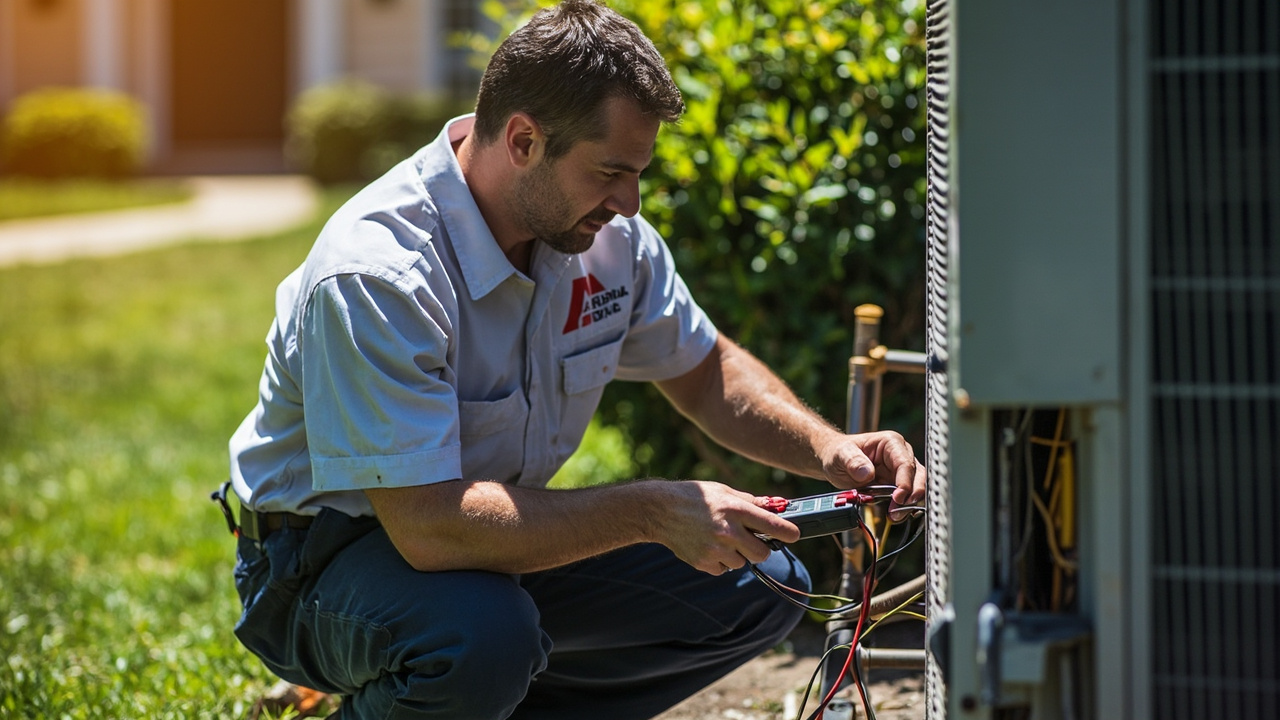
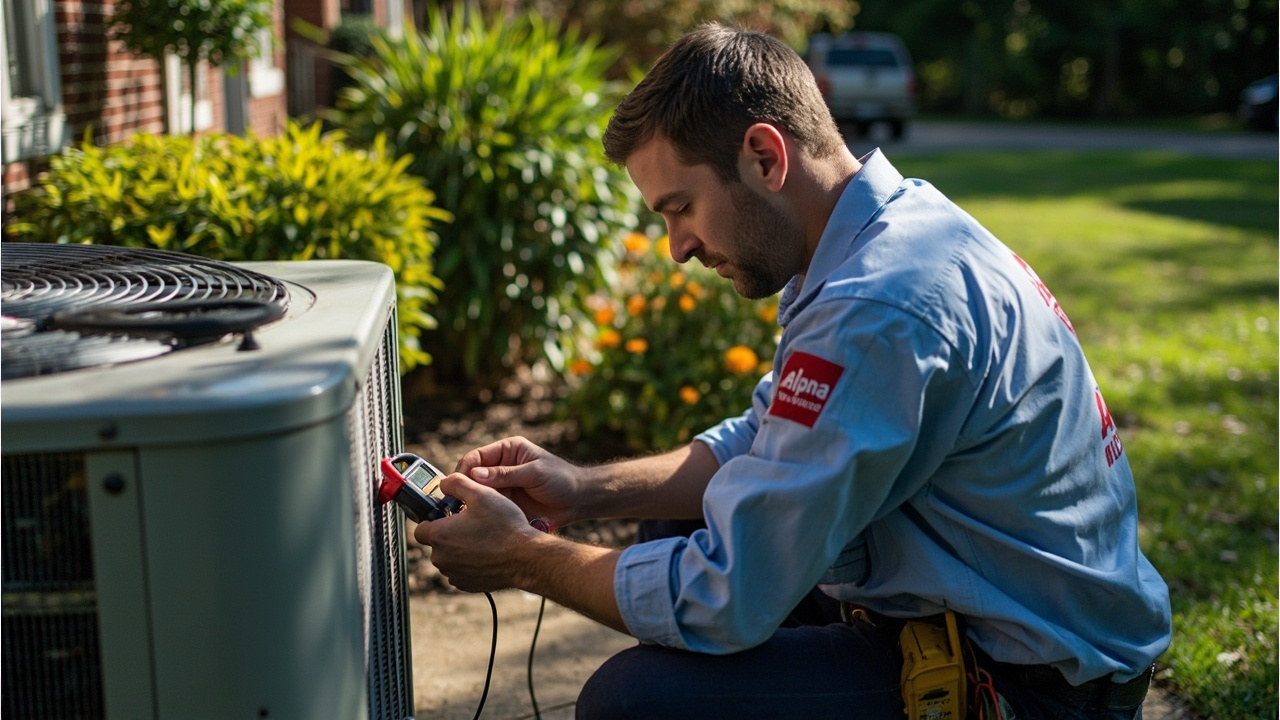
We do not guess. We use a digital multimeter, manifold gauges, and infrared thermography to isolate the exact failure point. Most techs swap parts until something works. We measure amperage draw, refrigerant subcooling and superheat, airflow across the coil, and thermostat cycling behavior. This approach saves you money and prevents repeat service calls.

First, we check the air filter and blower motor. A clogged filter drops airflow below the minimum CFM your evaporator coil needs, causing the low-pressure switch to trip and shut down the compressor. If the blower motor capacitor is weak, the motor cannot spin fast enough to move air, and the system short cycles on high head pressure.

Next, we measure refrigerant charge. Low refrigerant causes the evaporator coil to freeze. The system shuts down, the ice melts, and the cycle repeats. We check for leaks at the service valves, flare fittings, and coil braze joints. If we find a leak, we repair it, pull a vacuum, and recharge the system to the manufacturer's specification.

We test the thermostat and control board. A failing thermostat can send erratic signals, causing the system to turn on and off randomly. If the control board relay is stuck or the flame sensor on a gas furnace is dirty, the unit will cycle rapidly. We clean or replace the faulty component and verify the cycle timing with a stopwatch.

How We Fix Short Cycling Issues in Your Home

Short Cycling in Nashville – Fast HVAC Diagnosis to Stop Energy Waste and System Failure
01

Initial System Analysis

We arrive with diagnostic tools and observe your system through multiple cycles. You show us the thermostat behavior, and we document cycle duration and frequency. We inspect the outdoor condenser unit and indoor air handler for obvious mechanical failures, listen for unusual compressor noise, and check electrical connections. This gives us the failure pattern before we open any panels.
02

Targeted Component Testing

We test refrigerant pressures, airflow volume, capacitor microfarads, and thermostat voltage. If the suction pressure drops too low, we know the coil is starving for refrigerant or airflow. If the head pressure spikes, the condenser is dirty or the fan motor is failing. We use amp clamps to measure compressor draw and compare it to the nameplate rating. This isolates the defective part.
03

Repair and Cycle Verification

We replace the failed component, whether it is a capacitor, contactor, thermostat, or pressure switch. If we add refrigerant, we verify the charge with superheat and subcooling measurements. We let the system run through five complete cycles and time each one. You see the unit operate smoothly for fifteen to twenty minutes per cycle, and the house reaches the setpoint. We explain what failed and why.

Why Alpha HVAC Nashville Understands Local System Failures

Nashville HVAC systems face unique stresses. Our summer dew points regularly hit seventy degrees, which means your AC runs longer and works harder to dehumidify. Systems installed in the 1990s and early 2000s often used R-22 refrigerant, and as those units age, the refrigerant leaks and the charge drops. We know how to retrofit these systems or recommend replacement when the repair cost exceeds half the value of a new unit.

Many homes in Belmont, Hillsboro Village, and 12 South have undersized ductwork because central air was added after the house was built. The original gravity furnace used large ducts, but the newer AC system needs higher velocity and smaller returns. This mismatch causes the evaporator coil to freeze and the system to short cycle. We measure static pressure and recommend duct modifications when necessary.

We also understand the local building code. Nashville requires a permit for HVAC changeouts, and the new system must meet current efficiency standards. Some contractors skip the permit to save time. We pull the permit, schedule the inspection, and ensure your system passes. This protects your home's resale value and keeps your homeowner's insurance valid.

You get a technician who has worked on thousands of Nashville systems, not someone reading a troubleshooting chart for the first time. We know the common failure points for Carrier, Trane, Lennox, and Rheem equipment in this climate, and we stock the parts that fail most often.

What Happens When You Call Alpha HVAC Nashville

Same-Day Diagnostic Visits

We schedule most service calls within four to six hours. If your system is short cycling in the middle of a heat wave or cold snap, we prioritize your call and arrive the same day. You are not waiting three days while your energy bill climbs. Our techs carry the most common repair parts on the truck, so if the fix is a capacitor, contactor, or thermostat, we complete the repair during the first visit. You get cold air or heat restored quickly.

Thorough System Evaluation

We do not just fix the symptom. We check the entire system to identify underlying issues. If your capacitor failed, we test the compressor and blower motor to see if they are drawing excessive amperage. If your refrigerant is low, we find the leak before we recharge the system. You get a written diagnostic report that explains what we found, what we recommend, and why. No surprise charges. No upselling. Just the truth about your equipment.

Repairs That Last

We use OEM parts or high-quality aftermarket equivalents. Cheap capacitors fail again in six months. We install components rated for Nashville's climate and your system's load. After the repair, we test the system under normal operating conditions and verify the cycle timing. You see the unit run smoothly before we leave. If the repair does not hold, we come back and make it right. Our work reflects our reputation in this city.

Maintenance Plans to Prevent Future Issues

Short cycling often results from deferred maintenance. A dirty coil, clogged filter, or weak capacitor will eventually cause the system to fail. We offer scheduled maintenance visits where we clean the coils, test the capacitors, check the refrigerant charge, and inspect the ductwork. You catch small problems before they become expensive repairs. Most of our maintenance customers avoid emergency calls entirely. You get peace of mind and lower energy bills.

Frequently Asked Questions

You Have Questions,
We Have Answers

What is the most common cause of short cycling? +

The most common cause of short cycling in Nashville is a dirty air filter. When your filter clogs with dust, pollen, and humidity-driven mold spores, airflow drops. Your system overheats and shuts down early to protect itself. Other frequent culprits include refrigerant leaks, oversized units, and thermostat placement issues. Nashville's high summer humidity accelerates filter clogging. If your unit runs for less than 10 minutes before shutting off, check your filter first. Replace it monthly during peak cooling season. If the problem persists, you need a technician to diagnose refrigerant levels or compressor issues.

How do you fix short cycling? +

Fixing short cycling starts with the filter. Replace it if dirty. Next, check your thermostat. Make sure it is level, away from heat sources, and functioning correctly. Inspect your outdoor unit for debris blocking airflow. Clear leaves, grass clippings, and dirt from the condenser coils. If these steps do not solve it, you need professional help. A technician will check refrigerant charge, test the compressor, inspect electrical connections, and verify your system is properly sized for your home. Nashville's climate demands precise refrigerant levels. Low charge from leaks is a common fix requiring EPA-certified handling.

How many minutes is considered short cycling? +

Short cycling means your AC runs for less than 7 to 10 minutes before shutting off. A healthy cooling cycle should last 15 to 20 minutes. In Nashville's summer heat, expect your system to run longer during peak afternoon hours. If your unit clicks on, runs briefly, then shuts off repeatedly, that is short cycling. This pattern wastes energy, spikes your electric bill, and wears out components fast. Your compressor suffers the most damage. Count the minutes from startup to shutdown. Anything under 10 minutes per cycle indicates a problem that needs diagnosis.

What is the meaning of short cycling? +

Short cycling means your HVAC system turns on and off too frequently without completing a full cooling or heating cycle. Instead of running 15 to 20 minutes to reach your set temperature, the unit shuts down after just a few minutes. This happens when something tricks the system into thinking the job is done, or a safety feature forces early shutdown. The compressor, your system's most expensive part, takes the biggest hit. Each startup draws heavy power and creates mechanical stress. Over time, short cycling kills compressor life and doubles your energy costs in Nashville's long cooling season.

Can a thermostat cause short cycling? +

Yes, a faulty thermostat commonly causes short cycling. If your thermostat sits near a heat source like a lamp, sunny window, or kitchen appliance, it reads false temperatures. It thinks your home is cooler than it actually is and shuts the system off early. Older mechanical thermostats lose calibration over time. Loose wiring or dead batteries also create false signals. In Nashville's older homes, thermostats mounted on exterior walls can read temperature swings incorrectly. Try relocating your thermostat to an interior wall away from direct sunlight or heat sources. Upgrade to a programmable model for better accuracy.

How to tell if an AC compressor is short cycling? +

Listen and watch your outdoor unit. If the compressor fan runs for less than 10 minutes before shutting off, then restarts shortly after, that is short cycling. You will hear a distinct click when the compressor kicks on, followed by a hum. The fan should run steadily for 15 to 20 minutes. Place your hand near the outdoor unit. You should feel consistent warm air exhaust. If the airflow stops and starts repeatedly, your compressor is short cycling. Check your thermostat display too. If it shows the system satisfied before your home reaches set temperature, the compressor is shutting down prematurely.

What is the $5000 AC rule? +

The $5000 AC rule is a replacement guideline. Multiply your system's age by the repair cost estimate. If the total exceeds $5000, replace the unit instead of repairing it. For example, if your 12-year-old AC needs a $600 repair, that equals $7200, so replace it. If your 8-year-old unit needs a $400 repair, that equals $3200, so repair it. This rule helps Nashville homeowners avoid throwing money at aging equipment. Factor in efficiency gains too. New units use 30 to 40 percent less electricity than 10-year-old models, offsetting replacement costs through lower bills.

How to unclog an expansion valve in a car? +

This question does not relate to HVAC short cycling in homes. Automotive AC systems differ significantly from residential units. If you meant an HVAC expansion valve, that requires professional service. The expansion valve meters refrigerant flow into your evaporator coil. When it clogs with contaminants or ice, your system short cycles or loses cooling capacity. Nashville's humidity can cause ice buildup if airflow drops. A technician will recover refrigerant, replace the valve, evacuate moisture from lines, and recharge the system to manufacturer specs. Never attempt this yourself. Refrigerant handling requires EPA certification and specialized equipment.

Can dirty coils cause short cycling? +

Yes, dirty coils absolutely cause short cycling. Your evaporator coil inside the air handler and condenser coil outside both need clean surfaces to transfer heat. When Nashville's pollen, dust, and cottonwood fuzz coat your outdoor coil, heat cannot escape. The compressor overheats and shuts down early for protection. Inside, a dirty evaporator coil freezes up, blocking airflow and triggering safety switches. Clean your outdoor coil yearly with a garden hose sprayed from inside out. Never use a pressure washer, which bends fins. Indoor coils need professional cleaning during annual maintenance to prevent short cycling.

What is the 75% rule in cycling? +

The 75 percent rule in cycling refers to exercise training zones, not HVAC systems. It means training at 75 percent of maximum heart rate for endurance building. This has no connection to short cycling in air conditioning. If you meant HVAC capacity rules, technicians use Manual J load calculations to size equipment correctly. An oversized unit runs in short bursts because it cools too fast, never running long enough to remove humidity. In Nashville's muggy climate, proper sizing matters. Your system must run long cycles to dehumidify effectively, not just cool air.

How Nashville's Humidity and Temperature Swings Trigger HVAC Short Cycling

Nashville averages eighty-five percent humidity in summer mornings, and your AC must remove moisture as well as heat. When the evaporator coil ices over from low refrigerant or restricted airflow, the system shuts down to protect the compressor. The ice melts, the system restarts, and the cycle repeats. Winter brings rapid temperature shifts from thirty degrees at night to sixty degrees by afternoon. Thermostats struggle to maintain setpoint, and furnaces short cycle as the outdoor temperature rises faster than the indoor space can respond. These local climate patterns accelerate wear on your equipment.

Alpha HVAC Nashville has serviced residential and light commercial systems across Davidson County for years. We understand the quirks of older homes in East Nashville, the oversized units common in new construction in Donelson, and the ductwork challenges in historic properties near Vanderbilt. Local building inspectors know our work, and we maintain relationships with suppliers who stock parts for every major brand. When you call a national chain, you get a technician from another city reading a manual. When you call us, you get someone who has fixed this exact problem in your neighborhood.
HVAC Services in The Nashville Area

Alpha HVAC is a local business dedicated to serving the entire community. Our centralized location allows us to provide swift and reliable service to all surrounding areas. Whether you need a repair, a new installation, or routine maintenance, you can trust our team to be there for you when it matters most. Explore our service area on the map below to see how we can help you with all your heating and cooling needs.

Address:
Alpha HVAC Nashville, 1001 3rd Ave N, Nashville, TN, 37201

Additional Services We Offer

Our news updates

Latest Articles & News from The Blogs

Understanding the difference between a furnace and a boiler for older Middle Tennessee homes Choosing the right heating system for…

Understanding the difference between a furnace and a boiler for older Middle Tennessee homes

Understanding the difference between a furnace and a boiler for older Middle Tennessee homes Choosing the right heating system for…

How to choose a quiet HVAC system that won't disturb your neighbors in Brentwood

How to choose a quiet HVAC system that won't disturb your neighbors in Brentwood Living in Brentwood means enjoying peaceful…

Keeping your boat house or lakeside cabin comfortable with a mini split system

Keeping your boat house or lakeside cabin comfortable with a mini split system\n\nThe humid summers and mild winters of Middle…

Contact Us

Call Alpha HVAC Nashville at (615) 552-1922 right now. We will schedule a same-day diagnostic visit, identify the failure, and fix it fast. Your system should run smoothly for years. Let us prove it.