





Menu

Air Conditioning Installation in Nashville – Built for Your Home's Exact Load Requirements

Air conditioning installation that matches your square footage, insulation values, and ductwork capacity means lower energy bills and fewer callbacks. We calculate heat gain room by room before recommending equipment.

Slider Image 1
Slider Image 2
Slider Image 3
Slider Image 4
Slider Image 5
Slider Image 7
Slider Image 8
Slider Image 9
Slider Image 10
Slider Image 11

Why Most Nashville AC Installations Fail Within Five Years

Nashville's combination of 90-degree summers and 75% humidity creates brutal cooling demand from June through September. When contractors skip Manual J load calculations and install oversized units, you get short cycling, moisture problems, and premature compressor failure.

Drive through Germantown or East Nashville and you will see condensers running constantly but homes that never feel comfortable. That happens when contractors eyeball tonnage based on square footage alone. They ignore factors like attic insulation R-value, window orientation, and air leakage rates through older craftsman-style homes common in Sylvan Park and The Nations.

A proper central air installation starts with measuring actual heat gain, not guessing. Nashville homes built before 1980 often have inadequate ductwork for modern high-efficiency systems. Adding a new air conditioner to undersized ducts creates velocity noise, hot spots, and wasted capacity.

AC unit installation also requires addressing the crawl space conditions prevalent in Davidson County. High ground moisture and poor vapor barriers cause ductwork to sweat and degrade. You cannot install a new system over compromised infrastructure and expect it to perform.

The typical air conditioner replacement takes six to eight hours when done correctly. That includes pulling vacuum on refrigerant lines, testing airflow at each register, and verifying the condensate drain has proper pitch. Shortcuts during AC installation become expensive service calls within months.

You need a system matched to your home's thermal envelope and installed to manufacturer specifications. Anything less means you overpaid for underperformance.

Why Most Nashville AC Installations Fail Within Five Years
How We Size and Install Systems That Actually Work

How We Size and Install Systems That Actually Work

We start every air conditioning installation with a room-by-room load calculation using ACCA Manual J software. That means measuring window square footage, wall insulation, ceiling height, and occupancy levels. We account for Nashville's 91-degree design temperature and adjust for shading from mature oak trees common in Green Hills and Belle Meade.

After determining your actual cooling load, we select equipment with the correct SEER rating and tonnage. A three-ton unit in a home that needs two and a half tons will cycle on and off every four minutes. That destroys compressor longevity and leaves indoor humidity at 65%, which feels clammy even at 72 degrees.

Ductwork evaluation comes next. We measure static pressure and CFM at the air handler to verify your existing ducts can handle the new system's airflow requirements. Undersized return ducts are common in ranch homes built in the 1970s throughout Madison and Donelson. Adding return pathways prevents the negative pressure that slams doors and pulls hot attic air into living spaces.

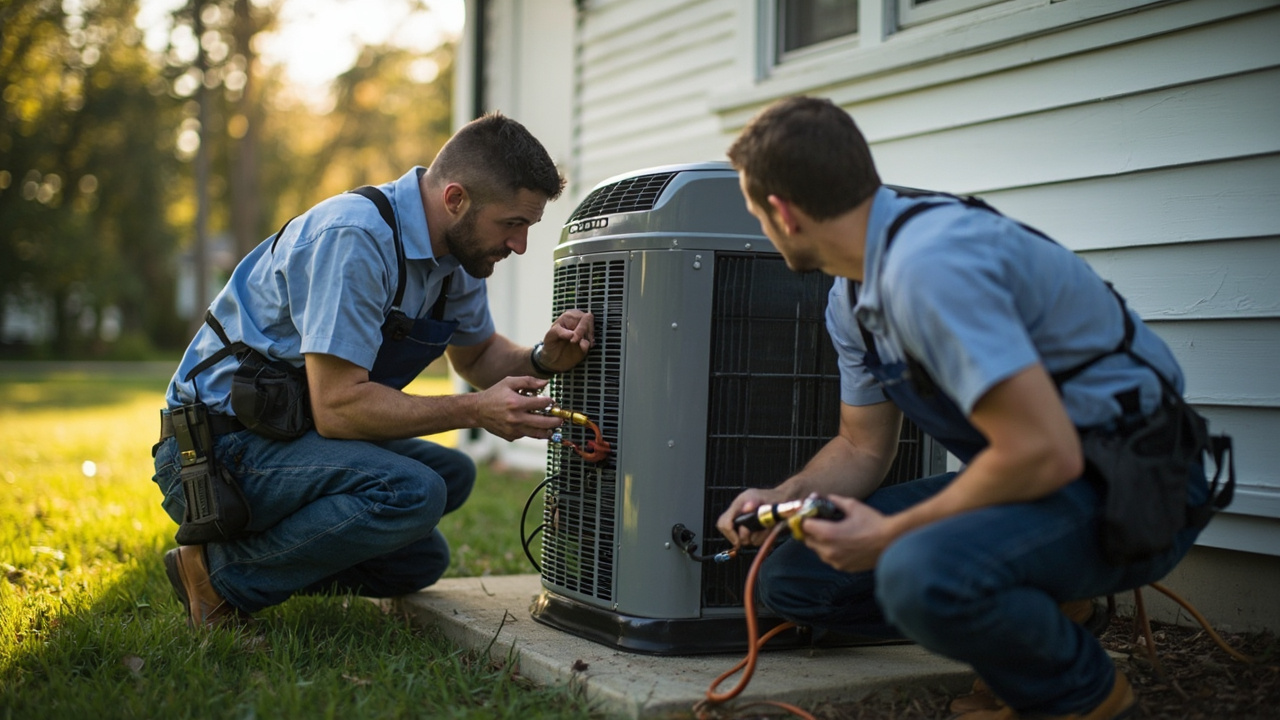
Our installation crews pull proper vacuum on refrigerant lines before charging the system. We do not guess at charge levels. We weigh refrigerant to manufacturer specs and verify subcooling and superheat with calibrated gauges. Line sets get brazed with nitrogen purge to prevent oxidation inside copper tubing.

The condensate drain gets pitched at a quarter inch per foot and terminated outside the building envelope, not into crawl spaces where it creates mold. We install float switches to shut down the system if the drain clogs, preventing water damage to ceilings.

Every new air conditioner install includes verifying voltage at the disconnect, checking contactor pull-in, and testing crankcase heater operation. These steps prevent nuisance failures during the first heat wave.

What Happens During Your Installation Appointment

Air Conditioning Installation in Nashville – Built for Your Home's Exact Load Requirements
01

Load Calculation and Equipment Selection

We measure your home's heat gain using Manual J protocols before recommending tonnage or SEER ratings. You receive a printed load calculation showing exactly why we sized your system the way we did. This prevents the oversizing that causes short cycling and humidity problems in Nashville's climate. We walk you through equipment options that match your actual cooling needs and budget parameters.
02

System Removal and Installation

Our crews remove your old equipment and recover refrigerant per EPA regulations. We install the new condenser on a composite pad that prevents settling in Davidson County clay soil. Inside, we mount the air handler or furnace, braze refrigerant lines with nitrogen purge, and verify ductwork connections seal properly. Every electrical connection gets torqued to spec and protected with proper gauge wire and breakers.
03

Startup and Performance Verification

We charge the system by weight, not pressure alone, and verify subcooling and superheat fall within manufacturer ranges. Airflow testing at each register confirms CFM delivery matches design specs. We measure amp draw on the compressor and blower motor to catch any electrical issues before you own them. You receive documentation of all pressures, temperatures, and voltages so you have a baseline for future service.

Why Nashville Homeowners Choose Alpha HVAC Memphis for AC Installation

Alpha HVAC Memphis has installed central air systems in Nashville homes from Inglewood bungalows to new construction in Wedgewood-Houston. We understand the local building stock and how to adapt modern equipment to older infrastructure without compromising performance.

Nashville's residential architecture ranges from 1920s craftsman homes with plaster walls and no attic access to 1980s split-levels with undersized ductwork. We have addressed every scenario. When we encounter knob-and-tube wiring or fuse panels during an air conditioner replacement, we coordinate with licensed electricians to bring service up to code before energizing new equipment.

Our familiarity with Davidson County permits and inspection requirements means your installation passes on the first visit. We pull permits for all new air conditioner installs and schedule inspections at the right sequence points. You do not get stuck in permit limbo because of missed steps.

We also understand Nashville's soil conditions. The limestone bedrock and expansive clay soil cause foundation movement that stresses refrigerant lines. We install flexible line sets with proper strain relief so seasonal ground shifts do not crack brazed joints and leak refrigerant.

When you call Alpha HVAC Memphis for AC unit installation, you get a crew that shows up on time with the correct equipment and completes the job in one day unless we discover structural issues that require additional work. We do not leave you without cooling while we order missing parts.

Our load calculations account for Nashville's solar heat gain, which peaks in July when the sun angle hits south-facing windows at the worst possible trajectory. We factor in the mature tree canopy common in older neighborhoods, which reduces cooling load by 15 to 20%. That precision prevents oversizing and the comfort problems it creates.

What You Can Expect From Start to Finish

Installation Timeline and Scheduling

Most central air installations take six to eight hours from equipment removal to final testing. We schedule installations Monday through Saturday and provide a four-hour arrival window. If we encounter issues like rotted ductwork or inadequate electrical service, we stop and present options before proceeding. You approve all additional work before we bill for it. Our crews arrive with all necessary equipment and materials so we do not waste your time with parts runs. We haul away your old equipment the same day and leave your property cleaner than we found it.

Pre-Installation Assessment Process

Before installation day, a technician visits your home to perform the Manual J load calculation and inspect your existing ductwork, electrical service, and condensate drain routing. We test static pressure in your duct system and identify any modifications needed for proper airflow. You receive a written proposal detailing equipment specs, installation scope, and total investment. We explain why we recommend specific tonnage and SEER ratings based on your load calculation. If your ducts need modification or your electrical panel requires upgrades, we include those costs upfront so you face no surprises on installation day.

Performance and Comfort Results

A properly sized and installed system maintains temperature within two degrees of your setpoint in every room. You will notice lower indoor humidity, quieter operation, and more consistent comfort compared to your old equipment. Energy bills typically drop 20 to 30% when replacing a system more than 12 years old. We provide you with startup documentation showing refrigerant charge, airflow CFM, and electrical readings so you have a performance baseline. If any room feels uncomfortable after installation, we return to diagnose and correct the issue at no charge during the first 30 days.

Manufacturer Coverage and Maintenance Plans

New equipment includes manufacturer parts coverage that ranges from five to ten years depending on brand and model. Compressors typically carry longer coverage than other components. We register your equipment with the manufacturer at installation to activate all applicable coverage. You also receive information about our maintenance plan, which includes annual inspections, priority scheduling, and discounted repairs. Regular maintenance prevents nuisance failures and extends equipment life. We track your service history and contact you when seasonal tune-ups are due so you never miss critical preventive care.

Frequently Asked Questions

You Have Questions,
We Have Answers

How much would it cost to have air conditioning installed? +

Air conditioning installation in Nashville typically ranges from several thousand dollars for a basic system to significantly more for high-efficiency units or complex installations. Your final cost depends on system size (measured in tons), SEER rating, ductwork condition, and whether you need electrical upgrades. Nashville's high humidity means proper sizing matters. An oversized unit short-cycles and fails to dehumidify. An undersized unit runs constantly during July and August. Get three quotes from licensed contractors who perform Manual J load calculations specific to your home's square footage, insulation, and window orientation.

What is the $5000 rule for AC? +

The $5,000 rule helps you decide between repair and replacement. If your AC repair cost multiplied by your system's age exceeds $5,000, replacement makes more financial sense. For example, a $400 repair on a 14-year-old unit equals $5,600, suggesting replacement. A $300 repair on a 6-year-old unit equals $1,800, favoring repair. Nashville's humid climate accelerates wear on compressors and coils. Systems older than 12 years using R-22 refrigerant face expensive repairs because refrigerant prices skyrocketed after phase-out. This rule provides a practical framework for your replacement decision.

How much does it typically cost to install air conditioning? +

Nashville air conditioning installation typically costs between mid-range to higher amounts depending on system type and home size. Central air systems cost more than ductless mini-splits. Cost factors include SEER rating (higher efficiency costs more upfront but saves on TVA electricity bills), tonnage requirements (Nashville homes average 2.5 to 4 tons), existing ductwork condition, and installation complexity. Older homes in East Nashville or Germantown may need duct sealing or electrical panel upgrades. Spring and fall installations sometimes offer better pricing than peak summer demand. Always verify the contractor pulls proper Metro Nashville permits.

How much does Home Depot charge to install an AC unit? +

Home Depot subcontracts HVAC installations to local third-party contractors, so pricing varies by your Nashville location and chosen system. Their installation quote typically bundles equipment and labor. You lose direct contractor relationships and may face coordination delays between the retailer and installer. Local Nashville HVAC companies often provide more responsive service, understand Middle Tennessee building codes, and handle warranty issues directly. They also account for Nashville-specific factors like clay soil foundation settling that affects ductwork and condensate drainage. Compare total project costs and post-installation support before deciding between big-box retailers and local contractors.

How much does an air conditioner cost for a 2000 sq ft home? +

A 2,000 square foot Nashville home typically requires a 3 to 4-ton air conditioning system. Total installation cost depends on system efficiency (14 SEER versus 18+ SEER), ductwork condition, and home construction. Older homes with poor attic insulation need larger capacity. Newer builds with better insulation and low-e windows need less tonnage. Nashville's summer humidity and 90-degree temperatures mean proper dehumidification matters as much as cooling capacity. Two-story homes may benefit from zoned systems. Expect higher costs if your home needs duct replacement, electrical upgrades, or crawlspace accessibility improvements. Request Manual J calculations.

What is the 3 minute rule for AC? +

The 3-minute rule prevents compressor damage by requiring a three-minute wait between shutdown and restart. When your AC stops, refrigerant pressure equalizes between the high and low sides. Restarting too quickly forces the compressor to start against high pressure, straining the motor and shortening its lifespan. Modern thermostats include built-in delay timers. If your AC trips breakers or struggles to start during Nashville's brutal summer afternoons, you may have a failing start capacitor or compressor. Never rapidly cycle your thermostat. This protection feature extends equipment life in demanding climates like Middle Tennessee.

Is the 600 tax credit for air conditioners? +

The Energy Efficient Home Improvement Credit offers up to $600 annually for qualifying air conditioners and heat pumps through 2032. Your new system must meet ENERGY STAR efficiency criteria, which typically means 16 SEER or higher for central air. You can claim the credit when filing federal taxes. Nashville homeowners benefit because TVA electricity rates reward efficiency. Higher SEER systems reduce summer cooling bills in our humid climate. The credit applies to equipment costs, not installation labor. Keep your manufacturer certification statement and receipts. Consult a tax professional about combining this credit with other energy upgrades.

What is the best month to buy an HVAC system? +

October through early March offers the best HVAC pricing in Nashville. Contractors face lower demand after cooling season ends and before spring rush begins. You gain negotiating leverage and flexible scheduling. Fall installations let you test heating mode before winter. Avoid June through August when emergency replacements dominate contractor schedules and equipment availability tightens. Nashville's mild winters mean you can install without immediate heating pressure. However, do not wait until your system fails during a July heatwave. Planned replacements always cost less than emergency installations. Spring offers moderate pricing but busier contractor calendars.

How much does it cost to replace an entire HVAC system? +

Complete HVAC system replacement in Nashville includes both heating and cooling equipment, typically an air conditioner or heat pump paired with a gas furnace or air handler. Total cost depends on system size, efficiency ratings, ductwork condition, and installation complexity. Nashville homes with existing ductwork cost less than new construction. Replacing both components simultaneously ensures compatibility and balanced performance. You may need electrical panel upgrades, new thermostats, or duct sealing. Higher efficiency systems (16+ SEER, 95+ AFUE) cost more upfront but reduce TVA utility bills. Financing options spread costs over time. Expect installation to take one to three days.

What is the cheapest way to install air conditioning? +

Window units offer the cheapest air conditioning option for Nashville homes, costing a few hundred dollars per unit. However, they cool only single rooms, increase security risks, and waste energy. Ductless mini-splits cost more upfront but cool multiple rooms efficiently without ductwork. For whole-home cooling, a basic 14 SEER central air system provides the most affordable solution. Avoid choosing the absolute cheapest option because Nashville's humidity and heat demand reliable performance. Undersized or low-quality systems fail prematurely and cost more long-term. The real value comes from proper sizing, quality installation, and energy efficiency that reduces monthly TVA bills.

How Nashville's Humidity and Clay Soil Impact Air Conditioning Installation

Nashville's summer dew points regularly hit 70 degrees, which means your air conditioner must remove moisture and heat simultaneously. Oversized units cool air quickly but shut off before completing a full dehumidification cycle. That leaves indoor humidity at 60% or higher, which feels uncomfortable and promotes mold growth in ductwork and around registers. Proper AC installation requires matching latent and sensible capacity to Nashville's specific climate profile. The expansive clay soil throughout Davidson County also creates foundation movement that stresses rigid refrigerant lines. We install systems with flexible connections and strain relief to prevent refrigerant leaks as your home settles seasonally.

Alpha HVAC Memphis has installed air conditioning systems across every Nashville neighborhood from historic Edgefield to new developments in Antioch. We work with local inspectors regularly and understand Davidson County permit requirements for HVAC installations. Our technicians recognize the architectural quirks of Nashville's building stock, from balloon-framed Victorian homes with no attic access to mid-century ranches with crawl space ductwork. That local knowledge prevents the guesswork and delays that plague out-of-town contractors. When you choose a company familiar with Nashville's specific challenges, you get an installation done right the first time.
HVAC Services in The Nashville Area

Alpha HVAC is a local business dedicated to serving the entire community. Our centralized location allows us to provide swift and reliable service to all surrounding areas. Whether you need a repair, a new installation, or routine maintenance, you can trust our team to be there for you when it matters most. Explore our service area on the map below to see how we can help you with all your heating and cooling needs.

Address:
Alpha HVAC Nashville, 1001 3rd Ave N, Nashville, TN, 37201

Additional Services We Offer

Our news updates

Latest Articles & News from The Blogs

Understanding the difference between a furnace and a boiler for older Middle Tennessee homes Choosing the right heating system for…

Understanding the difference between a furnace and a boiler for older Middle Tennessee homes

Understanding the difference between a furnace and a boiler for older Middle Tennessee homes Choosing the right heating system for…

How to choose a quiet HVAC system that won't disturb your neighbors in Brentwood

How to choose a quiet HVAC system that won't disturb your neighbors in Brentwood Living in Brentwood means enjoying peaceful…

Keeping your boat house or lakeside cabin comfortable with a mini split system

Keeping your boat house or lakeside cabin comfortable with a mini split system\n\nThe humid summers and mild winters of Middle…

Contact Us

Call Alpha HVAC Memphis at (615) 552-1922 to schedule your pre-installation assessment. We provide upfront pricing and complete most installations in one day. Stop gambling on comfort and efficiency.