








Menu

Whole Home Humidifiers in Nashville – Combat Dry Winter Air and Protect Your Home Year-Round

Central humidifiers integrate directly with your HVAC system to maintain balanced humidity levels throughout every room, preventing wood damage, respiratory issues, and static electricity in Nashville's variable climate.

Slider Image 1
Slider Image 2
Slider Image 3
Slider Image 4
Slider Image 5
Slider Image 7
Slider Image 8
Slider Image 9
Slider Image 10
Slider Image 11

Why Nashville Homes Need Whole House Humidifiers

Nashville's winter months bring indoor air so dry it cracks hardwood floors, splits crown molding, and turns your home into a static electricity factory. When your furnace runs continuously from December through February, it strips moisture from the air faster than portable units can replace it. You wake up with bloody noses, your kids develop chronic coughs, and your antique furniture starts pulling apart at the joints.

The humidity swings between seasons create another problem. Nashville summers stay humid, but the moment you fire up the heat in fall, indoor relative humidity plummets from 50% down to 20% or lower. That 30-point drop stresses everything in your home. Hardwood floors contract and gap. Paint cracks along window trim. Even your musical instruments go out of tune as the wood dries and warps.

Portable humidifiers cannot solve this. You would need one unit per room, constant refilling, and you still would not achieve consistent humidity levels throughout the house. Furnace humidifiers integrate directly into your ductwork, delivering moisture to every register automatically. Central humidifiers use your existing HVAC system to maintain 35-45% relative humidity in every room without you touching a thing.

HVAC humidifiers also protect your respiratory health during flu season. Dry air dries out your nasal passages and throat, making you more susceptible to viruses. Balanced humidity keeps your mucous membranes functioning properly, which is your first line of defense against infection. For homes with children or elderly residents, ducted humidifiers are not a luxury. They are preventive health care.

Why Nashville Homes Need Whole House Humidifiers
How Whole House Humidifier Systems Work

How Whole House Humidifier Systems Work

Ducted humidifiers mount directly to your furnace plenum or main supply trunk. When your blower runs, air passes through a water panel or misting chamber, picks up moisture, and distributes it through your existing ductwork. The system ties into your home's water supply with a small saddle valve or direct connection, eliminating manual refills.

There are three main types. Bypass humidifiers use a small damper to divert a portion of your heated air through a water panel before returning it to the duct system. They require no electricity but depend on furnace operation to function. Fan-powered humidifiers include their own blower, allowing them to operate independently of your furnace blower and deliver higher moisture output. Steam humidifiers boil water and inject pure steam directly into the ductwork, offering the highest capacity and fastest response but requiring dedicated electrical circuits.

Nashville homes typically need 12 to 18 gallons per day of humidification capacity depending on square footage, insulation quality, and air exchange rates. A 2,000-square-foot home with average insulation requires roughly 15 gallons per day to maintain 40% relative humidity when outdoor temperatures drop to 30 degrees. Undersized units run constantly and still fail to hit target humidity levels. Oversized units cycle too frequently and waste water.

We calculate your specific load requirements before recommending equipment. This includes measuring your home's air leakage, evaluating insulation R-values, and accounting for occupancy patterns. A poorly sealed 1920s bungalow in East Nashville needs different capacity than a 2015 build in Franklin with spray foam insulation. The math determines the equipment, not the sales pitch.

What Happens During Humidifier Installation

Whole Home Humidifiers in Nashville – Combat Dry Winter Air and Protect Your Home Year-Round
01

System Assessment and Sizing

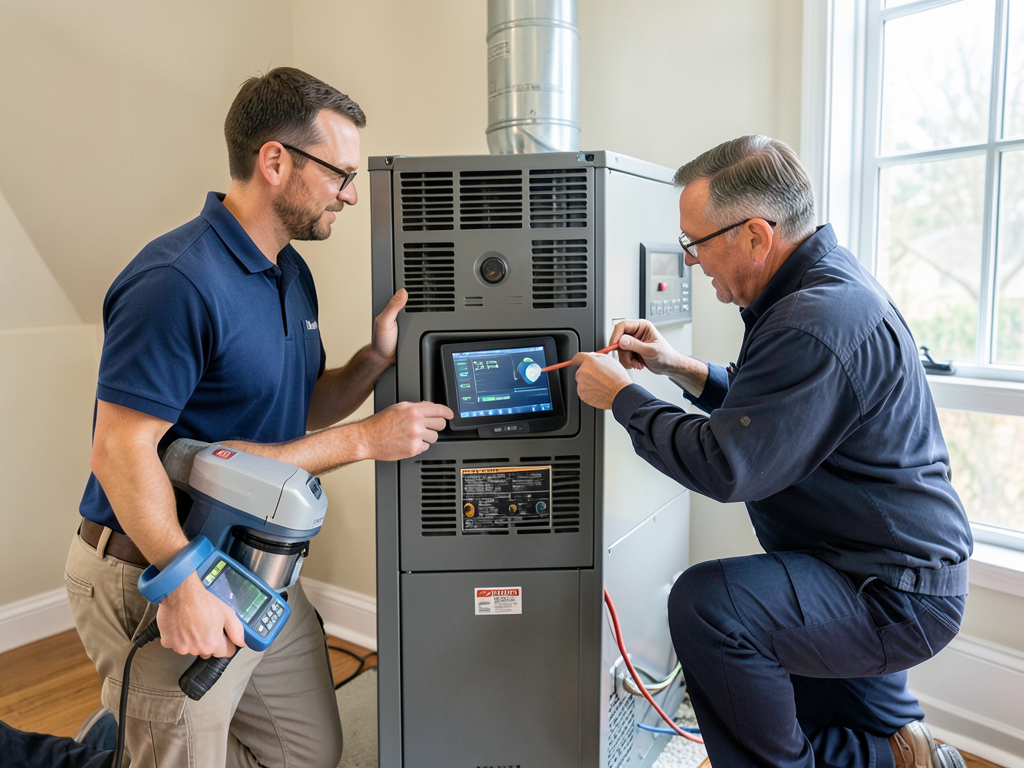
We measure your home's total conditioned space, test static pressure in your duct system, and evaluate your current furnace capacity. Undersized ductwork or marginal blower capacity affects humidifier performance, so we verify your system can handle the additional load before cutting any sheet metal. We also test your water supply pressure and hardness, since mineral content determines maintenance intervals and which humidifier type will last longest in your specific water conditions.
02

Mounting and Plumbing Connection

We cut the supply plenum or trunk line, mount the humidifier cabinet with sealed flanges, and install the water supply line with a shutoff valve for future maintenance. The humidistat mounts on your return air duct or integrates with your thermostat if you have a compatible smart system. We run low-voltage control wiring to synchronize humidifier operation with your furnace or set it to run independently based on your system design. All penetrations get sealed with mastic to prevent air leakage.
03

Calibration and Performance Testing

We set the humidistat to your target humidity level, typically 35-40% during winter, and verify the unit cycles properly. Using a calibrated hygrometer, we measure humidity levels at multiple locations throughout your home after 24 hours of operation. If readings vary more than 5% between rooms, we adjust dampers or airflow to balance distribution. You receive documentation showing baseline humidity readings, equipment specifications, and recommended seasonal adjustments to prevent condensation on windows when outdoor temperatures drop below 20 degrees.

Why Alpha HVAC Nashville for Whole House Humidifiers

Nashville's building stock ranges from 1890s shotgun houses in Germantown to modern LEED-certified construction in Gulch. Each era requires different humidification strategies. Historic homes with single-pane windows and minimal insulation need lower humidity setpoints to prevent condensation damage and mold growth on exterior walls. Modern tight construction with triple-pane windows can safely maintain higher humidity without moisture problems. We adjust recommendations based on your specific building envelope, not generic manufacturer guidelines.

We also account for Nashville's water quality. Davidson County water is moderately hard at 80-120 ppm, which causes mineral buildup on evaporator panels within one heating season. Homes in Williamson County on well water often exceed 200 ppm hardness, requiring either water softening or more frequent pad replacement. We test your supply water and recommend maintenance intervals that match your actual conditions, not the optimistic timeframes printed in equipment manuals.

Our installs follow Manual S protocols for equipment sizing and Manual D standards for duct integration. That means we calculate your actual humidification load using ACCA-approved worksheets, not rule-of-thumb estimates. It also means we verify your duct system can deliver the required CFM without excessive static pressure that reduces airflow and efficiency. Many contractors skip this step and mount whatever unit fits the space. You end up with a humidifier that either cannot keep up or cycles constantly because it is mismatched to your system.

We also understand Nashville's mechanical code requirements for overflow drains and backflow prevention. Whole house humidifiers must include proper drainage for maintenance events and water supply isolation. Inspectors flag missing components regularly. Our installations pass inspection the first time because we know what Metro codes require before we start cutting.

What to Expect from Your Humidifier Installation

Installation Timeline and Disruption

Most whole house humidifier installations take three to four hours from equipment staging to final testing. We shut down your furnace during the mechanical work but restore heating immediately after mounting. You will have heat the same day. If we encounter undersized ductwork or need to relocate equipment for proper clearances, the timeline extends to half a day. We identify potential complications during the initial assessment so you know the realistic timeline before we schedule installation. Your home stays comfortable throughout the process.

Pre-Installation Assessment Process

We start with a visual inspection of your furnace, ductwork, and mechanical room layout. We measure supply plenum dimensions, test water pressure, and verify electrical capacity if you are considering a steam humidifier. We also check your thermostat compatibility for integrated humidity control. If you have a Nest, Ecobee, or Honeywell smart thermostat, we can often eliminate the separate humidistat and control everything from one interface. You receive equipment recommendations matched to your system capacity and your home's specific moisture load requirements.

Performance and Comfort Results

You will notice the difference within 48 hours. Static electricity disappears. Your skin stops cracking. Wood floors stabilize and gaps close as moisture content normalizes. The system maintains consistent humidity automatically, adjusting output based on outdoor temperature and indoor conditions. You stop waking up with dry throat and morning congestion. Your furnace may also run slightly less often because humid air feels warmer at lower temperatures, allowing you to reduce your thermostat setpoint by one or two degrees without sacrificing comfort.

Maintenance and Long-Term Care

Evaporative pad humidifiers require annual pad replacement, typically before each heating season. We include this in our fall maintenance visits along with furnace service. Steam and misting systems need descaling every two to three years depending on water hardness. We also inspect the water supply valve, solenoid, and drain line for leaks or mineral buildup. Proper maintenance prevents premature failure and keeps your system operating at full capacity. We provide written maintenance schedules based on your specific equipment and water conditions, not generic recommendations.

Frequently Asked Questions

You Have Questions,
We Have Answers

What is the downside of a whole-house humidifier? +

The main downside is maintenance. You must change filters or clean components regularly to prevent mold and mineral buildup. Nashville's hard water makes this critical. Skip maintenance and you risk bacterial growth in your ductwork. Over-humidification can also occur if you do not monitor settings, leading to condensation on windows, mold in walls, and dust mite problems. Units also consume water and electricity, adding to utility bills. Poor installation can cause leaks or uneven humidity distribution. If you have existing moisture issues in your crawlspace, a whole-house unit can worsen problems without proper ventilation.

What type of humidifier is best for a whole house? +

For Nashville homes, a bypass flow-through humidifier works best. It taps into your HVAC system and uses a water panel that warm air passes through. Unlike steam units, it does not require dedicated electrical lines and handles our fluctuating humidity levels better. Bypass models work with both heating and cooling cycles, important for our mild winters and humid summers. They require less maintenance than reservoir drum-style units, which breed mold quickly in Tennessee's climate. Choose a unit sized correctly for your square footage. Undersized units run constantly. Oversized units create condensation problems on windows and in attics.

How much does it cost to get a whole home humidifier installed? +

Installation in Nashville ranges from several hundred to over a thousand dollars depending on unit type and complexity. Bypass models cost less to install than steam units, which need dedicated electrical work. Your total depends on whether you need new ductwork modifications, a dedicated water line run from your main supply, or humidistat upgrades. Homes with modern HVAC systems install faster. Older systems may need adapter plates or additional labor. Nashville contractors also factor in crawlspace access difficulty, which affects labor time. Get three quotes. Avoid companies that do not inspect your ductwork first. Poor installation causes leaks and mold.

What is the life expectancy of a whole-house humidifier? +

Expect 10 to 15 years from quality whole-house humidifiers with proper maintenance. Nashville's hard water shortens lifespan if you skip annual cleanings. The water panel or evaporator pad needs replacement every one to two years. Solenoid valves and motors can fail around year eight. Homes with municipal water see longer life than well water homes because minerals clog components faster. Bypass models outlast steam units due to fewer electrical parts. If you run your unit year-round or use well water, plan for the lower end of that range. Regular filter changes and descaling treatments extend equipment life significantly.

What are signs I need a humidifier? +

Watch for static shocks when you touch metal, cracked wood trim around windows, or gaps in hardwood floors. Your skin feels tight and itchy despite lotion. Frequent nosebleeds or sore throats in the morning signal dry air. Nashville winters drop indoor humidity below 30 percent when furnaces run constantly. Check for visible shrinkage in wood furniture or doors that suddenly fit loosely in frames. Your houseplants wilt despite watering. Increased respiratory infections or asthma flare-ups also point to low humidity. Grab a hygrometer from any hardware store. If readings stay below 30 percent, you need humidification.

Where does the water go from a whole house dehumidifier? +

This question confuses humidifiers with dehumidifiers. A whole-house dehumidifier removes moisture and drains it through a condensate line, typically into a floor drain, sump pump, or exterior drainage point. In Nashville basements and crawlspaces, contractors often tie the line into existing HVAC condensate drains. Some units pump water up to 15 feet if no gravity drain exists. The water must drain away from your foundation to prevent soil saturation and settling issues common in our clay soil. Never let a dehumidifier drain into a bucket you manually empty. Mechanical failure or vacation absence causes overflow and water damage.

Where is the best place to put a whole home humidifier? +

Install a whole-house humidifier directly on your main HVAC trunk line, ideally on the return air duct before the furnace. This placement ensures even distribution through all supply vents. Nashville contractors prefer mounting units in conditioned spaces like mechanical closets, not attics or crawlspaces where temperature extremes affect performance. The unit needs access to a cold water supply line and a drain for bypass models. Avoid locations near exterior walls where condensation can form. Your humidistat should mount on an interior wall away from kitchens, bathrooms, and direct sunlight. Poor placement causes uneven humidity and moisture problems in specific rooms.

What humidifiers do consumer reports recommend? +

Consumer Reports tests portable humidifiers, not whole-house systems. For integrated HVAC humidifiers, focus on brands with strong contractor support in Nashville rather than consumer magazine rankings. Aprilaire and Honeywell dominate the professional market because parts availability and warranty service matter more than brand reputation. Your HVAC contractor's installation quality impacts performance more than the brand name. Ask which units they stock parts for locally. A top-rated brand means nothing if you wait two weeks for a replacement solenoid valve. Choose based on your contractor's expertise with specific models and their service response time in Davidson County.

What are the signs of too much humidity? +

Condensation on windows signals excess humidity. You see water stains on ceilings or walls, smell musty odors, or notice mold growing on bathroom ceilings. Nashville homes often show humidity problems in closets with mildew on clothes or shoes. Your hardwood floors cup or buckle. Dust mites thrive above 50 percent humidity, worsening allergies. Paint peels or wallpaper loosens. You feel clammy even when the air conditioning runs. Grab a hygrometer. Readings above 60 percent invite mold growth. Our humid summers make this common. Run exhaust fans when cooking or showering and check your dehumidifier settings.

How big of a dehumidifier do I need for a 2000 sq ft house? +

You need a 50 to 70-pint dehumidifier for 2,000 square feet, depending on moisture levels and ceiling height. Nashville basements and crawlspaces often need higher capacity due to our clay soil and groundwater issues. Moderately damp spaces need 50-pint units. Wet basements with visible moisture require 70-pint models. Homes with nine-foot ceilings need more capacity than standard eight-foot ceilings. Buy a unit with a built-in pump if you lack a floor drain. Check the Energy Star rating to avoid high electric bills. Undersized units run constantly without solving the problem. Oversized units cycle too frequently and fail early.

How Nashville's Climate Extremes Demand Reliable Humidification

Nashville's 40-degree temperature swings between day and night during winter stress your home's humidity balance. A 60-degree afternoon tricks your humidistat into reducing output, then overnight lows in the 20s cause your furnace to run continuously, stripping moisture faster than undersized units can replace it. Central humidifiers with outdoor temperature compensation adjust output automatically, maintaining stable indoor humidity regardless of weather fluctuations. Portable units cannot react quickly enough to Nashville's volatile winter conditions, leaving you cycling between swampy mornings and desert-dry evenings.

Davidson County building codes require proper drainage and backflow prevention for all humidifier installations connected to potable water supplies. Many national HVAC chains ignore these local requirements, leading to failed inspections and expensive rework. Alpha HVAC Nashville installs every system to Metro code standards from day one. We also understand Nashville's historic district requirements for homes in Germantown, Edgefield, and East Nashville where exterior equipment placement and utility routing face additional scrutiny. Local expertise prevents permitting delays and ensures your installation meets all regulatory requirements without surprises.
HVAC Services in The Nashville Area

Alpha HVAC is a local business dedicated to serving the entire community. Our centralized location allows us to provide swift and reliable service to all surrounding areas. Whether you need a repair, a new installation, or routine maintenance, you can trust our team to be there for you when it matters most. Explore our service area on the map below to see how we can help you with all your heating and cooling needs.

Address:
Alpha HVAC Nashville, 1001 3rd Ave N, Nashville, TN, 37201

Additional Services We Offer

Our news updates

Latest Articles & News from The Blogs

Why an Energy Recovery Ventilator (ERV) is Essential for Tight New Builds in Wedgewood-Houston Modern construction in Nashville’s Wedgewood-Houston neighborhood…

Why an Energy Recovery Ventilator (ERV) is Essential for Tight New Builds in Wedgewood-Houston

Why an Energy Recovery Ventilator (ERV) is Essential for Tight New Builds in Wedgewood-Houston Modern construction in Nashville’s Wedgewood-Houston neighborhood…

Comparing Goodman and Amana Performance for Budget Conscious Nashville Homeowners

Why Nashville Homeowners Choose Between Goodman and Amana Both Goodman and Amana offer reliable heating and cooling systems that fit…

Choosing the Right HVAC System for Your New Luxury Pool House in Belle Meade

Choosing the Right HVAC System for Your New Luxury Pool House in Belle Meade Building a luxury pool house in…

Contact Us

Stop fighting dry air with portable units that cannot keep up. Call Alpha HVAC Nashville at (615) 552-1922 for a humidification assessment matched to your home's specific needs. We size equipment correctly, install to code, and deliver consistent comfort throughout your entire home.