
What the new SEER2 efficiency standards actually mean for Nashville homeowners
Starting January 1, 2023, the Department of Energy implemented new SEER2 efficiency standards that directly impact every Nashville homeowner considering a new air conditioning or heat pump system. These regulations change how cooling efficiency is measured and what minimum performance levels are required in the Southeast region, including Tennessee. Understanding these changes helps you make informed decisions about your HVAC investment and potential energy savings in Middle Tennessee’s unique climate. Department of Energy air conditioning guide.
What is SEER2 and how does it differ from SEER?
SEER2 (Seasonal Energy Efficiency Ratio 2) is the updated testing standard that replaced the original SEER rating system. The key difference lies in the M1 testing procedure, which increases external static pressure from 0.1 to 0.5 inches of water column during laboratory testing. This more rigorous testing simulates real-world conditions where ductwork creates resistance, providing a more accurate representation of how your system will actually perform in your Nashville home. The Best High Efficiency HVAC Systems for Luxury Homes in Brentwood.
The change means that a unit rated at 15 SEER under the old standard would now be rated approximately 14.3 SEER2. This adjustment ensures consumers can compare systems fairly and understand true energy efficiency in their specific climate conditions.
The South Region mandate: SEER2 requirements for Tennessee
Tennessee falls within the Southeast Region under DOE regulations, which has specific minimum efficiency requirements. As of 2023, all new split-system air conditioners and heat pumps installed in Tennessee must meet or exceed 14.3 SEER2 for cooling efficiency. This translates to approximately 15.0 SEER under the old rating system. Heating and Cooling Historic Germantown Homes Without Bulky Ductwork.
The Southeast Region includes states from Texas to Florida and north to Virginia, where cooling demands are highest due to longer, more humid summers. Nashville’s climate specifically requires systems that can handle extended cooling seasons and high humidity levels, making these efficiency standards particularly relevant for local homeowners. Nashville AC Repair Companies That Actually Answer the Phone on Weekends.
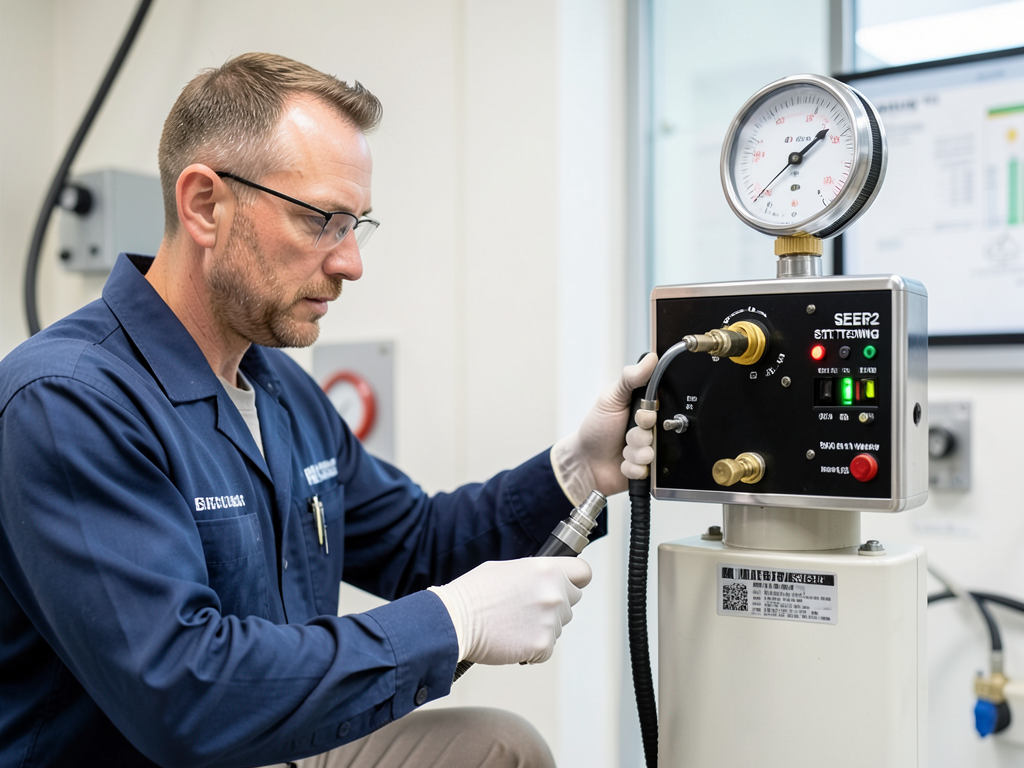
A technician uses a manometer to measure external static pressure during SEER2 testing, ensuring compliance with the new 0.5 inches water column standard.
SEER2 savings calculator: How much can you save in Nashville?
Based on Nashville’s climate data and average cooling degree days, upgrading from an older 10 SEER unit to a modern 16 SEER2 system can reduce cooling costs by approximately 37% annually. For a typical Nashville home using 24,000 BTU/hour cooling capacity, this translates to annual savings of $180-240 on cooling costs alone.. Read more about Upgrading From Window Units to Central Air in Older Woodbine Bungalows.
The payback period for higher efficiency systems varies based on usage patterns and local utility rates. Nashville Electric Service (NES) customers typically see faster returns due to the region’s long cooling season, which runs from April through October in most years.
Table 1: SEER vs SEER2 Efficiency Comparison
| Old SEER Rating | SEER2 Equivalent | Efficiency Improvement | Estimated Annual Savings* |
|---|---|---|---|
| 10 SEER | 9.6 SEER2 | 58% more efficient | $300-400 |
| 13 SEER | 12.4 SEER2 | 31% more efficient | $120-180 |
| 15 SEER | 14.3 SEER2 | 20% more efficient | $80-120 |
| 16 SEER | 15.2 SEER2 | 17% more efficient | $60-100 |
*Based on Nashville climate, 2,000 cooling hours annually, $0.12/kWh electricity rate
Beyond cooling: Understanding HSPF2 for heat pumps
Heat pumps in Nashville must meet both SEER2 cooling and HSPF2 (Heating Seasonal Performance Factor 2) standards. The Southeast Region requires a minimum of 7.5 HSPF2 for heating efficiency. This is crucial for Nashville’s climate, where heat pumps provide both heating and cooling throughout the year.
HSPF2 testing also uses the M1 procedure, making it more stringent than the previous HSPF standard. Nashville homeowners benefit from heat pumps that maintain efficiency during the region’s mild winters while providing reliable cooling during humid summers.
Tax credits and rebates for high-efficiency systems in Middle TN
Homeowners installing qualifying high-efficiency HVAC systems can access federal tax credits through the Energy Efficient Home Improvement Credit (25C). Systems meeting ENERGY STAR Version 6.1 requirements may qualify for up to $600 in tax credits for central air conditioners and $2,000 for heat pumps.
Additionally, Tennessee Valley Authority (TVA) partners with local power companies to offer EnergyRight rebates for qualifying high-efficiency equipment. NES customers in Nashville may receive rebates ranging from $150-450 depending on system efficiency ratings and installation specifics. TVA EnergyRight rebates.
A split-system air conditioner installation showing proper clearance from the home’s foundation, critical for meeting Nashville’s building code requirements.
Nashville’s climate considerations for SEER2 systems
Nashville’s humid subtropical climate creates unique demands on HVAC systems. The region experiences 45-50 inches of annual rainfall and relative humidity often exceeding 70% during summer months. SEER2-rated systems with variable-speed compressors handle these conditions more effectively by maintaining consistent indoor humidity levels while reducing energy consumption.
The clay soil common in Middle Tennessee also affects HVAC performance. Proper pad installation and vibration isolation become critical for system longevity, especially given the region’s frequent thunderstorms and occasional seismic activity. Storm Damage HVAC Repair.
Split system vs. packaged unit ratings
SEER2 standards apply differently to split systems versus packaged units. Split systems, which separate the condenser and air handler, typically achieve higher efficiency ratings due to better component matching. Packaged units, common in commercial applications but also used in some Nashville homes, have slightly different minimum requirements under SEER2.
For residential applications in Nashville, split systems generally provide better humidity control and efficiency, particularly important given the region’s climate challenges. The minimum 14.3 SEER2 requirement ensures even basic new installations offer significant improvements over older equipment.
Installation quality matters more than efficiency ratings
While SEER2 ratings indicate potential efficiency, proper installation determines actual performance. Nashville’s building codes require specific installation practices, including proper line set sizing, correct refrigerant charge, and adequate airflow across the evaporator coil. These factors can impact system efficiency by 15-30% if not executed correctly.
Professional installation also ensures compliance with Metro Nashville mechanical codes and maintains warranty coverage. The region’s clay soil and occasional flooding require special considerations for outdoor unit placement and elevation. Metro Nashville mechanical codes.
Future-proofing your HVAC investment
Understanding SEER2 standards helps Nashville homeowners make decisions that will serve them well beyond the current regulatory environment. As energy costs continue rising and climate concerns grow, higher efficiency systems provide both immediate savings and long-term value protection.. Read more about How the Inflation Reduction Act helps you save thousands on a new HVAC in Nolensville.
The transition to SEER2 represents a broader industry trend toward more accurate efficiency measurements and higher performance standards. Homeowners who understand these changes can better evaluate proposals and avoid being oversold on marginal efficiency improvements that may not justify their cost in Nashville’s specific climate.
A variable-speed compressor showing internal components, demonstrating the technology that enables SEER2 systems to handle Nashville’s humidity more effectively.
Making the right choice for your Nashville home
Choosing the right HVAC system involves balancing upfront costs, operating efficiency, and climate-specific performance. For Nashville homes, systems with good humidity control often provide more comfort than maximum efficiency ratings alone. Variable-speed systems, while more expensive initially, often prove most cost-effective over their lifetime in Middle Tennessee’s climate.
Consider your home’s specific characteristics, including insulation levels, window orientation, and existing ductwork condition. A properly sized system meeting minimum SEER2 standards often outperforms an oversized high-efficiency unit in Nashville’s climate.
Frequently Asked Questions
What is the minimum SEER2 rating required in Tennessee?
The minimum SEER2 rating for new air conditioning systems in Tennessee is 14.3, which corresponds to approximately 15.0 SEER under the old rating system. This requirement applies to all new installations as of January 1, 2023.
How much more efficient are SEER2 systems compared to older units?
SEER2 systems are tested under more realistic conditions, so direct comparisons show varying improvements. A 16 SEER2 system is approximately 20% more efficient than a 10 SEER unit, potentially saving $200-300 annually on cooling costs in Nashville.
Do SEER2 standards affect heat pump efficiency requirements?
Yes, heat pumps must meet both SEER2 cooling and HSPF2 heating standards. In the Southeast Region, the minimum HSPF2 requirement is 7.5, ensuring heat pumps provide adequate heating efficiency during Nashville’s mild winters.
Can I still buy equipment with older SEER ratings?
Manufacturers can only produce equipment meeting SEER2 standards as of January 1, 2023. However, contractors may still have inventory of older equipment, though this is becoming increasingly rare as the industry transitions completely to SEER2-rated systems.
How do I know if a contractor is installing SEER2-compliant equipment?
Ask to see the equipment’s AHRI certification card, which lists both SEER and SEER2 ratings. All new equipment installed after January 1, 2023, must meet SEER2 standards. Your contractor should also provide documentation showing compliance with local building codes.
Next steps for Nashville homeowners
Understanding SEER2 standards empowers you to make informed decisions about your HVAC system. Whether you’re planning a replacement or simply want to understand your current system’s efficiency, knowledge of these regulations helps you evaluate proposals and avoid unnecessary expenses.
Ready to explore your options for a new, efficient HVAC system? Call (615) 552-1922 today to schedule a consultation with our Nashville HVAC experts. We’ll help you understand exactly what SEER2 means for your specific home and provide clear recommendations based on your comfort needs and budget.
Don’t wait until your current system fails during a July heatwave. Contact us now to learn how SEER2-compliant equipment can improve your home’s comfort while reducing your energy bills. Our team understands Middle Tennessee’s unique climate challenges and can recommend systems that perform optimally in Nashville’s conditions.
Pick up the phone and call (615) 552-1922 before the next storm hits. We offer emergency service throughout Nashville and surrounding Middle Tennessee communities, ensuring you’re never left without reliable heating and cooling when you need it most.