
What to do if you find water sitting in your HVAC drain pan
Finding standing water in your AC drain pan can trigger instant panic about potential water damage to your Nashville home. That’s understandable. A clogged condensate drain line is one of the most common HVAC problems we see during Middle Tennessee’s humid summers, and it can lead to ceiling leaks, mold growth, and system shutdowns if ignored. The good news? You can often diagnose the issue yourself before calling a professional. This guide walks you through exactly what to check, how to clear minor clogs, and when it’s time to bring in Nashville’s HVAC experts at Alpha HVAC. Nashville AC Repair Companies That Actually Answer the Phone on Weekends.
Is it Normal to Have Water in Your AC Drain Pan?
A few drops of water in your primary drain pan are completely normal. Your air conditioner pulls moisture from humid Nashville air as it cools, and that condensation needs somewhere to go. The primary pan sits under the evaporator coil inside your air handler and catches this moisture as it drips off. A properly functioning system channels this water through the condensate drain line to the outside of your home.. Read more about Why there is water dripping from that little white pipe on the side of your house.
Standing water that covers the bottom of the pan or spills over? That’s a red flag. Your system has a secondary (emergency) drain pan underneath the entire unit specifically to catch overflow if the primary pan fails. If you see water in that secondary pan, your system is already in distress mode.
5 Common Causes of Standing Water in the Pan
Clogged Condensate Drain Line
Algae, mold, and dust buildup create a thick sludge that blocks water flow through the PVC drain line. Nashville’s high humidity accelerates this growth. The clog typically forms where the narrow pipe connects to the main drain line.
Damaged or Rusted Drain Pan
Metal pans can rust through after years of moisture exposure, while plastic pans can crack from age or physical damage. A compromised pan can’t hold water properly, leading to slow leaks. Storm Damage HVAC Repair.
Frozen Evaporator Coil
Low refrigerant levels or restricted airflow can cause the evaporator coil to freeze. When it thaws, the sudden rush of water overwhelms the drain pan’s capacity.
Faulty Condensate Pump
If your air handler sits in a basement or below-grade location, it relies on a small pump to push water uphill through the drain line. Pump failure means water backs up into the pan.
Improper Installation/Leveling
An unlevel air handler causes water to pool on one side of the pan instead of flowing toward the drain opening. This creates standing water even with a clear drain line.
The Nashville Factor: How Tennessee Humidity Affects Your AC
Middle Tennessee’s climate creates unique challenges for your HVAC system. Our average summer relative humidity ranges from 65% to 85%, compared to the national average of around 50%. This extra moisture means your AC works harder to dehumidify your home, producing significantly more condensate than systems in drier climates. The Best High Efficiency HVAC Systems for Luxury Homes in Brentwood.
Nashville’s water also contains higher mineral content than many other regions. When warm condensate flows through your drain line, minerals precipitate out and form scale buildup along pipe walls. This scale narrows the pipe diameter over time, making clogs more likely even with regular maintenance.
Local pollen counts compound the problem. During spring and fall, microscopic particles get pulled into your system and mix with condensate, creating a perfect breeding ground for algae and mold in your drain line.
DIY Troubleshooting: How to Clear a Clogged Line
Before attempting any DIY work, turn off your AC at both the thermostat and the circuit breaker. Working on a live system risks electrical shock and can damage components.
Locate the drain line exit point – usually a white PVC pipe sticking out near your outdoor unit or in a utility area. Look for a T-shaped vent pipe with a cap on top.
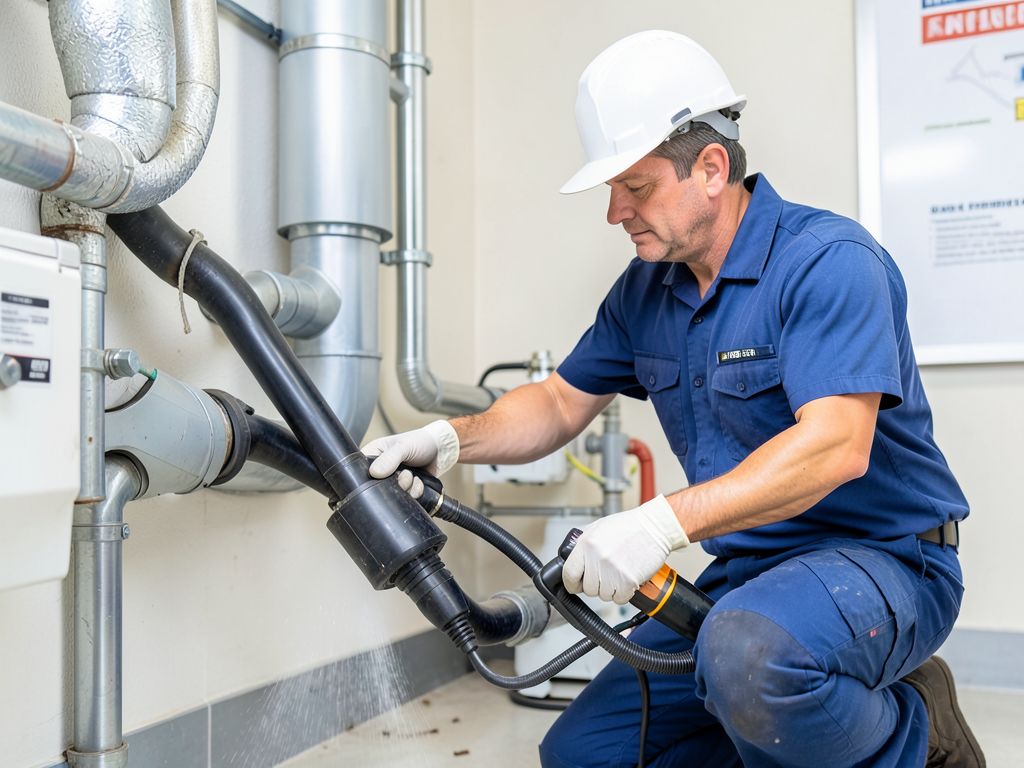
Try the wet/dry vacuum method:
- Attach the vacuum hose to the drain line exit using duct tape or a custom fitting
- Seal the connection completely to create suction
- Run the vacuum for 2-3 minutes
- Check if water and debris come out
Vinegar flush technique:
- Remove the cap from the vent tee on the drain line
- Pour 1 cup of white vinegar into the opening
- Wait 30 minutes for the vinegar to dissolve buildup
- Flush with clean water and check drainage
Warning signs to stop DIY efforts: If you see water backing up into the evaporator coil compartment, smell burning plastic, or notice electrical issues, stop immediately. These indicate problems beyond a simple clog that require professional diagnosis.
When to Call a Professional HVAC Technician
Some situations demand expert attention to prevent further damage or safety hazards. Call Alpha HVAC at (615) 552-1922 if you experience:
- Water overflowing from the secondary drain pan onto floors or ceilings
- Your AC shutting off completely (float switch activation)
- Visible mold growth around the air handler or in drain lines
- Crackling, popping, or burning smells from the system
- Water damage spreading to walls, ceilings, or flooring
- System running constantly without cooling effectively
Professional service includes camera inspection of drain lines, proper cleaning with commercial-grade equipment, testing of safety switches, and inspection for underlying issues like refrigerant leaks or coil problems that DIY methods can’t address.
Preventative Maintenance for Nashville Homeowners
Given our climate, Nashville homeowners should flush drain lines every 3-4 months rather than the standard annual schedule recommended elsewhere. Use the vinegar method monthly during peak cooling season (June through September). Heating and Cooling Historic Germantown Homes Without Bulky Ductwork.
Install a drain line cleanout port if your system doesn’t have one. This simple addition makes maintenance much easier and allows for quick emergency clearing if a clog forms.
Consider a condensate overflow shutoff switch if your system lacks one. This safety device automatically cuts power to your AC if water backs up, preventing costly water damage.
Schedule professional AC maintenance in early spring before the cooling season hits. Technicians can identify developing issues like hairline cracks in pans or early-stage corrosion that you might miss.
Understanding Your System’s Safety Features
Modern AC systems include multiple safety mechanisms designed to protect your home. The float switch in your secondary drain pan acts as a circuit breaker – when water rises to a certain level, it cuts power to the entire system. This prevents overflow but leaves you without cooling until the issue is resolved.
Some systems also have a condensate pump with its own overflow switch. If the pump fails and water reaches critical levels, this switch triggers an alarm or shuts down the system.
Understanding these safety features helps you interpret what’s happening when your AC suddenly stops working. It’s often a protective response to a developing problem, not a random failure.
Water Damage Prevention: What’s at Stake
Standing water in your drain pan can escalate quickly. In Nashville’s climate, mold can begin growing within 24-48 hours of continuous moisture exposure. Once established, mold remediation costs significantly more than routine HVAC maintenance.
Water overflowing from your secondary pan can damage ceiling drywall, hardwood floors, and electrical components. The average water damage repair from an AC overflow ranges from $2,500 to $7,000, while preventive maintenance costs around $150-300 annually. EPA mold prevention guidelines.
Insurance may not cover damage from neglected maintenance. Many policies exclude water damage resulting from lack of routine upkeep, leaving you responsible for the full repair cost.
Professional AC Tune-Up Benefits
A comprehensive AC tune-up from Alpha HVAC includes drain line inspection, cleaning, and testing that goes far beyond what homeowners can do themselves. Our technicians use specialized tools to measure water flow rates, check for pinhole leaks in pans, and verify proper system drainage under load conditions.
We also inspect related components that affect drainage – dirty air filters restrict airflow and can cause coil freezing, while low refrigerant levels create the same problem. Addressing these issues prevents future drain pan problems.
During our tune-up, we check that your system’s safety switches function correctly and that drain lines slope properly toward the exit point. Even a slight backward slope can cause water to pool and create standing water.
Frequently Asked Questions
How much water should be in my AC drain pan?
Ideally, you should see no standing water – just a few drops that quickly drain away. If you can see a visible pool or the bottom of the pan isn’t visible, you have a drainage problem that needs attention.
Can I use bleach instead of vinegar to clean my drain line?
White vinegar is safer for your system and the environment. Bleach can damage PVC pipes over time and create harmful fumes. Vinegar effectively kills algae and mold without the risks.
How often should I clean my AC drain line in Nashville?
Every 3-4 months minimum, with monthly vinegar flushes during peak cooling season (June-September). Our high humidity and pollen levels create conditions that require more frequent maintenance than other regions.
What does it mean if my AC shut off by itself?
Your float switch likely activated due to water backing up in the drain pan. This safety feature prevents overflow damage but requires professional diagnosis to restore cooling and fix the underlying issue.
Can a clogged drain line damage my AC compressor?
Yes. Severe clogs can cause the evaporator coil to freeze, leading to liquid refrigerant flooding back to the compressor. This can destroy the compressor, resulting in a repair costing $2,000-$4,000 or more.
Don’t let a simple drain line clog turn into a major repair. If you’re dealing with standing water in your HVAC drain pan, call Alpha HVAC at (615) 552-1922 today. Our Nashville technicians can diagnose and fix the problem quickly, preventing costly water damage to your home. We serve all of Middle Tennessee with 24/7 emergency service because we know AC problems don’t wait for business hours.
Pick up the phone and call (615) 552-1922 before the next storm hits. Your home’s protection is just one call away. For more information, visit ASHRAE HVAC standards.
You may also find this helpful. The best indoor air quality upgrades for Nashville families dealing with severe asthma.
{
“@context”: “https://schema.org”,
“@type”: “BlogPosting”,
“headline”: “What to do if you find water sitting in your HVAC drain pan”,
“description”: “Water in your AC drain pan? Learn the causes, DIY fixes, and when to call Nashville’s Alpha HVAC. Prevent costly water damage now.”,
“wordCount”: 1693,
“datePublished”: “2026-04-08T12:13:00.000Z”,
“dateModified”: “2026-04-08T12:13:00.000Z”,
“inLanguage”: “en-US”,
“mainEntityOfPage”: {
“@type”: “WebPage”,
“@id”: “https://alphahvacnashville.com”
},
“publisher”: {
“@type”: “LocalBusiness”,
“name”: “Alpha HVAC Nashville”,
“url”: “https://alphahvacnashville.com”
},
“author”: {
“@type”: “Organization”,
“name”: “Alpha HVAC Nashville”,
“url”: “https://alphahvacnashville.com”
},
“image”: {
“@type”: “ImageObject”,
“url”: “https://alphahvacnashville.com/wp-content/uploads/2026/03/what-to-do-if-you-find-water-sitting-in-your-hvac-1.png”
}
}
{
“@context”: “https://schema.org”,
“@type”: “HVACBusiness”,
“name”: “Alpha HVAC Nashville”,
“url”: “https://alphahvacnashville.com”,
“address”: {
“@type”: “PostalAddress”,
“addressLocality”: “Nashville”
},
“areaServed”: {
“@type”: “City”,
“name”: “Nashville”
}
}
{
“@context”: “https://schema.org”,
“@type”: “FAQPage”,
“mainEntity”: [
{
“@type”: “Question”,
“name”: “Is it Normal to Have Water in Your AC Drain Pan?”,
“acceptedAnswer”: {
“@type”: “Answer”,
“text”: “A few drops of water in your primary drain pan are completely normal. Your air conditioner pulls moisture from humid Nashville air as it cools, and that condensation needs somewhere to go. The primary pan sits under the evaporator coil inside your air handler and catches this moisture as it drips off. A properly functioning system channels this water through the condensate drain line to the outside of your home.”
}
},
{
“@type”: “Question”,
“name”: “How much water should be in my AC drain pan?”,
“acceptedAnswer”: {
“@type”: “Answer”,
“text”: “Ideally, you should see no standing water – just a few drops that quickly drain away. If you can see a visible pool or the bottom of the pan isn’t visible, you have a drainage problem that needs attention.”
}
},
{
“@type”: “Question”,
“name”: “Can I use bleach instead of vinegar to clean my drain line?”,
“acceptedAnswer”: {
“@type”: “Answer”,
“text”: “White vinegar is safer for your system and the environment. Bleach can damage PVC pipes over time and create harmful fumes. Vinegar effectively kills algae and mold without the risks.”
}
},
{
“@type”: “Question”,
“name”: “How often should I clean my AC drain line in Nashville?”,
“acceptedAnswer”: {
“@type”: “Answer”,
“text”: “Every 3-4 months minimum, with monthly vinegar flushes during peak cooling season (June-September). Our high humidity and pollen levels create conditions that require more frequent maintenance than other regions.”
}
},
{
“@type”: “Question”,
“name”: “What does it mean if my AC shut off by itself?”,
“acceptedAnswer”: {
“@type”: “Answer”,
“text”: “Your float switch likely activated due to water backing up in the drain pan. This safety feature prevents overflow damage but requires professional diagnosis to restore cooling and fix the underlying issue.”
}
},
{
“@type”: “Question”,
“name”: “Can a clogged drain line damage my AC compressor?”,
“acceptedAnswer”: {
“@type”: “Answer”,
“text”: “Yes. Severe clogs can cause the evaporator coil to freeze, leading to liquid refrigerant flooding back to the compressor. This can destroy the compressor, resulting in a repair costing $2,000-$4,000 or more.”
}
}
]
}
{
“@context”: “https://schema.org”,
“@type”: “BreadcrumbList”,
“itemListElement”: [
{
“@type”: “ListItem”,
“position”: 1,
“name”: “Home”,
“item”: “https://alphahvacnashville.com”
},
{
“@type”: “ListItem”,
“position”: 2,
“name”: “Blog”,
“item”: “https://alphahvacnashville.com/blog”
},
{
“@type”: “ListItem”,
“position”: 3,
“name”: “What to do if you find water sitting in your HVAC drain pan”
}
]
}
{
“@context”: “https://schema.org”,
“@type”: “Service”,
“serviceType”: “HVAC”,
“provider”: {
“@type”: “LocalBusiness”,
“name”: “Alpha HVAC Nashville”,
“url”: “https://alphahvacnashville.com”
},
“areaServed”: {
“@type”: “City”,
“name”: “Nashville”
},
“description”: “Water in your AC drain pan? Learn the causes, DIY fixes, and when to call Nashville’s Alpha HVAC. Prevent costly water damage now.”
}