
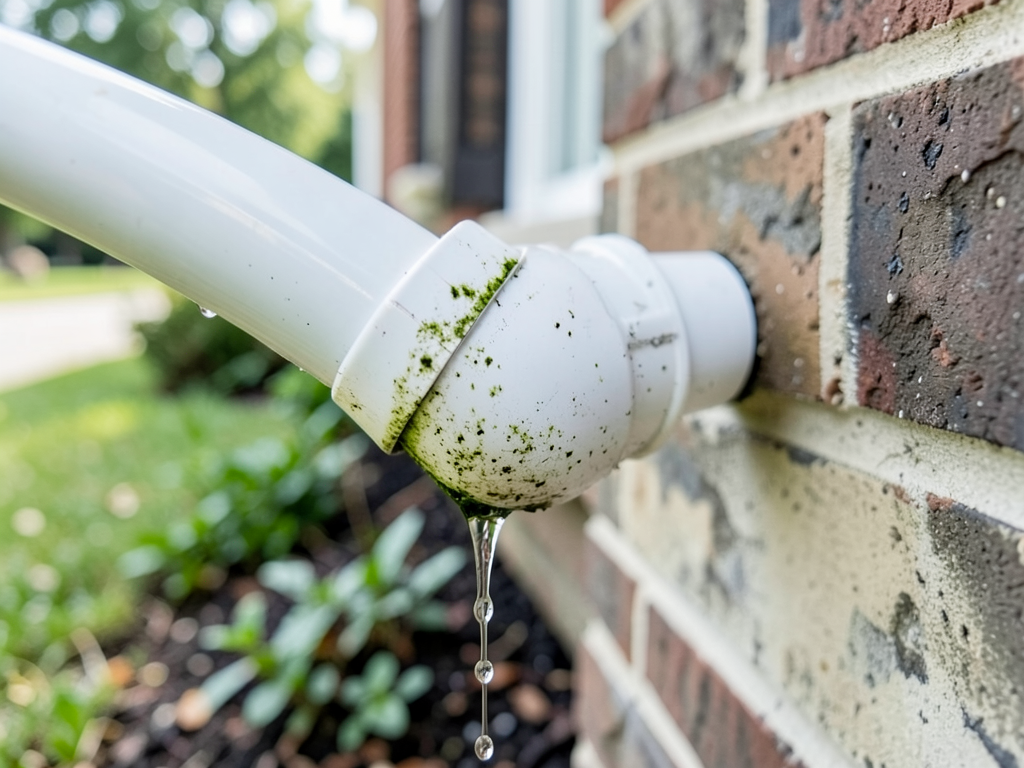
That small white PVC pipe on the side of your Nashville home is your AC condensate drain line and when it drips water it usually means your system is working hard to remove humidity from your home. In Middle Tennessee’s sticky summers your air conditioner can produce several gallons of water a day and that water needs somewhere to go. This article explains why that pipe is dripping what could go wrong and when you need to call a pro before water damage happens. Nashville AC Repair Companies That Actually Answer the Phone on Weekends.
Common Reasons Your AC Drain Line is Leaking
When your air conditioner cools your home it pulls moisture from the air. That moisture condenses on the evaporator coil and flows into a drain pan then out through the condensate line. If that system gets blocked or fails you will see water where it should not be. Here are the most common causes.
Algae and Mold Growth in the Line
Nashville’s high summer humidity creates the perfect environment for algae and mold to grow inside your PVC drain line. Over time this slimy growth can completely block the pipe causing water to back up into your home. You might notice the pipe dripping more than usual or see water pooling near your indoor unit.
Cracked or Rusted Secondary Drain Pan
Many Nashville homes have attic-mounted air handlers with a secondary drain pan underneath the unit. If that pan cracks or rusts through it can leak water onto your ceiling before you even notice a problem. This is especially common in homes built before 2010 when building codes required secondary pans for attic units. HVAC Mount Juliet.
Malfunctioning Condensate Pump
If your air handler is in a basement or crawl space it may use a condensate pump to push water up and out of your home. When that pump fails the water has nowhere to go and will overflow the drain pan. You might hear the pump humming but not moving water or see the safety switch has tripped.
Dirty Evaporator Coils
When your evaporator coils get dirty they cannot absorb heat efficiently. This can cause the coil to freeze then thaw creating more water than the drain system can handle. You might notice ice buildup on the copper lines or reduced cooling performance along with the dripping pipe. Heating and Cooling Historic Germantown Homes Without Bulky Ductwork.
How to Clear a Clogged Drain Line Yourself
Before calling a professional you can try these DIY methods to clear a minor clog. Always turn off your AC at the thermostat and breaker before attempting any maintenance.
Using a Wet/Dry Vac
Locate the outdoor end of your condensate line usually near the outdoor unit. Attach your wet/dry vac to the pipe using duct tape to create a seal. Run the vac for about 30 seconds to suck out the clog. You might see dark slime or debris come out the other end.
The Vinegar Flush Method
Find the access point on your drain line usually a T-shaped vent with a cap. Pour one cup of white vinegar into the line and let it sit for 30 minutes. The vinegar kills algae and breaks down minor buildup. Flush with clean water afterward to test flow.
Locating the PVC Access Point
Your drain line should have a cleanout access near your air handler. This is typically a PVC cap that allows you to pour cleaning solutions directly into the line. If you cannot find it your system may not have been installed to current code standards which require accessible cleanouts.
When to Call a Nashville HVAC Professional
Some problems need professional tools and expertise. Here are signs you should call (615) 552-1922 right away.
Water Damage to Ceiling or Walls
If you see water stains on your ceiling or walls your secondary drain pan has already failed. This is an emergency that can lead to ceiling collapse and mold growth. Turn off your system immediately and call for emergency service.
Strange Noises from the Drain Line
Gurgling or bubbling sounds from your drain line indicate a partial blockage that is trapping air. This can cause pressure buildup and eventual overflow. A professional can use a drain line snake or hydro-jet to clear stubborn clogs.
System Short Cycling or Not Cooling
If your AC turns on and off frequently or cannot maintain temperature the problem might be more than just a clogged drain. Low refrigerant levels can cause coil freezing which overwhelms the drain system. Only a licensed technician can safely check and recharge refrigerant.
No Safety Float Switch Installed
Modern building codes require a safety float switch that automatically shuts off your AC when the drain pan fills with water. If your system does not have one you are at risk for major water damage. Installation typically takes less than an hour and prevents thousands in repairs. EPA guide to air conditioner maintenance.
Preventing Future Leaks in Nashville’s Climate
Middle Tennessee’s humidity means your AC works harder and produces more condensate than systems in drier climates. Here is how to prevent future problems. The Best High Efficiency HVAC Systems for Luxury Homes in Brentwood.
Annual Professional Maintenance
Schedule a spring maintenance visit before cooling season starts. A technician will clean your drain line flush the system and check for code compliance. This prevents emergency calls during the first heat wave when everyone needs service.
Install a Safety Float Switch
If your system does not have a float switch ask about installation. This device sits in your drain pan and cuts power to the AC when water reaches a dangerous level. It is required by the 2018 International Mechanical Code for attic installations.
Use Algaecide Tablets
Place algaecide tablets in your drain pan each spring. These slow-release tablets prevent biological growth for several months. They are especially useful in Nashville where our humidity accelerates algae growth compared to northern climates.
Check Your Drain Line Slope
Your condensate line should slope downward at least 1/4 inch per foot toward the outdoor drain. If it sags or has improper slope water can pool inside the pipe and grow algae. A professional can check and correct the slope during maintenance.
Understanding Your AC’s Drain System
Your air conditioner’s drain system is more complex than most homeowners realize. Here is what happens inside your unit.
The evaporator coil sits above the drain pan and as warm humid air passes over the cold coil water condenses like on a cold glass of lemonade. This water flows into the primary drain pan then through the condensate line to the outside. The P-trap in your drain line prevents sewer gases from backing up into your home but it can also trap debris.
Secondary drain pans catch overflow if the primary system fails. These pans should have a separate drain line that exits somewhere visible like near a window so you notice the problem immediately. Some systems also include a water sensor alarm that sounds when the secondary pan fills.
Cost of Professional Drain Service in Nashville
Professional drain cleaning typically costs between $150 and $300 depending on the severity of the clog and whether you need emergency service. Float switch installation adds $100 to $200. If you need ceiling repairs from water damage costs can quickly exceed $1000. Storm Damage HVAC Repair.
Emergency service during peak summer months may cost 50% more but prevents further damage. Many Nashville HVAC companies offer maintenance plans that include annual drain cleaning at a discounted rate.
Frequently Asked Questions
Why is my AC drain line dripping so much water?
Your AC is removing humidity from your home. In Nashville’s humid climate a typical system can produce 5-10 gallons of water per day during peak summer. This is normal as long as the water flows freely outside and does not back up into your home.
Can I use bleach instead of vinegar to clean my drain line?
Avoid bleach as it can damage your drain line and create toxic fumes. White vinegar is safer and just as effective at killing algae. Commercial HVAC drain line cleaners are also available but follow product instructions carefully.
How often should I clean my AC drain line?
Clean your drain line at least once per year before cooling season. If you have pets or live in a particularly humid area clean it every six months. Homes with algae problems may need quarterly maintenance.
What does it mean if my drain line is not dripping at all?
No dripping could mean your drain line is completely blocked or your system is low on refrigerant and not producing condensate. Check for ice on the copper lines which indicates a refrigerant problem. This requires professional service.
Is a dripping AC drain line normal?
Yes occasional dripping is normal when your AC runs. The problem is when water backs up into your home or the dripping becomes excessive. If you are unsure call (615) 552-1922 for a quick inspection.
Protect Your Nashville Home from Water Damage
That small white pipe is your first warning sign of potential water damage. In Nashville’s humid climate a clogged drain line can go from minor inconvenience to major repair in just a few days. If you notice excessive dripping water stains or your system is not cooling properly call (615) 552-1922 today. Our licensed technicians can clear your drain line check for code compliance and install safety switches to prevent future problems. Do not wait until water is dripping through your ceiling. Pick up the phone and call (615) 552-1922 before the next storm hits. For more information, visit ASHRAE technical resources on HVAC systems.
{
“@context”: “https://schema.org”,
“@type”: “BlogPosting”,
“headline”: “Why there is water dripping from that little white pipe on the side of your house”,
“description”: “Find out why water is leaking from your AC’s white PVC pipe and how to stop it. Nashville’s humidity makes this a common problem. Call (615) 552-1922 for fast help.”,
“wordCount”: 1616,
“datePublished”: “2026-04-07T12:34:00.000Z”,
“dateModified”: “2026-04-07T12:34:00.000Z”,
“inLanguage”: “en-US”,
“mainEntityOfPage”: {
“@type”: “WebPage”,
“@id”: “https://alphahvacnashville.com”
},
“publisher”: {
“@type”: “LocalBusiness”,
“name”: “Alpha HVAC Nashville”,
“url”: “https://alphahvacnashville.com”
},
“author”: {
“@type”: “Organization”,
“name”: “Alpha HVAC Nashville”,
“url”: “https://alphahvacnashville.com”
},
“image”: {
“@type”: “ImageObject”,
“url”: “https://alphahvacnashville.com/wp-content/uploads/2026/03/why-there-is-water-dripping-from-that-little-white-1.png”
}
}
{
“@context”: “https://schema.org”,
“@type”: “HVACBusiness”,
“name”: “Alpha HVAC Nashville”,
“url”: “https://alphahvacnashville.com”,
“address”: {
“@type”: “PostalAddress”,
“addressLocality”: “Nashville”
},
“areaServed”: {
“@type”: “City”,
“name”: “Nashville”
}
}
{
“@context”: “https://schema.org”,
“@type”: “FAQPage”,
“mainEntity”: [
{
“@type”: “Question”,
“name”: “Why is my AC drain line dripping so much water?”,
“acceptedAnswer”: {
“@type”: “Answer”,
“text”: “Your AC is removing humidity from your home. In Nashville’s humid climate a typical system can produce 5-10 gallons of water per day during peak summer. This is normal as long as the water flows freely outside and does not back up into your home.”
}
},
{
“@type”: “Question”,
“name”: “Can I use bleach instead of vinegar to clean my drain line?”,
“acceptedAnswer”: {
“@type”: “Answer”,
“text”: “Avoid bleach as it can damage your drain line and create toxic fumes. White vinegar is safer and just as effective at killing algae. Commercial HVAC drain line cleaners are also available but follow product instructions carefully.”
}
},
{
“@type”: “Question”,
“name”: “How often should I clean my AC drain line?”,
“acceptedAnswer”: {
“@type”: “Answer”,
“text”: “Clean your drain line at least once per year before cooling season. If you have pets or live in a particularly humid area clean it every six months. Homes with algae problems may need quarterly maintenance.”
}
},
{
“@type”: “Question”,
“name”: “What does it mean if my drain line is not dripping at all?”,
“acceptedAnswer”: {
“@type”: “Answer”,
“text”: “No dripping could mean your drain line is completely blocked or your system is low on refrigerant and not producing condensate. Check for ice on the copper lines which indicates a refrigerant problem. This requires professional service.”
}
},
{
“@type”: “Question”,
“name”: “Is a dripping AC drain line normal?”,
“acceptedAnswer”: {
“@type”: “Answer”,
“text”: “Yes occasional dripping is normal when your AC runs. The problem is when water backs up into your home or the dripping becomes excessive. If you are unsure call (615) 552-1922 for a quick inspection.”
}
}
]
}
{
“@context”: “https://schema.org”,
“@type”: “BreadcrumbList”,
“itemListElement”: [
{
“@type”: “ListItem”,
“position”: 1,
“name”: “Home”,
“item”: “https://alphahvacnashville.com”
},
{
“@type”: “ListItem”,
“position”: 2,
“name”: “Blog”,
“item”: “https://alphahvacnashville.com/blog”
},
{
“@type”: “ListItem”,
“position”: 3,
“name”: “Why there is water dripping from that little white pipe on the side of your house”
}
]
}
{
“@context”: “https://schema.org”,
“@type”: “Service”,
“serviceType”: “HVAC”,
“provider”: {
“@type”: “LocalBusiness”,
“name”: “Alpha HVAC Nashville”,
“url”: “https://alphahvacnashville.com”
},
“areaServed”: {
“@type”: “City”,
“name”: “Nashville”
},
“description”: “Find out why water is leaking from your AC’s white PVC pipe and how to stop it. Nashville’s humidity makes this a common problem. Call (615) 552-1922 for fast help.”
}