
Why your lawn clippings might be slowly killing your AC unit in Lenox Village
The humid Nashville summers are brutal on air conditioning systems and something as simple as grass clippings from your weekend mowing can be the silent killer of your AC’s efficiency. In Lenox Village where homes sit close together with shared landscaping, those tiny bits of debris get sucked into your outdoor condenser unit and start a chain reaction that can lead to a complete system failure. The combination of Nashville’s 90% summer humidity and the cottonwood fuzz that blankets Middle Tennessee in May and June creates the perfect storm for clogged condenser coils that force your system to work overtime. The Best High Efficiency HVAC Systems for Luxury Homes in Brentwood.
Your AC condenser coils need to breathe to release heat from your home. When grass clippings, cottonwood seeds, and pollen coat those aluminum fins, the heat exchange process breaks down. The system runs longer cycles trying to cool your home, your energy bills spike 15-30%, and the compressor works itself into an early grave. This isn’t just about comfort—it’s about preventing a $3,000+ compressor replacement that could have been avoided with simple maintenance.
How to spot the warning signs before your AC dies
Most homeowners in Lenox Village don’t realize their AC is struggling until it’s too late. The first red flag is lukewarm air blowing from your vents when the system runs for more than 10 minutes. You might notice your AC cycling on and off more frequently or running constantly without ever reaching the set temperature. Another telltale sign is ice forming on the refrigerant lines near the outdoor unit—this happens when restricted airflow causes the system to overcool itself.. Read more about Protecting your outdoor AC unit from the constant moisture and lake mist in Old Hickory.
Listen for changes in your compressor’s sound. A healthy unit has a steady hum, but a struggling one often develops a louder, more strained noise as it fights against restricted airflow. Your energy bills offer another clue—if you see a 20%+ increase during summer months without changing your thermostat settings, your system is working harder than it should be. These symptoms often mimic other problems like refrigerant leaks, which is why professional diagnosis matters.
The Nashville-specific culprits clogging your coils
Lenox Village residents deal with unique challenges that homeowners in drier climates never face. Nashville’s humid subtropical climate means your AC runs almost constantly from May through September, giving debris ample time to accumulate. The cottonwood trees that line many Nashville neighborhoods release their fuzzy seeds during peak cooling season, and those lightweight particles travel for blocks before settling on condenser coils. Heating and Cooling Historic Germantown Homes Without Bulky Ductwork.
Local construction dust from new developments in the Lenox Village area adds another layer of contamination. When contractors work on nearby homes, fine concrete and drywall dust becomes airborne and finds its way into outdoor units. Combine this with the red clay soil common in Middle Tennessee that turns to mud when wet and dries to a fine powder, and you have a recipe for coil clogging that generic HVAC advice doesn’t address.
The EPA’s Energy Star program recommends annual professional cleaning for condenser coils, but Nashville’s specific environment often requires twice-yearly maintenance. The high moisture content in our air means debris sticks to coils rather than blowing away, creating a cement-like buildup that garden hose cleaning can’t remove. EPA Energy Star program recommendations.
Why dirty coils can destroy your compressor
The real danger isn’t just higher energy bills—it’s compressor failure. Your AC’s compressor is the heart of the system, and it’s designed to operate within specific temperature and pressure ranges. When condenser coils are clogged, the system can’t release heat properly, causing discharge pressures to skyrocket. Most modern units have high-pressure switches that shut down the system to prevent damage, but constant tripping still stresses the compressor. Storm Damage HVAC Repair.
Think of it like a car engine overheating. The first time your temperature gauge spikes, you might get away with it. But repeated overheating warps components and leads to catastrophic failure. The same principle applies to your AC compressor. Once those aluminum fins are bent or the internal motor windings overheat, you’re looking at a complete system replacement rather than a simple cleaning.
The National Electrical Code Article 440 requires specific overcurrent protection for HVAC equipment, but even properly protected compressors can fail from chronic overheating caused by dirty coils. The cost difference between a $150 coil cleaning and a $3,000+ compressor replacement makes preventive maintenance a no-brainer for Nashville homeowners. Nashville AC Repair Companies That Actually Answer the Phone on Weekends.
DIY cleaning vs. professional service: what actually works
Many homeowners grab a garden hose and spray down their condenser unit, thinking they’re solving the problem. While gentle rinsing can remove loose debris, it won’t touch the baked-on grime that forms in Nashville’s humid conditions. More importantly, DIY cleaning risks bending the delicate aluminum fins that are essential for heat transfer. Once those fins are damaged, your efficiency drops even further.
Professional coil cleaning uses specialized foaming cleaners that break down the organic material and mineral deposits that accumulate on coils. Technicians also use fin combs to straighten bent fins and ensure proper airflow. They check refrigerant pressures, electrical connections, and capacitor performance while they’re there—catching problems that could lead to summer breakdowns.
The diagnostic process involves measuring temperature splits across the coils, checking superheat and subcooling levels, and verifying that the system operates within manufacturer specifications. These measurements tell the technician whether your coils are just dirty or if there’s a more serious issue like a failing compressor or refrigerant leak. This level of diagnosis simply isn’t possible with DIY methods.
Cost comparison: cleaning now vs. emergency repair later
Professional coil cleaning in the Lenox Village area typically costs between $150-300 depending on your system’s size and condition. Compare that to emergency service calls that start at $150 just for the trip, plus parts and labor for whatever failed component needs replacement. If your compressor needs replacement during a July heatwave, you might pay 2-3 times the off-season rate for rushed service.
Energy savings add up quickly too. A system with clean coils operates at peak efficiency, often using 15-30% less electricity than a clogged one. Over a single summer, that can mean $100-200 in savings on your power bill—enough to pay for the cleaning service. Factor in the extended equipment life from reduced stress, and professional maintenance pays for itself multiple times over.
Many Nashville HVAC companies offer maintenance agreements that include two annual cleanings for $200-400 per year. These plans often provide priority scheduling for repairs and discounts on parts, making them worthwhile investments for homeowners who want to avoid surprise breakdowns.
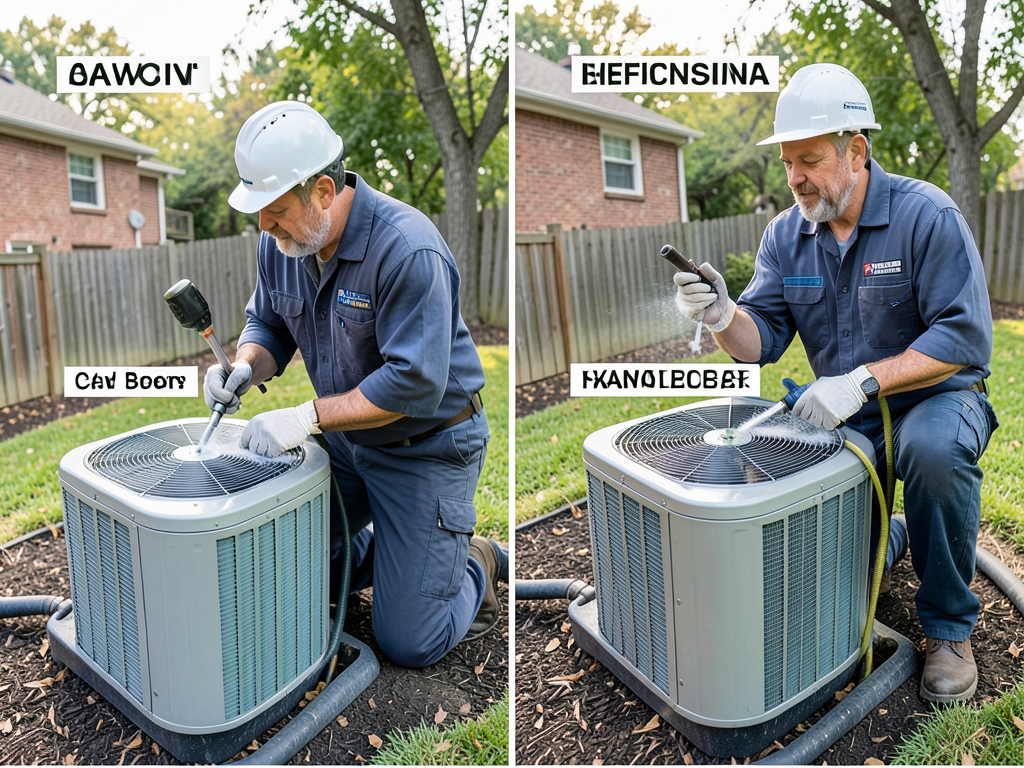
Before and after comparison of a Lennox condenser coil cleaning in a Lenox Village home. The left side shows grass clippings, cottonwood fuzz, and pollen buildup restricting airflow. The right side displays the clean aluminum fins after professional chemical treatment and fin straightening. This restoration can improve system efficiency by 25-40%.
The maintenance schedule Nashville homeowners need
In Middle Tennessee, waiting until your AC shows problems means you’ve already lost efficiency and shortened equipment life. The ideal schedule starts with spring cleaning in April or May, before cooling season hits full force. This timing catches the winter debris and prepares your system for the summer workload.
Many Lenox Village homes benefit from a second cleaning in late June or early July. This addresses the cottonwood season and any pollen buildup from spring flowering trees. If you have multiple trees near your outdoor unit or live in a newer construction area with ongoing dust, this mid-season cleaning prevents the efficiency losses that accumulate over a long, hot summer.
Fall maintenance in September or October prepares your system for the next cooling season and catches any issues before you switch to heating mode. This is also when technicians can check your capacitor and contactor for wear—components that often fail after a summer of heavy use. Following this three-visit schedule keeps your system running at peak efficiency and catches small problems before they become expensive emergencies.. Read more about Why heavy tree cover in West Meade might be making your AC work harder than it should.
When to call a Nashville professional immediately
Some AC problems require immediate professional attention rather than waiting for routine maintenance. If your system trips the circuit breaker repeatedly, produces burning smells, or makes loud banging or screeching noises, shut it off and call for emergency service. These symptoms often indicate electrical problems or failing components that could cause further damage if run.
Ice on refrigerant lines is another urgent warning sign. While it might seem like your system is working extra hard to cool your home, ice actually indicates restricted airflow or refrigerant problems. Running a frozen system can destroy the compressor within hours. Turn off the power at the disconnect switch near your outdoor unit and call for service.
Age matters too. If your system is over 10 years old and showing multiple symptoms like poor cooling, high humidity indoors, or frequent cycling, it might be time for replacement rather than repair. Modern high-efficiency units can cut cooling costs by 30-50% compared to older models, making replacement cost-effective even before complete failure.

Technician using a digital manifold gauge set to diagnose a Lenox Village AC system. The gauges measure high and low-side pressures to verify proper refrigerant charge and identify restrictions in the system. This diagnostic step reveals whether dirty coils are the sole problem or if there are underlying issues affecting performance.
Protecting your investment in Nashville’s climate
Your HVAC system represents one of the largest investments in your home. In Nashville’s climate where air conditioning runs nearly year-round, protecting that investment requires understanding the local environmental factors that accelerate wear. The combination of high humidity, seasonal pollen explosions, and construction dust creates conditions that manufacturers in drier climates never anticipated.
Smart homeowners in Lenox Village treat their AC system like they treat their car—with regular maintenance that prevents costly breakdowns. Just as you wouldn’t skip oil changes and expect your engine to last, skipping coil cleaning guarantees premature system failure. The difference is that AC repairs often happen during the hottest weeks of summer when you need cooling the most.
Consider the peace of mind factor too. Knowing your system has been professionally inspected and maintained means you’re not lying awake at night wondering if your AC will make it through the next heatwave. That assurance is worth the maintenance cost alone, especially for families with young children, elderly residents, or anyone with health conditions affected by heat and humidity.
Choosing the right HVAC partner in Nashville
Not all HVAC companies approach maintenance the same way. Look for technicians who perform comprehensive diagnostics rather than just cleaning coils and leaving. They should measure temperature splits, check electrical connections, verify refrigerant levels, and inspect the condensate drain system. These additional checks catch problems that visual inspection misses.
Experience with Nashville’s specific climate matters. A company that understands how local pollen patterns affect coil performance and knows the common failure points in Middle Tennessee homes will provide better service than a generic contractor. Ask about their familiarity with Lenox Village’s common home styles and any neighborhood-specific issues they’ve encountered.
Emergency availability is crucial too. When your AC fails on a 95-degree day, you need a company that can respond quickly. Look for 24/7 service availability and ask about typical response times during peak season. The cheapest maintenance plan isn’t worth much if you’re waiting three days for emergency repair during a heatwave.
Frequently Asked Questions
How often should I clean my AC condenser coils in Nashville?
Most Nashville homes need professional coil cleaning twice yearly—once in spring before cooling season and again in early summer after cottonwood season. Homes near heavy vegetation or construction sites may need quarterly cleaning to maintain peak efficiency.
Can I clean my AC coils myself with a garden hose?
Light rinsing with a garden hose can remove loose debris but won’t address the baked-on grime that forms in humid conditions. More importantly, improper cleaning can bend delicate aluminum fins, reducing efficiency further. Professional cleaning uses specialized equipment and chemicals designed for HVAC systems.
What’s the difference between a dirty coil and a clogged coil?
A dirty coil has light debris buildup that slightly reduces efficiency. A clogged coil has significant restriction that causes system strain, higher energy bills, and potential compressor damage. You can often see through a dirty coil but not through a clogged one. Clogged coils require professional chemical cleaning.
How much does professional coil cleaning cost in Nashville?
Professional coil cleaning in the Nashville area typically costs $150-300 depending on system size and condition. Some companies offer maintenance agreements that include two annual cleanings for $200-400 per year, often with additional benefits like priority service and repair discounts.
Will cleaning my coils really save money on my power bill?
Yes. Clean coils can improve your system’s efficiency by 15-30%, directly reducing your cooling costs. In Nashville’s long cooling season, this often means $100-200 in annual savings—enough to pay for the cleaning service while extending your equipment’s life.
Close-up view of cottonwood seed buildup on AC condenser fins. These lightweight seeds from local trees accumulate rapidly during May and June, creating a felt-like mat that blocks airflow. This type of buildup requires chemical treatment rather than simple rinsing to restore proper heat transfer.
Take action before your AC fails this summer
Your air conditioner is working harder than you realize, and those lawn clippings from your weekend mowing might be the final straw that pushes it to failure. The humid Nashville summers don’t give your system any downtime to recover from restricted airflow, making preventive maintenance essential rather than optional.
Don’t wait until your system shows obvious signs of trouble. By then, you’ve already paid higher energy bills and potentially shortened your equipment’s lifespan. A simple $150-300 cleaning can prevent a $3,000+ compressor replacement and keep your home comfortable through the hottest weeks of summer.
Call (615) 552-1922 today to schedule your professional coil cleaning and comprehensive system inspection. Our Nashville technicians understand the unique challenges Lenox Village homes face and can restore your system’s efficiency before the next heatwave hits. Don’t let something as simple as grass clippings cost you thousands in emergency repairs.
Pick up the phone and call (615) 552-1922 now. Your AC has been working overtime all season—give it the maintenance it needs to keep your family cool through the Nashville summer. For more information, visit Energy.gov air conditioner maintenance guide.
You may also find this helpful. How to handle a buzzing or vibrating AC unit before it turns into an expensive repair.
{
“@context”: “https://schema.org”,
“@type”: “BlogPosting”,
“headline”: “Why your lawn clippings might be slowly killing your AC unit in Lenox Village”,
“description”: “Discover how Nashville’s humid summers and lawn debris are damaging AC units in Lenox Village. Learn the warning signs, risks, and when to call for professional cleaning.”,
“wordCount”: 2421,
“datePublished”: “2026-05-28T08:40:00.000Z”,
“dateModified”: “2026-05-28T08:40:00.000Z”,
“inLanguage”: “en-US”,
“mainEntityOfPage”: {
“@type”: “WebPage”,
“@id”: “https://alphahvacnashville.com”
},
“publisher”: {
“@type”: “LocalBusiness”,
“name”: “Alpha HVAC Nashville”,
“url”: “https://alphahvacnashville.com”
},
“author”: {
“@type”: “Organization”,
“name”: “Alpha HVAC Nashville”,
“url”: “https://alphahvacnashville.com”
},
“image”: {
“@type”: “ImageObject”,
“url”: “https://alphahvacnashville.com/wp-content/uploads/2026/03/why-your-lawn-clippings-might-be-slowly-killing-yo-1.png”
}
}
{
“@context”: “https://schema.org”,
“@type”: “HVACBusiness”,
“name”: “Alpha HVAC Nashville”,
“url”: “https://alphahvacnashville.com”,
“address”: {
“@type”: “PostalAddress”,
“addressLocality”: “Nashville”
},
“areaServed”: {
“@type”: “City”,
“name”: “Nashville”
}
}
{
“@context”: “https://schema.org”,
“@type”: “FAQPage”,
“mainEntity”: [
{
“@type”: “Question”,
“name”: “How often should I clean my AC condenser coils in Nashville?”,
“acceptedAnswer”: {
“@type”: “Answer”,
“text”: “Most Nashville homes need professional coil cleaning twice yearly—once in spring before cooling season and again in early summer after cottonwood season. Homes near heavy vegetation or construction sites may need quarterly cleaning to maintain peak efficiency.”
}
},
{
“@type”: “Question”,
“name”: “Can I clean my AC coils myself with a garden hose?”,
“acceptedAnswer”: {
“@type”: “Answer”,
“text”: “Light rinsing with a garden hose can remove loose debris but won’t address the baked-on grime that forms in humid conditions. More importantly, improper cleaning can bend delicate aluminum fins, reducing efficiency further. Professional cleaning uses specialized equipment and chemicals designed for HVAC systems.”
}
},
{
“@type”: “Question”,
“name”: “What’s the difference between a dirty coil and a clogged coil?”,
“acceptedAnswer”: {
“@type”: “Answer”,
“text”: “A dirty coil has light debris buildup that slightly reduces efficiency. A clogged coil has significant restriction that causes system strain, higher energy bills, and potential compressor damage. You can often see through a dirty coil but not through a clogged one. Clogged coils require professional chemical cleaning.”
}
},
{
“@type”: “Question”,
“name”: “How much does professional coil cleaning cost in Nashville?”,
“acceptedAnswer”: {
“@type”: “Answer”,
“text”: “Professional coil cleaning in the Nashville area typically costs $150-300 depending on system size and condition. Some companies offer maintenance agreements that include two annual cleanings for $200-400 per year, often with additional benefits like priority service and repair discounts.”
}
},
{
“@type”: “Question”,
“name”: “Will cleaning my coils really save money on my power bill?”,
“acceptedAnswer”: {
“@type”: “Answer”,
“text”: “Yes. Clean coils can improve your system’s efficiency by 15-30%, directly reducing your cooling costs. In Nashville’s long cooling season, this often means $100-200 in annual savings—enough to pay for the cleaning service while extending your equipment’s life.”
}
}
]
}
{
“@context”: “https://schema.org”,
“@type”: “BreadcrumbList”,
“itemListElement”: [
{
“@type”: “ListItem”,
“position”: 1,
“name”: “Home”,
“item”: “https://alphahvacnashville.com”
},
{
“@type”: “ListItem”,
“position”: 2,
“name”: “Blog”,
“item”: “https://alphahvacnashville.com/blog”
},
{
“@type”: “ListItem”,
“position”: 3,
“name”: “Why your lawn clippings might be slowly killing your AC unit in Lenox Village”
}
]
}
{
“@context”: “https://schema.org”,
“@type”: “Service”,
“serviceType”: “HVAC”,
“provider”: {
“@type”: “LocalBusiness”,
“name”: “Alpha HVAC Nashville”,
“url”: “https://alphahvacnashville.com”
},
“areaServed”: {
“@type”: “City”,
“name”: “Nashville”
},
“description”: “Discover how Nashville’s humid summers and lawn debris are damaging AC units in Lenox Village. Learn the warning signs, risks, and when to call for professional cleaning.”
}