
Why heavy tree cover in West Meade might be making your AC work harder than it should
Living in West Meade means enjoying lush tree canopy and mature landscaping that creates a beautiful suburban retreat. But that same canopy could be silently sabotaging your air conditioning system’s efficiency. When trees drop leaves, pollen, and debris directly onto your outdoor condenser unit, airflow becomes restricted and your AC must work significantly harder to cool your home. This hidden problem affects many Nashville neighborhoods with heavy tree cover, leading to higher energy bills, more frequent repairs, and reduced system lifespan. EPA guide to air cleaners and filters.
Understanding how West Meade’s natural environment impacts your HVAC system requires looking beyond the obvious. While shade from trees might seem beneficial for reducing heat gain, the reality is more complex. Debris buildup on condenser coils, restricted airflow from nearby vegetation, and the increased humidity that wooded areas trap all create conditions that force your AC to run longer cycles and consume more electricity than necessary.
The good news is that these problems are preventable with the right maintenance approach. By understanding the specific challenges that West Meade’s tree canopy creates, you can take steps to protect your investment and ensure your air conditioning system operates at peak efficiency throughout Nashville’s hot, humid summers. The Best High Efficiency HVAC Systems for Luxury Homes in Brentwood.
How West Meade’s tree canopy affects your AC’s performance
West Meade’s mature oak, maple, and pine trees create a microclimate that differs significantly from more open areas of Nashville. While these trees provide cooling shade for your home, they also create conditions that can severely impact your air conditioning system’s ability to reject heat. The dense canopy reduces airflow around your outdoor condenser unit, while falling debris accumulates on the coils and in the surrounding area. Heating and Cooling Historic Germantown Homes Without Bulky Ductwork.
The physics of heat transfer explain why this matters. Your AC’s condenser unit must expel heat from your home’s refrigerant to the outside air. When airflow becomes restricted by leaves, pine needles, and other organic matter, the system cannot effectively release this heat. This forces the compressor to work harder and longer, consuming more electricity while delivering less cooling capacity.
Humidity plays an additional role in wooded areas like West Meade. Trees release moisture through transpiration, and the canopy traps this humidity near the ground. When your AC runs in these conditions, it must work harder to remove both heat and moisture from your indoor air. The combination of restricted airflow and elevated outdoor humidity creates a perfect storm for reduced efficiency and increased wear on your system components. Storm Damage HVAC Repair.
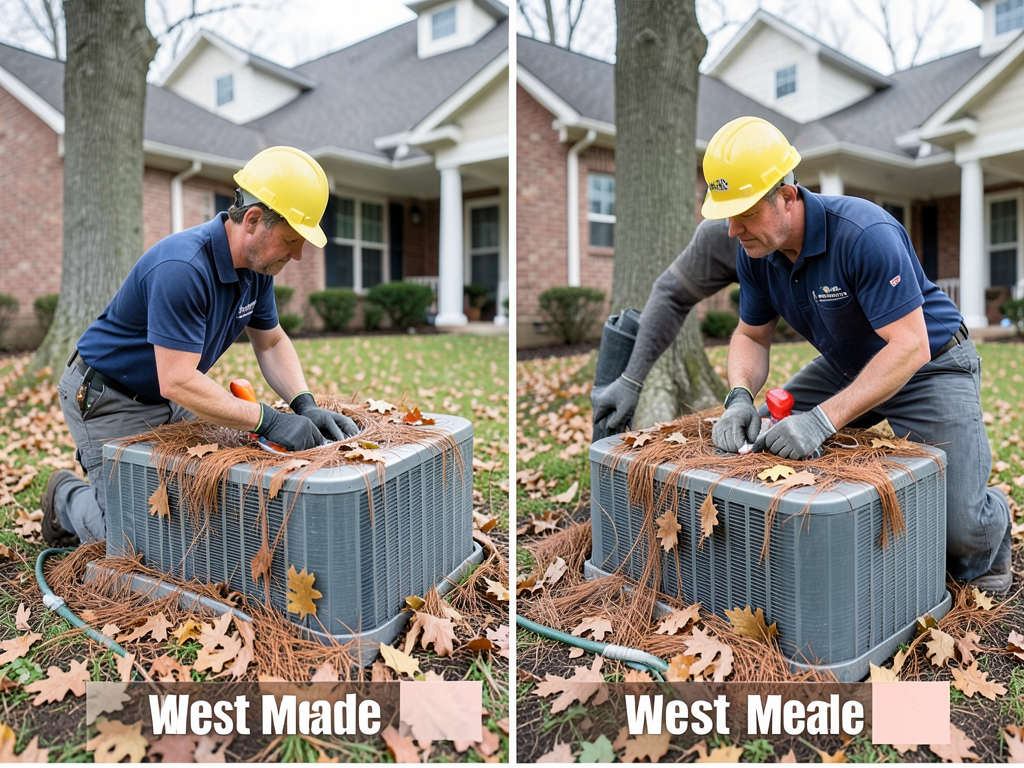
Diagram showing how tree debris blocks condenser airflow and reduces heat rejection efficiency
The hidden costs of debris buildup on condenser coils
Condenser coils are the heart of your AC’s heat rejection process. When leaves, pine needles, cottonwood seeds, and other debris accumulate on these coils, they create an insulating layer that prevents efficient heat transfer. This buildup is particularly problematic in West Meade where oak trees drop catkins in spring and pine trees shed needles year-round.
The efficiency loss from dirty condenser coils can be dramatic. Industry studies show that even a thin layer of organic debris can reduce cooling capacity by up to 30 percent. For a West Meade homeowner, this means your AC runs longer cycles to achieve the same temperature, consuming significantly more electricity while experiencing increased mechanical stress. The compressor, which is often the most expensive component to replace, bears the brunt of this additional workload.
Beyond the immediate efficiency impact, debris buildup creates conditions that promote corrosion and biological growth. Moisture trapped in leaf litter and organic matter creates an ideal environment for mold and algae growth on the coils. These organisms further reduce heat transfer efficiency while potentially affecting indoor air quality when spores are drawn into the system. The combination of restricted airflow and biological growth can lead to frozen evaporator coils, refrigerant leaks, and ultimately compressor failure if left unaddressed.
Why the 2-foot clearance rule matters more in wooded areas
Standard HVAC installation guidelines recommend maintaining at least 24 inches of clearance around outdoor condenser units. However, in West Meade’s heavily wooded environment, this minimum clearance often proves insufficient. The dense tree canopy and proximity of mature landscaping create conditions where even small amounts of nearby vegetation can significantly impact system performance. HVAC Mount Juliet.
The clearance requirement serves multiple purposes beyond simple airflow. First, it allows technicians to access the unit for maintenance and repairs. Second, it prevents leaves and debris from falling directly onto the condenser from overhanging branches. Third, it reduces the risk of root systems interfering with the concrete pad or refrigerant lines. In wooded areas, these factors become even more critical due to the constant bombardment of organic material from above. Nashville AC Repair Companies That Actually Answer the Phone on Weekends.
Homeowners in West Meade should consider increasing the recommended clearance to 36 inches or more, particularly on the sides facing the prevailing wind direction. This additional space helps prevent debris accumulation and allows for better air circulation around the unit. It also provides room for technicians to work without damaging nearby plants or compacting soil around the unit’s foundation. The investment in proper clearance pays dividends through improved efficiency, reduced maintenance needs, and extended equipment life.
Seasonal challenges unique to West Meade’s tree cover
Each season brings different challenges for AC systems in West Meade’s wooded environment. Spring brings the heaviest debris load as oak trees drop catkins, maple trees release helicopter seeds, and pine trees shed old needles. This organic material accumulates rapidly on condenser units, creating immediate airflow restrictions that force systems to work harder during the first heat waves of the season.
Summer presents different challenges as thunderstorms become more frequent. Heavy rain can wash debris into the bottom of the condenser unit, where it mixes with moisture to create a sludge that further restricts airflow. Lightning strikes, while less common, can damage both trees and AC equipment, creating situations where fallen branches crush outdoor units or power surges damage sensitive electronic components.. Read more about Protecting your outdoor AC unit from the constant moisture and lake mist in Old Hickory.
Fall brings another major debris event as deciduous trees drop their leaves. In West Meade, where many properties have mature oak and maple trees, this leaf drop can completely cover condenser units within days. Winter, while milder than in northern states, still presents challenges as freezing temperatures can cause moisture in debris to expand, potentially damaging coil fins or creating ice dams that further restrict airflow.
How to maintain your AC in a wooded Nashville neighborhood
Proper maintenance for AC systems in wooded areas requires a proactive approach that goes beyond standard service schedules. Homeowners in West Meade should implement a weekly visual inspection routine during peak debris seasons, checking for accumulated leaves, pine needles, and other organic material on and around the condenser unit. This simple habit can prevent many efficiency problems before they start.
Professional cleaning should occur more frequently in wooded areas than in open settings. While standard recommendations call for annual coil cleaning, homes in West Meade with heavy tree cover may benefit from bi-annual or even quarterly professional cleaning services. This is particularly important for properties with oak trees, which produce the most problematic debris due to their large, flat leaves that trap moisture and create ideal conditions for biological growth.
Filter maintenance becomes even more critical in wooded environments. The higher humidity and organic debris in the air mean filters clog more quickly, reducing airflow through the entire system. Homeowners should check filters monthly and replace them at the first sign of discoloration or dust accumulation. Using higher MERV-rated filters can help trap smaller particles, but these must be changed more frequently to prevent restricting system airflow.
5 maintenance tips specifically for homes in the woods
Living in West Meade’s wooded environment requires specialized maintenance strategies that differ from standard HVAC care. These five tips address the unique challenges that heavy tree cover creates for air conditioning systems and can help prevent the most common problems before they impact your comfort or budget.
First, install a quality condenser coil guard or screen that allows airflow while blocking larger debris. These guards should be removable for cleaning and should not restrict the manufacturer’s recommended airflow. Second, trim back tree branches that overhang the condenser unit, maintaining at least 6 feet of vertical clearance to prevent leaves and debris from falling directly onto the equipment.
Third, create a gravel or stone border around the base of the condenser unit. This border should extend at least 24 inches from the unit in all directions and should be deep enough to prevent weed growth. The gravel prevents organic material from accumulating directly against the unit while allowing water to drain away from the base.
Fourth, schedule your AC maintenance visits during early spring before the heavy debris season begins. This timing allows technicians to clean the system thoroughly before it faces the most challenging operating conditions of the year. Fifth, consider installing a whole-home dehumidifier if your wooded property experiences high indoor humidity levels. This addition can reduce the workload on your AC system while improving overall comfort.
Common symptoms of restricted airflow in shaded homes
Recognizing the early warning signs of airflow problems can help West Meade homeowners address issues before they cause major system damage. One of the most common symptoms is short cycling, where the AC turns on and off frequently without completing a full cooling cycle. This behavior often indicates that the system cannot effectively reject heat due to restricted airflow around the condenser.
Another telltale sign is ice formation on the refrigerant lines or evaporator coil. When airflow becomes restricted, the refrigerant cannot absorb enough heat from your home’s air, causing the coil temperature to drop below freezing. This ice buildup further restricts airflow, creating a destructive cycle that can lead to compressor damage if not addressed promptly.
Higher than normal energy bills often signal airflow problems, particularly during mild weather when the AC should run less frequently. If you notice your system running constantly but your home never reaching the desired temperature, restricted airflow is a likely culprit. The system is working harder but achieving less cooling due to the heat rejection problems caused by debris buildup and restricted ventilation.
Unusual noises from the outdoor unit can also indicate airflow problems. Hissing sounds may indicate refrigerant issues caused by frozen coils, while rattling noises often signal loose components vibrating due to the system working harder than designed. Any change in the normal operating sounds of your AC should prompt immediate investigation.
When to call a Nashville HVAC specialist
While many maintenance tasks can be handled by homeowners, certain situations require professional HVAC expertise. If your AC system shows signs of reduced performance despite regular cleaning and maintenance, it’s time to call a specialist who understands the unique challenges of Nashville’s wooded environments. Professional diagnosis can identify problems that aren’t visible to the untrained eye.
Specific indicators that warrant professional attention include persistent ice buildup on coils, unusual noises from the outdoor unit, or a noticeable decrease in cooling capacity. These symptoms often indicate problems that go beyond simple debris buildup, such as refrigerant leaks, compressor issues, or electrical problems that require specialized diagnostic equipment and expertise to resolve properly.
Professional HVAC technicians can also provide valuable guidance on optimizing your system’s performance in West Meade’s specific environment. They can recommend appropriate clearance distances based on your property’s tree cover, suggest modifications to improve airflow, and identify potential problems before they cause system failure. This expertise is particularly valuable for older homes where the AC system may not have been properly sized for the property’s current tree coverage.
Emergency situations require immediate professional response. If your AC stops working during a heat wave, produces burning smells, or shows signs of electrical problems, turn off the system and call for emergency service. These situations can pose safety risks and often cause additional damage if the system continues operating under compromised conditions.
The long-term impact of proper maintenance
Investing in proper AC maintenance for wooded properties pays significant dividends over time. Systems that receive appropriate care in challenging environments typically last 3-5 years longer than those that operate under constant stress from debris and restricted airflow. This extended lifespan represents thousands of dollars in avoided replacement costs and the value of uninterrupted comfort during Nashville’s hottest months.
Energy efficiency improvements from proper maintenance are equally substantial. An AC system operating at peak efficiency in a wooded environment can use 20-30 percent less electricity than one struggling with debris-related airflow restrictions. For the average Nashville homeowner, this translates to annual savings of several hundred dollars, which compounds over the system’s lifetime to represent a significant return on maintenance investment.
Beyond the direct financial benefits, proper maintenance protects your home’s value and your family’s comfort. A well-maintained AC system maintains consistent temperatures and humidity levels, preventing the mold growth and moisture damage that can occur when systems struggle to manage humidity in wooded environments. This protection extends to your home’s contents, electronics, and structural components, all of which benefit from stable indoor environmental conditions.
The peace of mind that comes from knowing your system is prepared for Nashville’s challenging climate conditions is perhaps the most valuable benefit of all. When heat waves hit and neighbors are dealing with AC failures, you can relax knowing your system has been properly maintained to handle the specific challenges of West Meade’s beautiful but demanding tree canopy.
Frequently Asked Questions
How often should I clean my AC condenser in a wooded area?
Homes in wooded areas like West Meade should have their condenser coils professionally cleaned at least twice per year, typically in early spring and late fall. During peak debris seasons, monthly visual inspections and light cleaning may be necessary to maintain optimal performance.
Can tree shade actually help my AC efficiency?
While shade can reduce heat gain on your home, the benefits are often outweighed by the negative impacts of debris accumulation and restricted airflow around the condenser unit. The key is finding the right balance between beneficial shade and problematic debris.
What’s the best way to prevent leaves from getting into my AC unit?
Install a quality condenser coil guard, maintain proper clearance around the unit, and trim back overhanging branches. A gravel border around the unit also helps prevent organic material from accumulating directly against the equipment.
How do I know if my AC is working harder than it should?
Signs include higher energy bills, the system running constantly, ice formation on coils, short cycling, and reduced cooling capacity. If you notice any of these symptoms, professional evaluation is recommended.
Is it worth installing a whole-home dehumidifier in a wooded area?
Yes, particularly in West Meade where high humidity is common. A whole-home dehumidifier can reduce the workload on your AC system while improving indoor comfort and preventing moisture-related problems.
- Weekly Visual Inspections
Check for debris accumulation on and around the condenser unit, especially during spring and fall when trees are most active.
- Professional Cleaning Schedule
Arrange bi-annual professional cleaning services, with additional visits during peak debris seasons if necessary.
- Clearance Maintenance
Maintain at least 36 inches of clearance around the unit and trim back any overhanging branches that could drop debris.
- Filter Management
Check and replace air filters monthly, using higher MERV ratings if needed for your wooded environment.
- Seasonal Preparation
Schedule maintenance visits before heavy debris seasons and inspect the system after major storms.
Living in West Meade’s beautiful wooded environment doesn’t mean you have to sacrifice air conditioning efficiency or comfort. With proper understanding of how tree cover affects your HVAC system and a commitment to regular maintenance, you can enjoy the best of both worlds: natural beauty outside and reliable comfort inside.
The key is recognizing that wooded properties require a different approach to AC maintenance than open areas. By implementing the strategies outlined in this guide and staying vigilant about debris management, you can prevent the most common problems that plague AC systems in tree-covered neighborhoods. Your system will run more efficiently, last longer, and provide the reliable comfort you expect during Nashville’s hottest months.
Don’t wait until your AC shows signs of trouble. Take proactive steps now to protect your investment and ensure your system is ready for whatever Nashville’s climate throws its way. Your comfort, your energy bills, and your peace of mind are worth the effort.
Call (615) 552-1922 today to schedule your inspection. Our Nashville HVAC specialists understand the unique challenges that West Meade’s tree canopy creates and can help you optimize your system’s performance for years of reliable comfort.
Pick up the phone and call (615) 552-1922 before the next storm hits. Don’t let heavy tree cover silently sabotage your AC’s efficiency and leave you sweating through another Nashville summer. For more information, visit Energy.gov AC maintenance guide.
{
“@context”: “https://schema.org”,
“@type”: “BlogPosting”,
“headline”: “Why heavy tree cover in West Meade might be making your AC work harder than it should”,
“description”: “Heavy tree cover in West Meade creates hidden HVAC problems. Learn how Nashville’s canopy affects AC performance, airflow, and energy bills. Call (615) 552-1922.”,
“wordCount”: 2838,
“datePublished”: “2026-05-30T12:44:00.000Z”,
“dateModified”: “2026-05-30T12:44:00.000Z”,
“inLanguage”: “en-US”,
“mainEntityOfPage”: {
“@type”: “WebPage”,
“@id”: “https://alphahvacnashville.com”
},
“publisher”: {
“@type”: “LocalBusiness”,
“name”: “Alpha HVAC Nashville”,
“url”: “https://alphahvacnashville.com”
},
“author”: {
“@type”: “Organization”,
“name”: “Alpha HVAC Nashville”,
“url”: “https://alphahvacnashville.com”
},
“image”: {
“@type”: “ImageObject”,
“url”: “https://alphahvacnashville.com/wp-content/uploads/2026/03/why-heavy-tree-cover-in-west-meade-might-be-making-1.png”
}
}
{
“@context”: “https://schema.org”,
“@type”: “HVACBusiness”,
“name”: “Alpha HVAC Nashville”,
“url”: “https://alphahvacnashville.com”,
“address”: {
“@type”: “PostalAddress”,
“addressLocality”: “Nashville”
},
“areaServed”: {
“@type”: “City”,
“name”: “Nashville”
}
}
{
“@context”: “https://schema.org”,
“@type”: “FAQPage”,
“mainEntity”: [
{
“@type”: “Question”,
“name”: “How often should I clean my AC condenser in a wooded area?”,
“acceptedAnswer”: {
“@type”: “Answer”,
“text”: “Homes in wooded areas like West Meade should have their condenser coils professionally cleaned at least twice per year, typically in early spring and late fall. During peak debris seasons, monthly visual inspections and light cleaning may be necessary to maintain optimal performance.”
}
},
{
“@type”: “Question”,
“name”: “Can tree shade actually help my AC efficiency?”,
“acceptedAnswer”: {
“@type”: “Answer”,
“text”: “While shade can reduce heat gain on your home, the benefits are often outweighed by the negative impacts of debris accumulation and restricted airflow around the condenser unit. The key is finding the right balance between beneficial shade and problematic debris.”
}
},
{
“@type”: “Question”,
“name”: “What’s the best way to prevent leaves from getting into my AC unit?”,
“acceptedAnswer”: {
“@type”: “Answer”,
“text”: “Install a quality condenser coil guard, maintain proper clearance around the unit, and trim back overhanging branches. A gravel border around the unit also helps prevent organic material from accumulating directly against the equipment.”
}
},
{
“@type”: “Question”,
“name”: “Is it worth installing a whole-home dehumidifier in a wooded area?”,
“acceptedAnswer”: {
“@type”: “Answer”,
“text”: “Yes, particularly in West Meade where high humidity is common. A whole-home dehumidifier can reduce the workload on your AC system while improving indoor comfort and preventing moisture-related problems.”
}
}
]
}
{
“@context”: “https://schema.org”,
“@type”: “HowTo”,
“name”: “How to Maintain Your AC in a Wooded Area”,
“step”: [
{
“@type”: “HowToStep”,
“position”: 1,
“name”: “Weekly Visual Inspections”,
“text”: “Check for debris accumulation on and around the condenser unit, especially during spring and fall when trees are most active.”
},
{
“@type”: “HowToStep”,
“position”: 2,
“name”: “Professional Cleaning Schedule”,
“text”: “Arrange bi-annual professional cleaning services, with additional visits during peak debris seasons if necessary.”
},
{
“@type”: “HowToStep”,
“position”: 3,
“name”: “Clearance Maintenance”,
“text”: “Maintain at least 36 inches of clearance around the unit and trim back any overhanging branches that could drop debris.”
},
{
“@type”: “HowToStep”,
“position”: 4,
“name”: “Filter Management”,
“text”: “Check and replace air filters monthly, using higher MERV ratings if needed for your wooded environment.”
},
{
“@type”: “HowToStep”,
“position”: 5,
“name”: “Seasonal Preparation”,
“text”: “Schedule maintenance visits before heavy debris seasons and inspect the system after major storms.”
}
],
“image”: “https://alphahvacnashville.com/wp-content/uploads/2026/03/why-heavy-tree-cover-in-west-meade-might-be-making-1.png”
}
{
“@context”: “https://schema.org”,
“@type”: “BreadcrumbList”,
“itemListElement”: [
{
“@type”: “ListItem”,
“position”: 1,
“name”: “Home”,
“item”: “https://alphahvacnashville.com”
},
{
“@type”: “ListItem”,
“position”: 2,
“name”: “Blog”,
“item”: “https://alphahvacnashville.com/blog”
},
{
“@type”: “ListItem”,
“position”: 3,
“name”: “Why heavy tree cover in West Meade might be making your AC work harder than it should”
}
]
}
{
“@context”: “https://schema.org”,
“@type”: “Service”,
“serviceType”: “HVAC”,
“provider”: {
“@type”: “LocalBusiness”,
“name”: “Alpha HVAC Nashville”,
“url”: “https://alphahvacnashville.com”
},
“areaServed”: {
“@type”: “City”,
“name”: “Nashville”
},
“description”: “Heavy tree cover in West Meade creates hidden HVAC problems. Learn how Nashville’s canopy affects AC performance, airflow, and energy bills. Call (615) 552-1922.”
}