
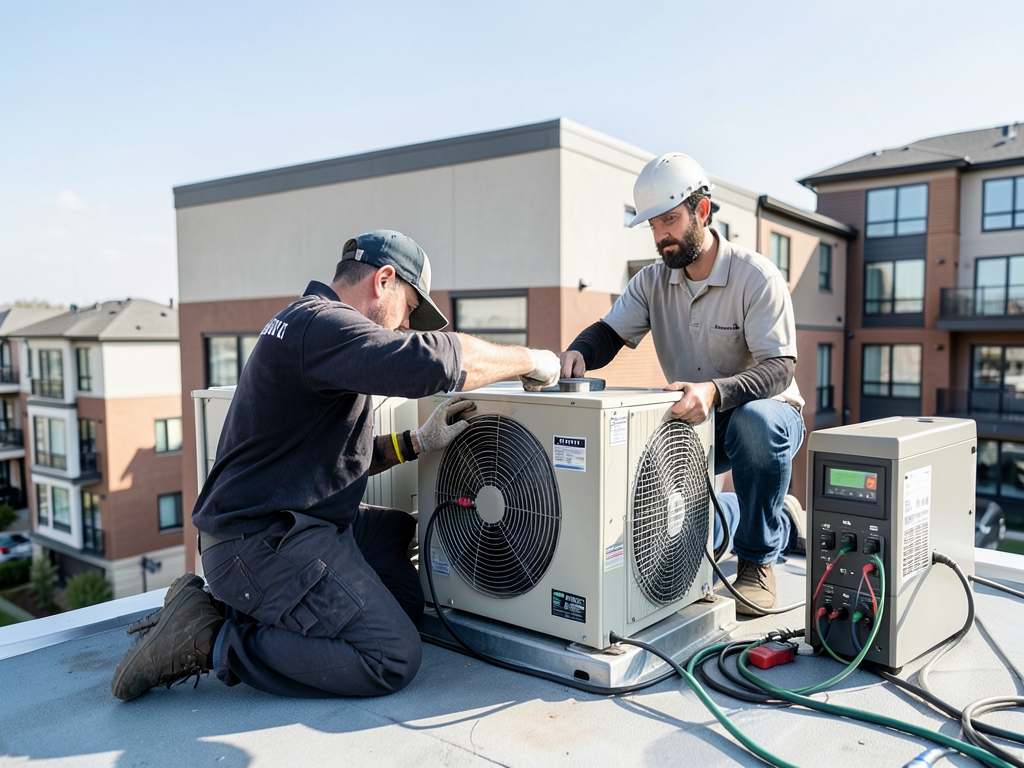
Maintaining Rooftop HVAC Units on Modern Townhomes in The Nations
Modern townhomes in The Nations face unique HVAC challenges due to Nashville’s humid subtropical climate and the specific demands of rooftop units. These high-efficiency systems require specialized maintenance to handle the heavy spring pollen, intense summer humidity, and occasional severe storms that roll through the area. Without proper care, rooftop units can suffer from reduced efficiency, premature failure, and costly emergency repairs. EPA Section 608 Certification.
The Nations, with its mix of newly constructed townhomes along Centennial Boulevard and the historic Charlotte Avenue corridor, presents specific maintenance needs. Rooftop units here must contend with limited access for service, exposure to Nashville Electric Service grid fluctuations, and the area’s characteristic red clay soil settling that can affect roof stability. Understanding these local factors is crucial for maintaining optimal performance and extending equipment life. Nashville AC Repair Companies That Actually Answer the Phone on Weekends.
Why Rooftop Units in The Nations Need Special Attention
The Nations sits in a unique microclimate within Nashville. The area’s elevation changes and proximity to the Cumberland River create localized weather patterns that affect rooftop HVAC performance. During spring months, The Nations experiences some of the highest pollen counts in Davidson County, with oak and pine pollen clogging condenser coils and reducing efficiency by up to 15%. The Best High Efficiency HVAC Systems for Luxury Homes in Brentwood.
Summer humidity in The Nations regularly exceeds 70%, placing additional strain on rooftop units. The high dew points mean condensate drains work overtime, and without proper cleaning, algae and mold can build up in drain pans. This creates not only efficiency problems but also potential indoor air quality issues for residents.
Winter brings its own challenges. The Nations experiences more frequent freeze-thaw cycles than other parts of Nashville due to its slightly higher elevation. This temperature fluctuation can cause condensate lines to freeze and rupture if not properly insulated. The area’s red clay soil also expands and contracts more dramatically than other soil types, potentially affecting roof structures and unit mounting pads. HVAC Mount Juliet.
Essential Rooftop Maintenance Checklist for The Nations Townhomes
Regular maintenance prevents 80% of rooftop HVAC failures. Here’s what every townhome association or property manager in The Nations should schedule:
- Spring Pollen Cleaning
Remove accumulated pollen from condenser coils using specialized coil cleaner. The Nations’ high pollen counts require cleaning twice during spring months.
- Condensate Drain Treatment
Apply biocide tablets to prevent algae growth in drain pans. Nashville’s humidity creates ideal conditions for biological growth.
- Refrigerant Level Check
Test for proper charge and inspect for micro-leaks common in rooftop units exposed to temperature extremes.
- Belt and Bearing Inspection
Check for wear patterns and proper tension. The Nations’ temperature swings cause more frequent belt degradation.
- Electrical Component Testing
Verify contactor operation and capacitor health. NES grid fluctuations in The Nations can stress electrical components.
- Economizer Calibration
Ensure proper operation for free cooling during mild weather. This saves energy during The Nations’ pleasant spring and fall seasons. Heating and Cooling Historic Germantown Homes Without Bulky Ductwork.
- Roof Mount Inspection
Check for loose mounting bolts and signs of roof deterioration. The area’s soil composition affects roof settling patterns.
- Filter Replacement
Install high-efficiency filters rated for Nashville’s pollen levels. Change frequency increases during spring months.
Seasonal Maintenance Schedule for The Nations Climate
The Nations’ climate demands a proactive approach to rooftop HVAC maintenance. Here’s a seasonal breakdown:
| Season | Key Tasks | Frequency |
|---|---|---|
| Spring | Pollen cleaning, filter replacement, condensate treatment | 2-3 times |
| Summer | Coil cleaning, refrigerant check, electrical testing | Monthly |
| Fall | Debris removal, belt inspection, economizer calibration | 2 times |
| Winter | Freeze protection, insulation check, heat pump testing | Monthly |
Spring maintenance is particularly critical in The Nations. The area’s oak and pine trees produce heavy pollen that coats condenser coils, reducing heat transfer efficiency by up to 20%. Without proper cleaning, units work harder, consume more energy, and experience premature compressor failure.
Summer in The Nations means humidity levels that regularly exceed 75%. This moisture load forces condensate drains to handle significantly more water than units in drier climates. Drain pans should be inspected monthly for algae growth and proper drainage slope.
Fall brings leaf debris that can clog rooftop unit intakes. The Nations’ mature tree canopy, particularly along 51st Avenue North, requires more frequent intake screening checks than newer developments.
Winter freeze-thaw cycles in The Nations can cause condensate lines to expand and contract, leading to cracks. Units should be checked for proper insulation and heat tape functionality before the first freeze.
Common Rooftop Unit Problems in The Nations
Understanding failure patterns helps prevent costly emergency repairs. Here are the most common issues we see in The Nations:
- Pollen-Induced Efficiency Loss: Oak and pine pollen accumulation reduces cooling capacity by 15-20% during peak spring months.
- Condensate Drain Clogs: High humidity and pollen create ideal conditions for algae growth in drain pans.
- Electrical Component Stress: NES grid fluctuations common in The Nations accelerate contactor and capacitor wear.
- Roof Settling Issues: Red clay soil expansion causes more frequent unit misalignment than in areas with different soil types.
- Storm Damage: Spring and summer thunderstorms can damage condenser fins and shift unit positioning.
The Nations experiences more frequent severe weather alerts than other Nashville neighborhoods. According to National Weather Service data, the area receives an average of 8-10 severe thunderstorm warnings annually, compared to the city average of 6-7. This increased storm activity correlates with higher rates of rooftop unit damage. Storm Damage HVAC Repair.
Energy Efficiency and Cost Savings
Properly maintained rooftop units in The Nations can reduce energy costs by 15-25% annually. The area’s high humidity makes energy efficiency particularly important, as units must work harder to remove moisture from the air.
A comprehensive maintenance program typically pays for itself within 12-18 months through energy savings and prevented repairs. For a typical townhome with a 3-ton rooftop unit, annual maintenance costs range from $250-400, while emergency repairs can exceed $1,000.
Energy Star estimates that dirty condenser coils alone can increase energy consumption by 30%. In The Nations’ humid climate, this translates to an additional $25-40 per month during peak cooling season for an average townhome.
Professional vs. DIY Maintenance
While some maintenance tasks are suitable for DIY, rooftop units require professional service for several critical reasons:
| Task | DIY Appropriate? | Professional Required? |
|---|---|---|
| Filter replacement | Yes | No |
| Coil cleaning | No | Yes |
| Refrigerant level check | No | Yes |
| Electrical testing | No | Yes |
| Roof mount inspection | No | Yes |
Professional maintenance includes EPA-mandated refrigerant handling, electrical safety testing per NEC Article 440, and proper disposal of cleaning chemicals. These requirements make DIY maintenance not only impractical but potentially illegal.
Choosing a Rooftop Maintenance Provider in The Nations
When selecting a maintenance provider for your The Nations townhome, consider these factors:
- Local Experience: Providers familiar with The Nations’ specific climate challenges and building types.
- EPA Certification: Required for refrigerant handling and recovery.
- Insurance Coverage: Must include workers’ compensation and liability for rooftop work.
- Emergency Response: 24/7 availability for urgent repairs.
- Maintenance Agreements: Scheduled service plans that include priority response.
Local providers understand that The Nations’ townhomes often have limited roof access and may require specialized equipment. They also know the area’s typical unit brands and common failure patterns.
Compliance and Building Codes
Rooftop HVAC maintenance in The Nations must comply with Metro Nashville codes and Tennessee state regulations. The Metro Nashville Energy Conservation Code requires specific efficiency standards for replacement units and mandates proper disposal of old equipment. Metro Nashville Energy Conservation Code.
Tennessee State Fire Marshal regulations require licensed technicians for all electrical work on HVAC systems. This includes capacitor replacement, contactor repair, and any work on control boards.. Read more about How to choose a quiet HVAC system that won’t disturb your neighbors in Brentwood.
The EPA’s Section 608 certification is mandatory for any technician handling refrigerants. This certification ensures proper recovery and recycling of refrigerants to prevent atmospheric release.
Local building permits may be required for major rooftop unit replacements or significant modifications to existing installations. The Nations falls within Davidson County jurisdiction, which has specific requirements for rooftop equipment mounting and drainage.
Emergency Preparedness for Townhome Associations
Townhome associations in The Nations should develop emergency response plans for HVAC failures. Key components include:
- Emergency Contact List: Maintain updated contact information for all residents and service providers.
- Temporary Cooling Plans: Identify locations where residents can go during extended outages.
- Backup Power Considerations: Evaluate generator capacity for critical systems.
- Communication Protocol: Establish procedures for notifying residents of maintenance schedules and outages.
- Documentation System: Keep records of all maintenance, repairs, and unit specifications.
The Nations’ townhome communities often share roof structures, making coordinated maintenance planning essential. A failure in one unit can affect adjacent units through shared electrical systems or roof drainage patterns.. Read more about Why your HVAC system needs a surge protector to survive the next big Nashville lightning storm.
Cost Factors and Budgeting
Understanding cost factors helps townhome associations budget appropriately for rooftop maintenance. Key cost drivers include:
- Unit Age: Units over 10 years typically require more frequent service and parts replacement.
- Accessibility: Limited roof access in The Nations townhomes can increase service time and costs.
- Brand and Model: Some brands have higher parts costs or require specialized tools.
- Climate Exposure: Units facing south or west in The Nations experience more UV damage and require additional protection.
- Building Height: Higher buildings may require additional safety equipment and labor.
A typical 5-year maintenance budget for a townhome association in The Nations should allocate $500-800 per unit annually, with higher amounts for older systems or buildings with accessibility challenges.
Technology and Smart Features
Modern rooftop units offer smart features that enhance maintenance and efficiency. These include:
- Remote Monitoring: Real-time performance tracking and alert systems.
- Predictive Maintenance: AI-driven analysis that predicts component failures before they occur.
- Energy Usage Analytics: Detailed consumption data to identify efficiency opportunities.
- Automated Diagnostics: Self-testing features that simplify troubleshooting.
Upgrading to smart-enabled units can reduce maintenance costs by 15-20% through early problem detection and optimized scheduling. Many newer townhomes in The Nations already include these features.
Environmental Considerations
Rooftop HVAC maintenance in The Nations should include environmental best practices:
- Refrigerant Recovery: Proper handling of R-410A and other modern refrigerants per EPA guidelines.
- Chemical Disposal: Safe disposal of coil cleaners and other maintenance chemicals.
- Energy Efficiency: Regular maintenance reduces energy consumption and carbon footprint.
- Recycling Programs: Proper recycling of old components and packaging materials.
The Nations’ proximity to the Cumberland River makes environmental stewardship particularly important. Proper chemical handling prevents contamination of local waterways.
Frequently Asked Questions
How often should rooftop units be serviced in The Nations?
Rooftop units in The Nations should receive professional maintenance twice yearly, with additional service during spring pollen season. Monthly visual inspections by property managers are also recommended.
What are signs that a rooftop unit needs immediate attention?
Unusual noises, reduced cooling capacity, water leaks, ice formation on coils, and burning smells indicate urgent problems requiring immediate professional service.
How long do rooftop HVAC units typically last in Nashville’s climate?
With proper maintenance, rooftop units in The Nations typically last 12-15 years. Units in coastal or extremely humid areas may have shorter lifespans without diligent care.
Are rooftop units more expensive to maintain than ground-level units?
Rooftop units often cost 15-25% more to maintain due to accessibility challenges and exposure to weather extremes. However, they free up ground space and can be more efficient for multi-unit buildings.
Call to Action
Don’t wait for your rooftop unit to fail during Nashville’s next heat wave. Call (615) 552-1922 today to schedule your comprehensive rooftop HVAC inspection. Our The Nations specialists understand the unique challenges of your neighborhood and can help you avoid costly emergency repairs.
Pick up the phone and call (615) 552-1922 before the next storm hits. We’ll ensure your rooftop unit is ready to handle whatever Middle Tennessee weather throws at it.
Call (615) 552-1922 now to join our maintenance program and receive priority service, discounted rates, and peace of mind knowing your system is protected year-round.
{
“@context”: “https://schema.org”,
“@type”: “BlogPosting”,
“headline”: “Maintaining rooftop HVAC units on modern townhomes in The Nations”,
“description”: “Expert rooftop HVAC maintenance for modern townhomes in The Nations. Learn about Nashville’s climate challenges, preventative care, and how to protect your investment.”,
“wordCount”: 1996,
“datePublished”: “2026-05-25T11:08:00.000Z”,
“dateModified”: “2026-05-25T11:08:00.000Z”,
“inLanguage”: “en-US”,
“mainEntityOfPage”: {
“@type”: “WebPage”,
“@id”: “https://alphahvacnashville.com”
},
“publisher”: {
“@type”: “LocalBusiness”,
“name”: “Alpha HVAC Nashville”,
“url”: “https://alphahvacnashville.com”
},
“author”: {
“@type”: “Organization”,
“name”: “Alpha HVAC Nashville”,
“url”: “https://alphahvacnashville.com”
},
“image”: {
“@type”: “ImageObject”,
“url”: “https://alphahvacnashville.com/wp-content/uploads/2026/03/maintaining-rooftop-hvac-units-on-modern-townhomes-1.png”
}
}
{
“@context”: “https://schema.org”,
“@type”: “HVACBusiness”,
“name”: “Alpha HVAC Nashville”,
“url”: “https://alphahvacnashville.com”,
“address”: {
“@type”: “PostalAddress”,
“addressLocality”: “Nashville”
},
“areaServed”: {
“@type”: “City”,
“name”: “Nashville”
}
}
{
“@context”: “https://schema.org”,
“@type”: “FAQPage”,
“mainEntity”: [
{
“@type”: “Question”,
“name”: “How often should rooftop units be serviced in The Nations?”,
“acceptedAnswer”: {
“@type”: “Answer”,
“text”: “Rooftop units in The Nations should receive professional maintenance twice yearly, with additional service during spring pollen season. Monthly visual inspections by property managers are also recommended.”
}
},
{
“@type”: “Question”,
“name”: “What are signs that a rooftop unit needs immediate attention?”,
“acceptedAnswer”: {
“@type”: “Answer”,
“text”: “Unusual noises, reduced cooling capacity, water leaks, ice formation on coils, and burning smells indicate urgent problems requiring immediate professional service.”
}
},
{
“@type”: “Question”,
“name”: “How long do rooftop HVAC units typically last in Nashville’s climate?”,
“acceptedAnswer”: {
“@type”: “Answer”,
“text”: “With proper maintenance, rooftop units in The Nations typically last 12-15 years. Units in coastal or extremely humid areas may have shorter lifespans without diligent care.”
}
},
{
“@type”: “Question”,
“name”: “Are rooftop units more expensive to maintain than ground-level units?”,
“acceptedAnswer”: {
“@type”: “Answer”,
“text”: “Rooftop units often cost 15-25% more to maintain due to accessibility challenges and exposure to weather extremes. However, they free up ground space and can be more efficient for multi-unit buildings.”
}
}
]
}
{
“@context”: “https://schema.org”,
“@type”: “HowTo”,
“name”: “Rooftop HVAC Maintenance Steps”,
“step”: [
{
“@type”: “HowToStep”,
“position”: 1,
“name”: “Spring Pollen Cleaning”,
“text”: “Remove accumulated pollen from condenser coils using specialized coil cleaner. The Nations’ high pollen counts require cleaning twice during spring months.”
},
{
“@type”: “HowToStep”,
“position”: 2,
“name”: “Condensate Drain Treatment”,
“text”: “Apply biocide tablets to prevent algae growth in drain pans. Nashville’s humidity creates ideal conditions for biological growth.”
},
{
“@type”: “HowToStep”,
“position”: 3,
“name”: “Refrigerant Level Check”,
“text”: “Test for proper charge and inspect for micro-leaks common in rooftop units exposed to temperature extremes.”
},
{
“@type”: “HowToStep”,
“position”: 4,
“name”: “Belt and Bearing Inspection”,
“text”: “Check for wear patterns and proper tension. The Nations’ temperature swings cause more frequent belt degradation.”
},
{
“@type”: “HowToStep”,
“position”: 5,
“name”: “Electrical Component Testing”,
“text”: “Verify contactor operation and capacitor health. NES grid fluctuations in The Nations can stress electrical components.”
},
{
“@type”: “HowToStep”,
“position”: 6,
“name”: “Economizer Calibration”,
“text”: “Ensure proper operation for free cooling during mild weather. This saves energy during The Nations’ pleasant spring and fall seasons. Heating and Cooling Historic Germantown Homes Without Bulky Ductwork.”
},
{
“@type”: “HowToStep”,
“position”: 7,
“name”: “Roof Mount Inspection”,
“text”: “Check for loose mounting bolts and signs of roof deterioration. The area’s soil composition affects roof settling patterns.”
},
{
“@type”: “HowToStep”,
“position”: 8,
“name”: “Filter Replacement”,
“text”: “Install high-efficiency filters rated for Nashville’s pollen levels. Change frequency increases during spring months.”
}
],
“image”: “https://alphahvacnashville.com/wp-content/uploads/2026/03/maintaining-rooftop-hvac-units-on-modern-townhomes-1.png”
}
{
“@context”: “https://schema.org”,
“@type”: “BreadcrumbList”,
“itemListElement”: [
{
“@type”: “ListItem”,
“position”: 1,
“name”: “Home”,
“item”: “https://alphahvacnashville.com”
},
{
“@type”: “ListItem”,
“position”: 2,
“name”: “Blog”,
“item”: “https://alphahvacnashville.com/blog”
},
{
“@type”: “ListItem”,
“position”: 3,
“name”: “Maintaining rooftop HVAC units on modern townhomes in The Nations”
}
]
}
{
“@context”: “https://schema.org”,
“@type”: “Service”,
“serviceType”: “HVAC”,
“provider”: {
“@type”: “LocalBusiness”,
“name”: “Alpha HVAC Nashville”,
“url”: “https://alphahvacnashville.com”
},
“areaServed”: {
“@type”: “City”,
“name”: “Nashville”
},
“description”: “Expert rooftop HVAC maintenance for modern townhomes in The Nations. Learn about Nashville’s climate challenges, preventative care, and how to protect your investment.”
}