
Woodmont homeowners know Nashville’s humidity hits hard every summer. But what many don’t realize is that the damp crawlspace beneath their home is quietly forcing their HVAC system to work twice as hard as it should. When moisture seeps into your crawlspace, it doesn’t stay there. The stack effect pulls that damp air upward into your living spaces, making your air conditioner fight both heat and humidity. This hidden battle costs you money, shortens equipment life, and creates unhealthy indoor air. Nashville AC Repair Companies That Actually Answer the Phone on Weekends.
The good news is that understanding this connection between your crawlspace and HVAC performance can help you take control. By addressing crawlspace moisture, you can reduce energy bills, extend equipment life, and improve your home’s comfort. Let’s explore how this works and what you can do about it.
Why Woodmont crawlspaces struggle with moisture
Woodmont’s location in the Cumberland River basin creates unique challenges. The area’s heavy clay soil retains water, and many homes sit on lots with poor natural drainage. When summer thunderstorms roll through Middle Tennessee, that water has nowhere to go but into the ground around your foundation. Storm Damage HVAC Repair.
Most Woodmont homes were built before modern vapor barrier requirements became standard. Many crawlspaces have dirt floors covered with thin plastic sheeting that’s torn or missing entirely. This allows ground moisture to evaporate directly into the crawlspace air.
Combine that with Nashville’s average summer relative humidity of 65-70% and you have a perfect recipe for crawlspace condensation. When warm, humid air contacts the cooler surfaces under your home, moisture forms on ducts, insulation, and wood framing. This creates the damp environment that’s killing your HVAC efficiency. The Best High Efficiency HVAC Systems for Luxury Homes in Brentwood.
How moisture makes your HVAC work overtime
Your air conditioner has two jobs: cool the air and remove humidity. When your crawlspace adds extra moisture to the system, your AC must work much harder. Here’s what happens:
Instead of cooling 75-degree air by 20 degrees, your system now cools 80-degree air with high humidity by 25 degrees. This requires more energy and longer run times. The compressor, which is already the most expensive component to replace, experiences extra wear from these extended cycles. Heating and Cooling Historic Germantown Homes Without Bulky Ductwork.
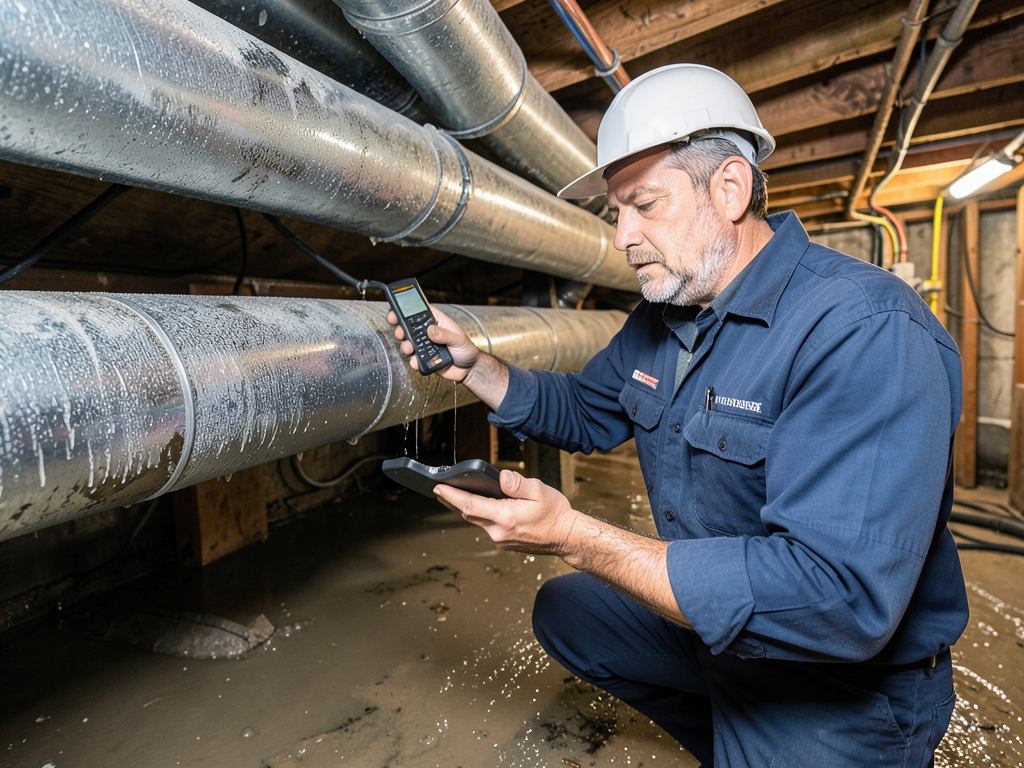
Moisture also causes problems in the ductwork. When humid crawlspace air contacts cold supply ducts, condensation forms on the outside. This water drips onto insulation and can travel along duct seams into your walls. The added weight and moisture damage reduce airflow efficiency.
According to the Department of Energy, homes with encapsulated crawlspaces use 15-20% less energy for cooling. That’s because the HVAC system no longer fights the constant moisture battle. Your equipment can focus on temperature control instead of dehumidification. Department of Energy crawlspace insulation guide.
The stack effect: how crawlspace air reaches your living space
The stack effect is a natural process where warm air rises and escapes through upper levels of your home, creating negative pressure that pulls air from lower levels. In Woodmont homes, that means air from your damp crawlspace gets pulled upward through floor penetrations, gaps around pipes, and even through the subfloor itself.
Building scientists estimate that 40-50% of the air you breathe on the first floor comes from the crawlspace. This means the mold spores, dust mites, and musty odors in your crawlspace become part of your indoor air quality problem.
During summer, this effect is amplified. Your AC creates cold surfaces throughout the home, which causes more condensation in the crawlspace. The resulting humid air gets pulled upward, making your AC work even harder to dehumidify the living space.
This cycle continues until the crawlspace moisture is controlled. Many Woodmont homeowners notice their homes feel muggy even when the thermostat reads the correct temperature. That’s the stack effect at work, bringing damp air from below.
Moisture damage to HVAC components
Beyond efficiency losses, crawlspace moisture causes direct damage to HVAC equipment. Most Woodmont homes have furnaces or air handlers in the crawlspace, where they’re exposed to constant humidity.
Metal components rust when exposed to moisture. Control boards, which contain sensitive electronics, can fail when condensation forms on their surfaces. The rust also affects the heat exchanger in furnaces, potentially creating dangerous carbon monoxide leaks.
Ductwork connections rely on mastic sealant to prevent air leaks. When this sealant gets wet repeatedly, it loses adhesion and cracks. This allows conditioned air to escape into the crawlspace instead of reaching your rooms, further reducing efficiency.
The condensate drain line, which removes moisture from your AC, can back up when exposed to crawlspace humidity. This causes water to overflow into the unit or onto your crawlspace floor, creating even more moisture problems.
According to ASHRAE Standard 62.1, which governs indoor air quality, maintaining relative humidity below 60% prevents most mold growth and protects building materials. Your crawlspace likely exceeds this level for much of the year.. Read more about How to tell if the spots on your Hermitage air vents are actually dangerous mold.
Energy cost impact in real numbers
Homeowners in Woodmont typically see 15-25% higher cooling costs due to crawlspace moisture issues. For a typical 2,500 square foot home, that translates to $300-500 extra per cooling season.
These costs compound over time. An HVAC system working 20% harder will wear out 20% faster. Instead of lasting 15-20 years, your equipment might need replacement at 12-15 years, costing you thousands in premature replacement.. Read more about Why your lawn clippings might be slowly killing your AC unit in Lenox Village.
The energy waste extends beyond your HVAC system. When your home feels damp, you’re tempted to lower the thermostat for comfort. Each degree lower increases energy consumption by 3-5%. A home that feels comfortable at 75 degrees might require 72 degrees when excess humidity is present.
TVA, which provides power to most Nashville-area homes, offers rebates for energy efficiency improvements. Their EnergyRight program provides incentives for home envelope improvements, including crawlspace encapsulation, that can offset 20-30% of the project cost.
Professional encapsulation: the complete solution
Encapsulating your crawlspace involves more than just laying plastic. A proper system addresses all moisture sources and creates a conditioned environment that works with your HVAC system.
The process starts with addressing standing water issues. French drains, sump pumps, and proper grading ensure water flows away from your foundation. This prevents the constant moisture source that defeats encapsulation efforts.. Read more about Keeping Your HVAC Lines Safe from Foundation Shifts in Crieve Hall’s Clay Soil.
Next comes the vapor barrier installation. Professional-grade 12-20 mil reinforced polyethylene is sealed to foundation walls and piers, creating an uninterrupted moisture barrier. All seams are taped, and penetrations around pipes and columns are sealed.
Foundation walls require insulation to prevent condensation on cool surfaces. Closed-cell spray foam or rigid foam board with sealed seams prevents thermal bridging and adds R-value to your home’s envelope.
The final component is mechanical ventilation. A dedicated crawlspace dehumidifier maintains relative humidity between 45-55%, preventing mold growth while protecting wood framing. This unit must be properly sized for your crawlspace volume and integrated with your HVAC system.
According to the Tennessee State Fire Marshal’s mechanical codes, any encapsulated crawlspace must have mechanical ventilation to prevent pressure imbalances and ensure proper air exchange.
DIY vs. professional encapsulation: what works in Woodmont
Many homeowners consider DIY crawlspace vapor barrier installation to save money. While this can help, it rarely solves the underlying moisture problems that affect HVAC efficiency.
DIY materials typically use 6-mil plastic that tears easily and doesn’t seal properly at seams. Without proper sealing to foundation walls and piers, moisture still enters from the ground. Most DIY installations also miss critical details like insulating foundation walls or installing proper drainage.
Professional encapsulation addresses all moisture sources. Technicians use moisture meters to identify problem areas, install proper drainage systems, and ensure all components work together. They also understand local building codes and warranty requirements.
The cost difference is significant but justified. DIY materials for a 1,500 square foot crawlspace cost $500-800. Professional installation runs $3,000-6,000 depending on crawlspace condition and required repairs. However, the energy savings and equipment longevity often pay back the investment in 3-5 years. EPA indoor air quality guidelines.
Professional work also includes warranty protection. Most reputable companies offer 20-25 year warranties on materials and 1-2 year warranties on labor. DIY work has no warranty and may void HVAC equipment warranties if moisture damage occurs.
Impact on indoor air quality and health
The connection between crawlspace moisture and indoor air quality affects your family’s health. Mold spores, dust mites, and other allergens thrive in humid environments above 60% relative humidity.
When these contaminants enter your living space through the stack effect, they trigger allergies and respiratory issues. Common symptoms include sneezing, coughing, itchy eyes, and aggravated asthma. Children and elderly family members are particularly vulnerable.
Musty odors in your home often indicate crawlspace mold growth. These odors aren’t just unpleasant; they signal active microbial growth that releases volatile organic compounds into your air. Some of these compounds have been linked to headaches and fatigue.
Encapsulation breaks this cycle by controlling humidity levels. When relative humidity stays between 45-55%, mold cannot grow and dust mites die off. This creates a healthier indoor environment without the need for additional air purifiers or filtration systems.
The EPA recommends maintaining indoor relative humidity between 30-50% for optimal air quality and comfort. An encapsulated crawlspace helps achieve this target naturally.
Real Woodmont success stories
Homeowners in the Woodmont area have seen dramatic improvements after addressing crawlspace moisture. One family on Glen Echo Road noticed their second-floor bedrooms stayed cooler after encapsulation, allowing them to raise their thermostat by two degrees while maintaining comfort.
A homeowner on Woodmont Boulevard reported their HVAC system cycled less frequently after encapsulation, reducing noise and extending equipment life. Their energy bills dropped by $45 per month during the first summer.
Another Woodmont resident discovered extensive mold growth during a pre-sale home inspection. After professional remediation and encapsulation, both the mold and the high humidity issues were resolved, allowing the sale to proceed without costly negotiations.
These improvements happen because encapsulation addresses the root cause rather than just treating symptoms. When your crawlspace stops contributing moisture to your home, your HVAC system can operate as designed.
Maintenance requirements for encapsulated crawlspaces
An encapsulated crawlspace requires minimal maintenance but does need periodic attention. The dehumidifier collects water that must be drained or pumped out. Most units have automatic drains, but the collection bucket should be checked quarterly.
The vapor barrier should be inspected annually for tears or damage. Heavy equipment storage or pest activity can puncture the material. Small repairs with seam tape prevent larger problems from developing.
The dehumidifier filter needs cleaning every 3-6 months depending on your home’s dust levels. A dirty filter reduces efficiency and can cause the unit to ice up. Some models have washable filters that make this task simple.. Read more about Why cleaning your own AC coils in Bordeaux might actually do more harm than good.
Foundation vents, if present, should remain closed after encapsulation. Opening these vents allows humid air to enter, defeating the encapsulation benefits. Many homeowners forget this step and wonder why their crawlspace still feels damp.
Professional inspections every 2-3 years help identify developing issues before they become expensive problems. Technicians check for plumbing leaks, pest activity, and equipment function during these visits.
Cost factors and ROI considerations
The total cost of crawlspace encapsulation varies based on several factors. Crawlspace size is the primary determinant, with larger spaces requiring more materials and labor. Access difficulty also affects pricing; tight spaces or low clearance increase installation time.
Existing moisture problems add to the cost. If you need French drains, sump pumps, or mold remediation, these services increase the project budget but are essential for long-term success.
Material quality significantly impacts both cost and performance. Professional-grade 20-mil reinforced barrier costs more than standard 6-mil plastic but lasts decades instead of years. Similarly, commercial-grade dehumidifiers cost more upfront but use less energy and require fewer repairs. Whole Home Humidifiers.
The return on investment calculation includes energy savings, equipment longevity, and potential home value increase. Energy savings of 15-20% on a $200 monthly cooling bill saves $360-480 annually. Extending HVAC life by 5 years on a $8,000 system saves $1,600 in replacement costs.
Home appraisers recognize encapsulated crawlspaces as valuable improvements. While exact value varies, many experts estimate a 70-80% return on investment when selling your home, plus the benefit of faster sales in competitive markets.
Common mistakes to avoid
Many homeowners make critical errors when addressing crawlspace moisture. The most common mistake is installing only a vapor barrier without addressing drainage or ventilation. This creates a moisture trap that can worsen problems.
Another frequent error is using the wrong materials. Standard construction plastic tears easily and allows moisture vapor transmission. Professional-grade materials cost more but provide the moisture protection needed for long-term success.
Ignoring the HVAC connection is a critical oversight. An encapsulated crawlspace must work with your HVAC system, not against it. This means proper sizing of the dehumidifier and ensuring return air pathways don’t create pressure imbalances.
Some homeowners seal foundation vents without providing mechanical ventilation. This creates a sealed space that can develop negative pressure, potentially pulling combustion gases from water heaters or furnaces back into the home.
Finally, skipping the mold assessment and remediation can leave hidden problems that continue affecting your air quality even after encapsulation. Professional mold testing identifies issues that aren’t visible to the naked eye.
Choosing the right contractor in Woodmont
Not all contractors understand the HVAC-crawlspace connection. Look for companies that specialize in building performance and have specific experience with Nashville’s climate challenges.
Ask potential contractors about their moisture assessment process. They should use moisture meters to identify problem areas and explain how they’ll address each issue. Be wary of companies that offer only one solution without assessing your specific situation.
Verify licensing and insurance. In Tennessee, contractors must be licensed by the Department of Commerce and Insurance. Ask for proof of both general liability and workers’ compensation insurance.
Request references from local homeowners with similar homes. A contractor who’s worked successfully in Woodmont will understand the area’s specific challenges, from clay soil to historic home construction methods.
Get detailed proposals that specify materials, including vapor barrier thickness, dehumidifier capacity, and insulation R-values. Compare proposals carefully, as the cheapest option often uses inferior materials that won’t provide lasting results.
Finally, ask about warranty terms. A confident contractor will offer substantial warranties on both materials and workmanship. Be skeptical of companies that can’t provide written warranty information.
Frequently Asked Questions
How do I know if my crawlspace is affecting my HVAC system?
Signs include high humidity levels in your home even when the AC runs constantly, musty odors, condensation on windows, and uneven cooling between rooms. A professional energy audit can measure crawlspace moisture and its impact on your HVAC efficiency.
Can I encapsulate my crawlspace in winter?
Yes, crawlspace encapsulation can be done year-round. In fact, winter is often a good time because humidity levels are lower, making the installation process easier. The benefits apply regardless of when you complete the project.
Will encapsulation make my home too dry?
Properly designed systems maintain relative humidity between 45-55%, which is ideal for both comfort and building materials. This range prevents mold growth while avoiding the static electricity and dry skin issues associated with very low humidity.
How long does professional encapsulation take?
Most residential projects take 2-4 days depending on crawlspace size and condition. This includes moisture assessment, any necessary repairs, installation, and system testing. Your home remains fully usable during the entire process.
Does encapsulation help with pests?
Yes, encapsulation creates a barrier that deters many pests including termites, rodents, and insects. However, it should be combined with proper pest control measures for comprehensive protection. Some pests may already be present and require separate treatment.
Take control of your home’s comfort
Your Woodmont home deserves an HVAC system that operates efficiently without fighting constant moisture battles. The damp crawlspace beneath your floors is costing you money every month through higher energy bills and premature equipment wear.
By addressing crawlspace moisture through professional encapsulation, you can reduce cooling costs by 15-20%, extend your HVAC equipment life by years, and create a healthier indoor environment for your family. These improvements pay for themselves through energy savings while increasing your home’s value and comfort.
Don’t let another summer go by watching your AC struggle against Nashville’s humidity. Call (615) 552-1922 today to schedule your crawlspace assessment. Our Nashville-based team understands the unique challenges Woodmont homeowners face and can design a solution that works with your specific home and HVAC system.
Pick up the phone and call (615) 552-1922 before the next heat wave hits. Your HVAC system will thank you with lower bills, better performance, and years of additional service life.
{
“@context”: “https://schema.org”,
“@type”: “BlogPosting”,
“headline”: “How a damp Woodmont crawlspace is making your HVAC system work twice as hard”,
“description”: “Discover how Woodmont’s humid crawlspaces strain your HVAC system. Learn the local moisture impact, energy costs, and solutions from Nashville’s crawlspace experts.”,
“wordCount”: 2771,
“datePublished”: “2026-05-05T12:49:00.000Z”,
“dateModified”: “2026-05-05T12:49:00.000Z”,
“inLanguage”: “en-US”,
“mainEntityOfPage”: {
“@type”: “WebPage”,
“@id”: “https://alphahvacnashville.com”
},
“publisher”: {
“@type”: “LocalBusiness”,
“name”: “Alpha HVAC Nashville”,
“url”: “https://alphahvacnashville.com”
},
“author”: {
“@type”: “Organization”,
“name”: “Alpha HVAC Nashville”,
“url”: “https://alphahvacnashville.com”
},
“image”: {
“@type”: “ImageObject”,
“url”: “https://alphahvacnashville.com/wp-content/uploads/2026/03/how-a-damp-woodmont-crawlspace-is-making-your-hvac-1.png”
}
}
{
“@context”: “https://schema.org”,
“@type”: “HVACBusiness”,
“name”: “Alpha HVAC Nashville”,
“url”: “https://alphahvacnashville.com”,
“address”: {
“@type”: “PostalAddress”,
“addressLocality”: “Nashville”
},
“areaServed”: {
“@type”: “City”,
“name”: “Nashville”
}
}
{
“@context”: “https://schema.org”,
“@type”: “FAQPage”,
“mainEntity”: [
{
“@type”: “Question”,
“name”: “How do I know if my crawlspace is affecting my HVAC system?”,
“acceptedAnswer”: {
“@type”: “Answer”,
“text”: “Signs include high humidity levels in your home even when the AC runs constantly, musty odors, condensation on windows, and uneven cooling between rooms. A professional energy audit can measure crawlspace moisture and its impact on your HVAC efficiency.”
}
},
{
“@type”: “Question”,
“name”: “Can I encapsulate my crawlspace in winter?”,
“acceptedAnswer”: {
“@type”: “Answer”,
“text”: “Yes, crawlspace encapsulation can be done year-round. In fact, winter is often a good time because humidity levels are lower, making the installation process easier. The benefits apply regardless of when you complete the project.”
}
},
{
“@type”: “Question”,
“name”: “How long does professional encapsulation take?”,
“acceptedAnswer”: {
“@type”: “Answer”,
“text”: “Most residential projects take 2-4 days depending on crawlspace size and condition. This includes moisture assessment, any necessary repairs, installation, and system testing. Your home remains fully usable during the entire process.”
}
},
{
“@type”: “Question”,
“name”: “Does encapsulation help with pests?”,
“acceptedAnswer”: {
“@type”: “Answer”,
“text”: “Yes, encapsulation creates a barrier that deters many pests including termites, rodents, and insects. However, it should be combined with proper pest control measures for comprehensive protection. Some pests may already be present and require separate treatment.”
}
}
]
}
{
“@context”: “https://schema.org”,
“@type”: “BreadcrumbList”,
“itemListElement”: [
{
“@type”: “ListItem”,
“position”: 1,
“name”: “Home”,
“item”: “https://alphahvacnashville.com”
},
{
“@type”: “ListItem”,
“position”: 2,
“name”: “Blog”,
“item”: “https://alphahvacnashville.com/blog”
},
{
“@type”: “ListItem”,
“position”: 3,
“name”: “How a damp Woodmont crawlspace is making your HVAC system work twice as hard”
}
]
}
{
“@context”: “https://schema.org”,
“@type”: “Service”,
“serviceType”: “HVAC”,
“provider”: {
“@type”: “LocalBusiness”,
“name”: “Alpha HVAC Nashville”,
“url”: “https://alphahvacnashville.com”
},
“areaServed”: {
“@type”: “City”,
“name”: “Nashville”
},
“description”: “Discover how Woodmont’s humid crawlspaces strain your HVAC system. Learn the local moisture impact, energy costs, and solutions from Nashville’s crawlspace experts.”
}